Deliverables
A logo using a combination of Type and also a “device”- at least 10 options in concept sketch form, prior to developing your final choice on screen. Select secondary fonts for a “strapline/ product description”, colour palettes, textures/ decoration, image or illustration styles as “visual vocabulary” to be used on the packaging and promotional material and presented in the form of a style guide. Then create a packaging design and submit a flat net in print ready PDF format as well as mockups.
Task 1
You have been engaged by the Client to produce a Logo / Visual identity for a new type of chocolate confectionary to the market. The Brand is in development and the client has a list of proposed names/options.
Project Plan
Rather than going in blind, I decided to create a project plan. I sometimes get a little off track and make up time elsewhere throughout a project, but I thought creating a step by step plan will give me a good chance at maintaining steady progress throughout the project.
I have chosen to use Trello to create a project board containing 5 lists. Each list contains a group of tasks which can be done in just a couple of days (or less) to make sure I make steady progress and finish the project on time without having to rush.
You can scroll through the embedded Trello board below.
Strategy
I've broken down the strategy for my brand into four key parts: target market, design qualities, unique selling point, and competitor analysis.
Strategy
Target Market
The target market for my chocolate brand will be mid-range, between the likes of Cadburys and Lindt and specifically aimed at 20-40 year olds. The reason for choosing this market is that I want my brand to be exciting, bold, and vibrant. One that feels tropical and above all else, fun!
I've chosen this specific age range because statistically, younger adults (millennials and Gen Z) travel more frequently (on average 5 trips per year) than older demographics, and a majority report increased spending on leisure travel in 2024. This cohort tends to prioritise experiences, novel purchases, and design-led indulgences rather than bare necessities which matches strongly with a brand rooted in excitement and fun with a tropical, explorative feel.
Being mid-range would allow the product to be placed alongside brands like Tony's, Alter Eco, Ghirardelli and more. Many of these brands have ethical or social missions that allow them to charge higher prices despite having chocolate that is on par with the quality of Cadbury's or other mass produced products.
This places them in a small category positioned between mid range brands such as Cadburys and Galaxy and luxury brands such as Lindt, Ferrero Rocher, etc.
Strategy
Design Qualities
According to research, design elements that resonate most with 20–40 year olds prioritise authenticity, individuality, sustainability, and functional simplicity, often blending minimalism with bolder, expressive touches.
This demographic values design that feels personal rather than generic, favouring curated, meaningful details and materials that reflect environmental awareness, such as recycled elements and natural textures.
Gen Z typically gravitates toward vibrant colours, energetic patterns, and playful maximalism, while Millennials lean toward clean lines, neutral palettes, and modern, uncluttered aesthetics.
Nostalgic and retro influences appeal across both groups, as does the seamless integration of smart technology and intuitive, user-centred experiences.
Ultimately, they are drawn to designs that feel genuine, visually engaging, and aligned with their lifestyle values, balancing practicality with personality.
Strategy
Unique Selling Point
The way I interpret the USP from a design perspective is that the packaging should clearly communicate why Coco Loco is special. In this case, I need to come up with my own USP that could be used if the brand was real. After researching consumer trends of my target market, it's clear that a social responsibility commitment would be a suitable USP as it aligns with the opinions of the intended customer. Creating a USP that conforms with the beliefs of the target consumer means that if it was on the shelf amongst it's competition, the product would have a higher purchase rate as the consumer feels as though they are doing the right thing by choosing Coco Loco as they are contributing to a cause they believe in.
Think of it this way:
Two perfume brands are targeted at consumers that love animals, they are conscious of this in their spending. The brand designs + packaging are designed accordingly. Brand A uses animal testing, brand B pledges a commitment to never test on animals, only safe human tests. Put yourself in the shoes of an animal lover and suddenly it's very easy to choose a product you want to buy.
However, you still need to make a good product. If the perfume smells like rotten vegetables, nobody's going to buy it. So as long as the product is on par (or better) than the competition, you'll put yourself ahead of your competitors in the eyes of the target consumer. Bodyshop is a great example of this.
Strategy
Competitor Analysis
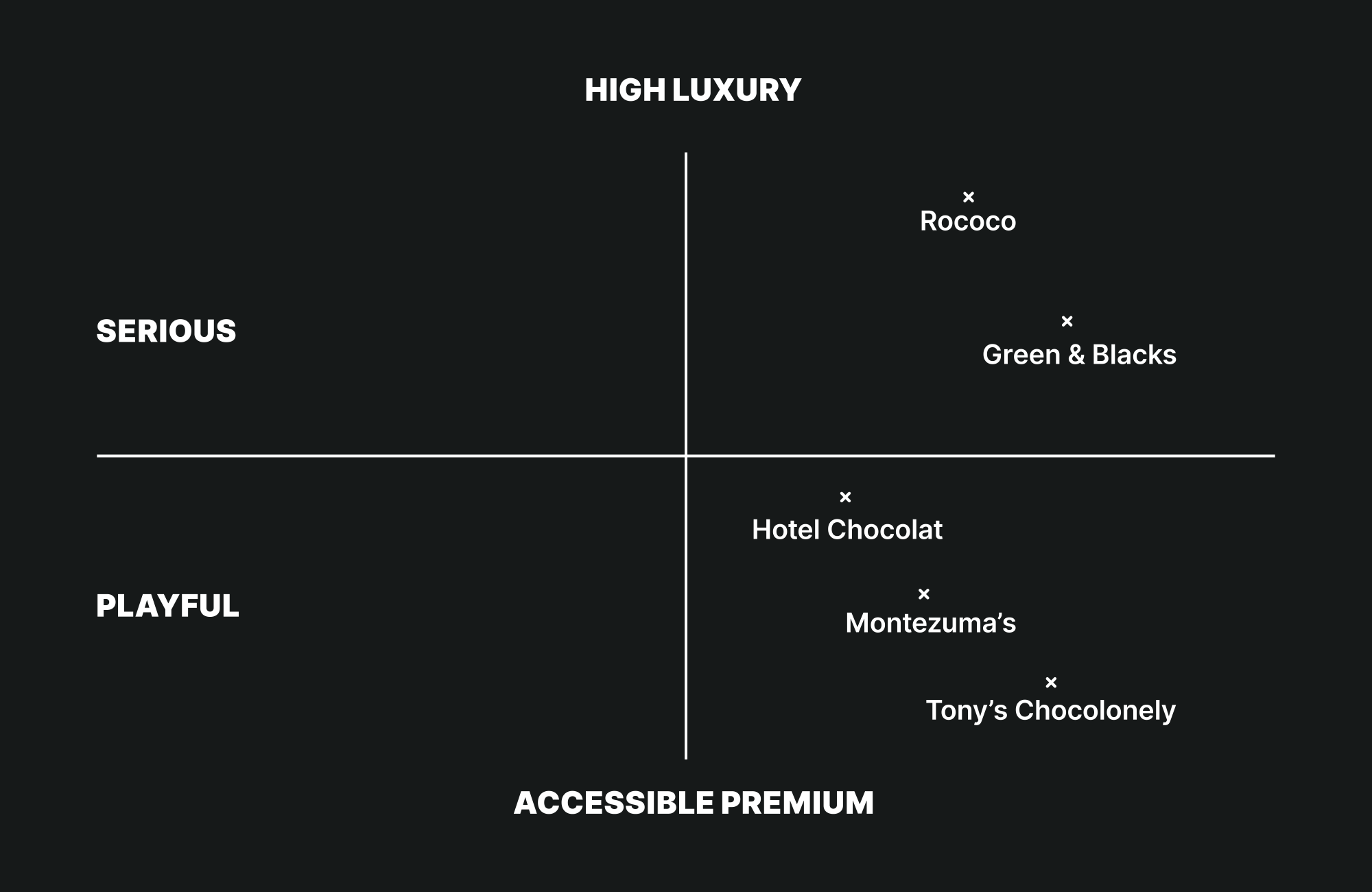
Hotel Chocolat is one of the strongest players in the target space, positioning itself as an affordable luxury brand that blends modern aesthetics with a clear ethical stance. Its clean typography, monochrome palette, and gift-focused packaging make it particularly appealing to 20-40 year olds who want something special but still accessible.
Tony’s Chocolonely occupies a very different position, using bold colour blocking, oversized typography, and an outspoken mission to promote a slave-free cocoa industry. Its loud, playful visual identity resonates strongly with ethically minded younger consumers who appreciate brands with a clear, disruptive personality.
Love Cocoa offers a more refined and design-conscious approach, targeting the gifting market with elegant patterns, stylish packaging and a strong emphasis on sustainability. Its letterbox-friendly products and premium positioning make it especially attractive to millennials and young professionals seeking thoughtful, well-designed gifts. Montezuma’s, meanwhile, sits between indie quirkiness and premium quality, using bright colours, adventurous flavour combinations and ethical messaging to appeal to consumers who value both creativity and responsible sourcing.
Green & Black’s represents the more serious, organic end of the premium chocolate category, using darker palettes, gold accents and a flavour-first narrative to attract consumers who prioritise purity, quality and heritage over playfulness.
At the luxury extreme, Rococo Chocolates offers an artisanal, heritage-driven experience with intricate, illustrative packaging and high-end gift sets. Its boutique positioning appeals to older, affluent consumers but also to aspirational younger buyers seeking something indulgent and distinctive.
Across these competitors, several clear themes emerge: ethical sourcing is now expected in the premium chocolate space, memorable packaging systems play a critical role in shelf impact, and gifting-oriented storytelling is essential for attracting 20-40 year olds.
Visual Direction
Now that I have a clearly defined strategy, I can begin to develop my visual direction for Coco Loco with key considerations in mind to ensure I successfully appeal to my target market.
I originally had the idea to utilise stylistic elements closely related to the Day of the Dead holiday as it is widely associated with bright, vibrant colours and beautiful patterns. I chewed on the idea and realised it's quite insensitive to design a brand based on a significant cultural holiday purely to exploit it's visual appeal.
After careful research, I have found that there are many brands that successfully use the style in mind by collaborating with Mexican artists and designers to create culturally respectful work that celebrates the holiday and supports it, rather than using it's identity to make sales.
With this in mind, I refocused my attention to find a style that was less culturally influenced and more defined by the environments and patterns that naturally occur around the world.
Visual Direction
Moodboard
My mood-board is jam packed with packaging examples that convey a sense of sustainability and ethical business practice. I've included packaging examples from brand such as Green & Blacks, Tony's Chocoloney, and more.
The most common themes are environmental imagery such as plants, leaves, and cocoa beans. Now I think about it, these are all pretty generic ideas. However, they are effective when it comes to drawing the attention of socially conscious consumers.
Visual Direction
Creative Direction
Tony’s Chocolonely is a key example of a brand that refuses to fit the mould, both metaphorically and literally, as seen in its bars divided into uneven, deliberately “wonky” pieces. The brand uses symbolism throughout its design to reinforce the values it stands for, with the uneven bar structure representing the unequal distribution of wealth within the global cocoa industry. Tony’s core USP is its commitment to producing chocolate that is entirely free from exploitation and modern slavery, positioning itself as an activist brand within the confectionery sector.
A widely cited investigation commissioned by the U.S. Department of Labor found that Côte d’Ivoire and Ghana — which together produce nearly 60% of the world’s cocoa supply — face extensive labour issues. Research conducted by NORC at the University of Chicago during the 2018/19 season reported that approximately 1.48 million children were engaged in hazardous work on cocoa farms, including using sharp tools, handling agricultural chemicals, and carrying heavy loads. This represents around 43% of children living in agricultural households in cocoa-producing regions. (Source: Wikipedia)
Against this backdrop, Tony’s deliberately uses design as activism: its bold colour blocking, oversized typography, and uneven chocolate bars work together to signal that the brand is challenging industry norms. The intention is not simply to broadcast its ethical credentials but to stand out on the shelf, spark curiosity, and persuade consumers to participate in a mission for systemic change.
As a result, Tony’s successfully appeals to a broad target audience. It attracts ethically minded consumers who care about global inequality, while also drawing in younger buyers who are attracted to novelty, bold visual identity, and a sense of cultural relevance. Tony’s manages to merge activism with marketability, making its design both a storytelling tool and a commercial driver.
The creative direction I want to take is along the same lines. Promoting a brand that supports in incredible cause in a way that speaks to the every day consumer without sounding like every other brand. It's quite simple, rather than telling everyone Cocoa Loco helps the world, help the world and let everyone see it for themselves. This is of course all hypothetical, but that's the idea behind the brand.
Logo
A while back I bought this book from a current, successful logo designer based in Minneapolis, USA. It's called "Logos That Last" and it's essentially an insight into how to make a successful logo/brand identity that stands the test of time and the process of doing so. As part of my project I'd like to try Allan Peters' process to create a successful mark as his work is nothing short of incredible. Below is his process, step by step.

Logo
Brand Nouns
Based on everything I've looked at so far, I really like the idea of a logo that visually represents a new lease of life, renewal, and growth. As if Cocoa Loco is on a mission to leave the world in a better place than what it was found. With this in mind, here are my list of 15 brand nouns:
Seed
Sprout
Bloom
Harvest
Renewal
Grow
Root
Flourish
Origin
Life
Rise
Future
Cycle
Energy
Flow
Logo
Sketch Phase
After deciding my brand nouns, I printed them off in a list and stuck them across multiple pages in my sketchbook so I could have them in front of me throughout the sketch phase. This meant it would be way easier to stay on track and avoid losing focus of the subject matter. I came up with multiple concepts and variations of a couple and decided on two marks which really stood out to me, though they needed some refinement. I've highlighted these by drawing an absurd amount of arrows around them.


Logo
Vectors and Exploration
This part was super fun. It's actually sparked a greater interest in logo design for me because I typically love the idea, but fail to properly enjoy the whole process. I normally find myself being super uncreative and resent the final product. This was the complete opposite. Perhaps it was the new process that really helped, who knows. Whatever it was, it was fun!

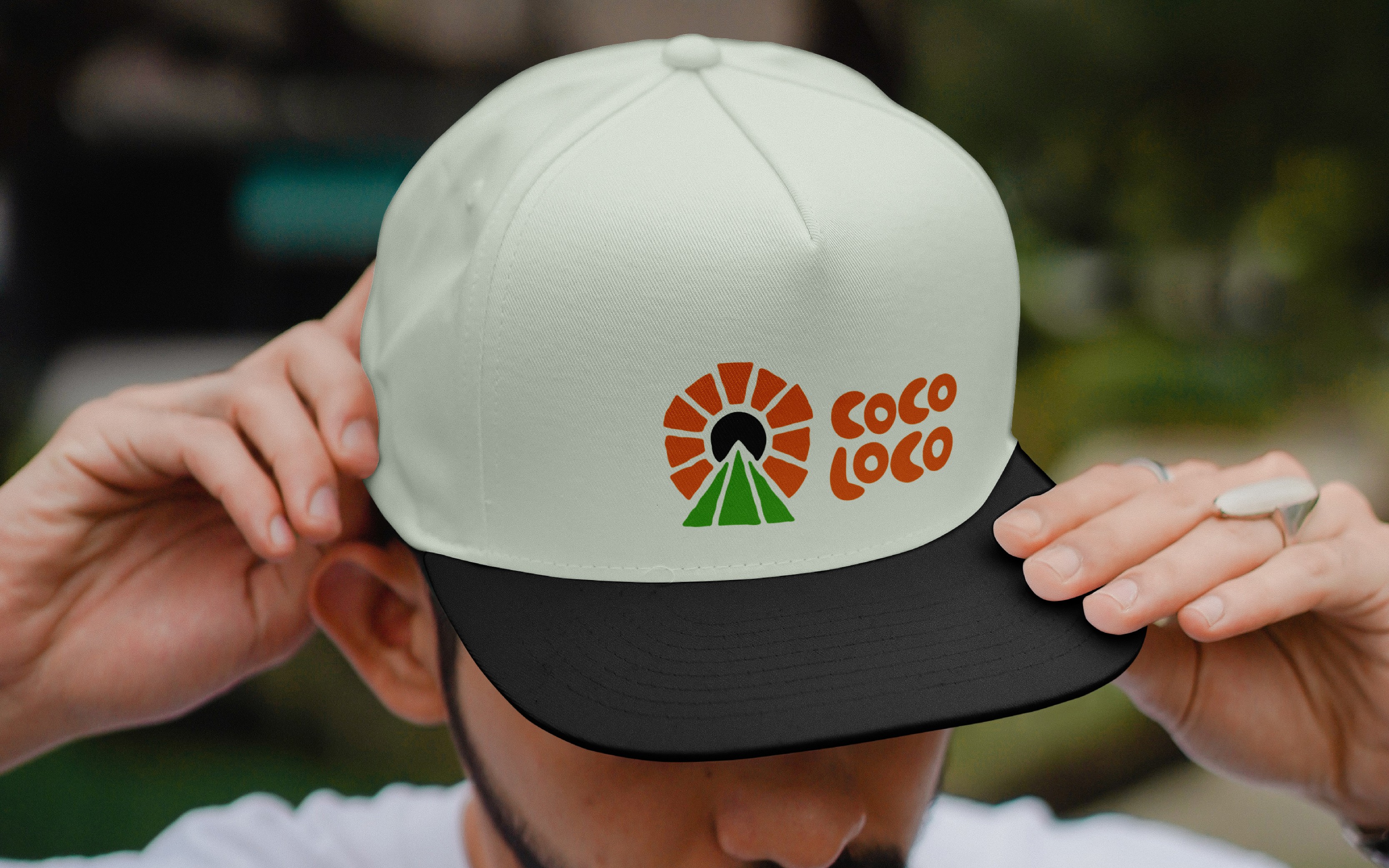
The sunrise sketch symbolises excitement and joy as it visually resembles a rising sun over what can be seen as a mountain, fields, or even the top half of a cacao pod. I love this logo as it has a story behind it. The original idea was simply the sun rising over a field to represent harvest and the tropical countries cocoa is typically grown in. After developing this into a logo which felt quite corporate, I used the Distort > Transform > Roughen tool to give it a more rustic aesthetic. To tone this down a little and make it more approachable, I simple used the Path > Smooth tool to fine tune the rough edges into a more hand crafted, authentic feel.
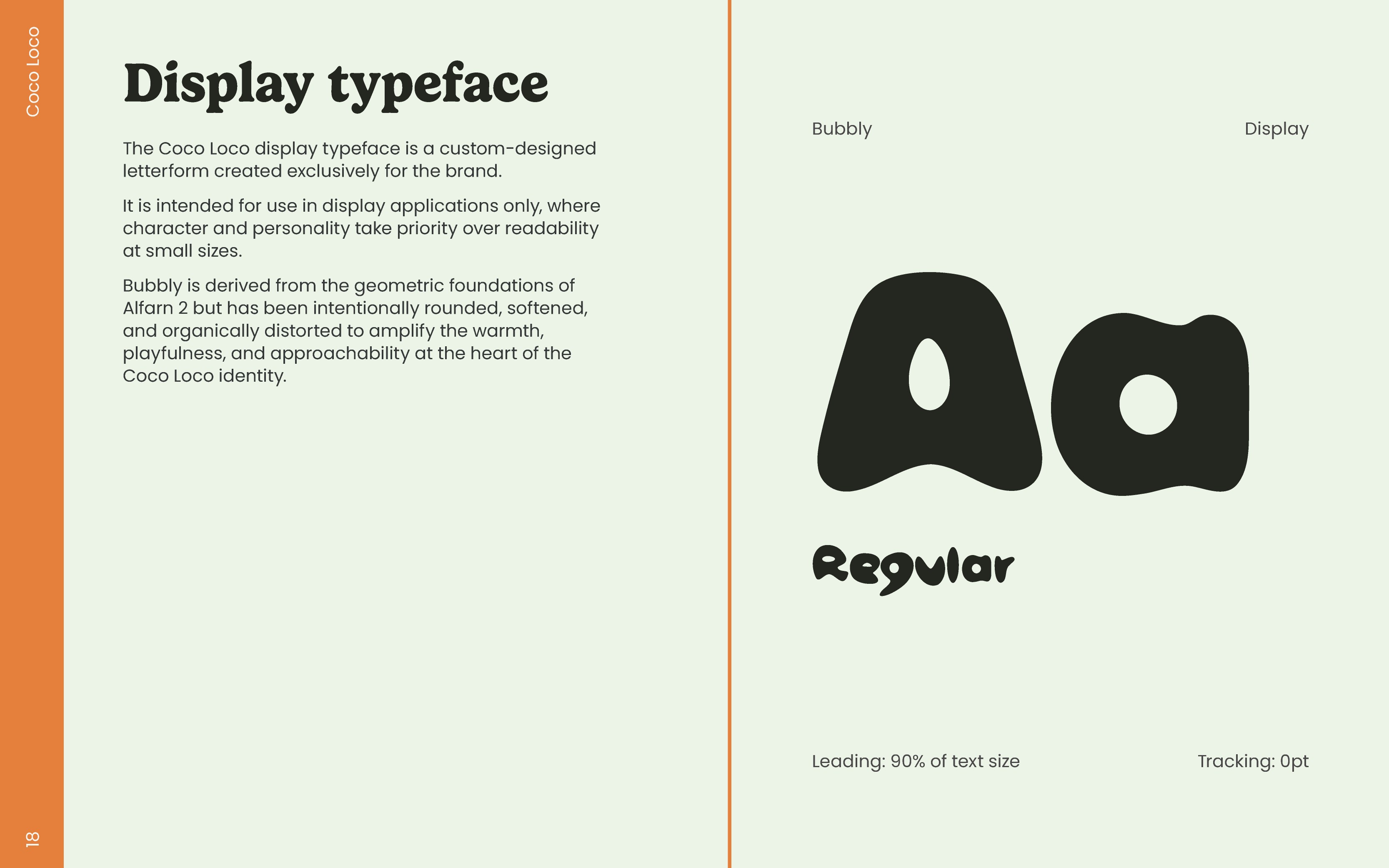
For the word-mark, it was a similar story. I chose a bold, chunky font (Alfarn 2 in this case) and applied the same effects. I had to make some tweaks to the counters of each letter, but after some subtle tweaks I had a word-mark that makes you want to say coco-loco in a funny way. Most importantly, it works well with the logo-mark.
I feel like this perfectly communicates the intended themes of ethical sustainability, exploration and travel. It feels human, organic, and most importantly it feels packed with personality to really appeal to the intended target market. I'm super happy with the outcome.
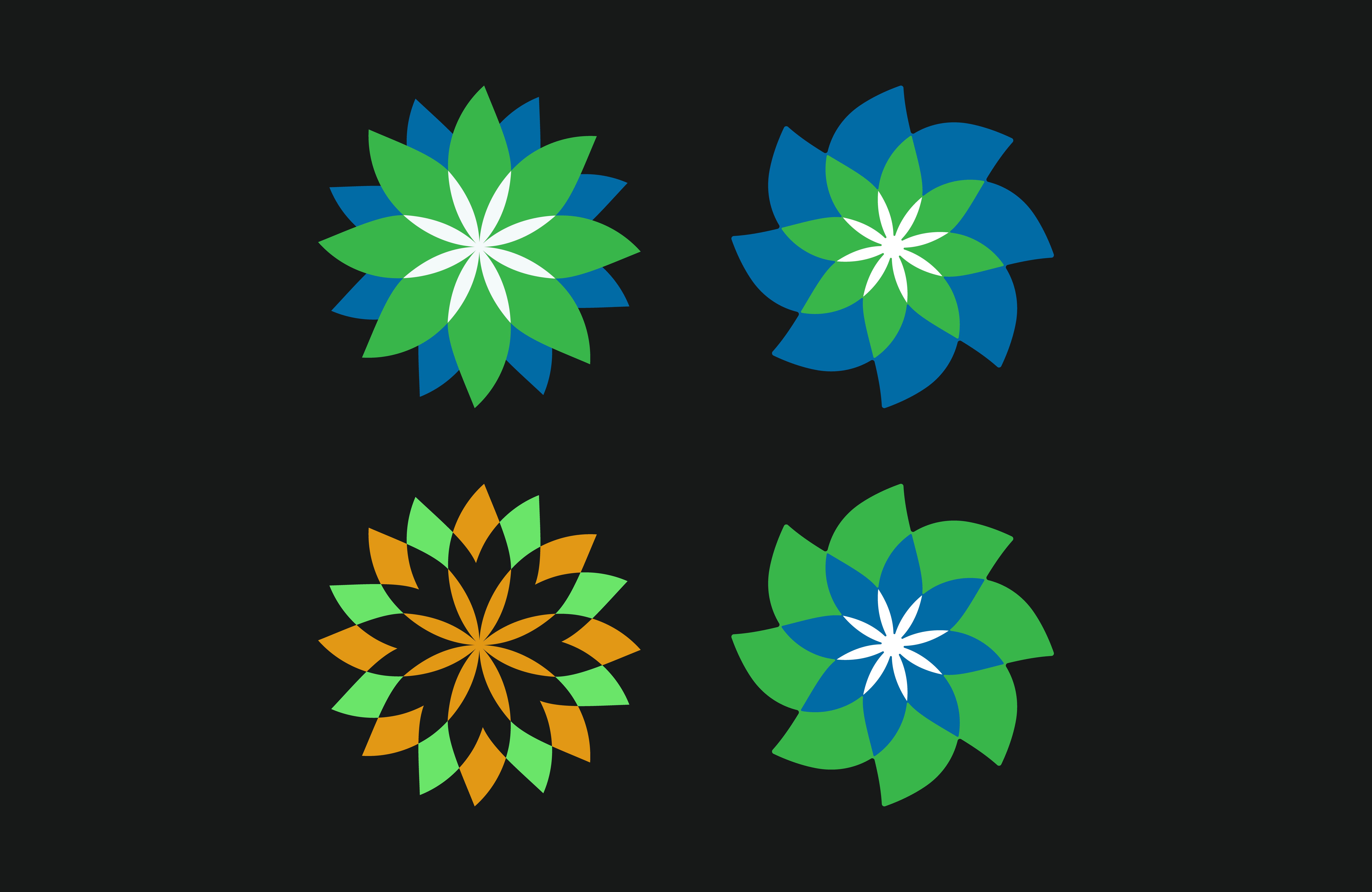
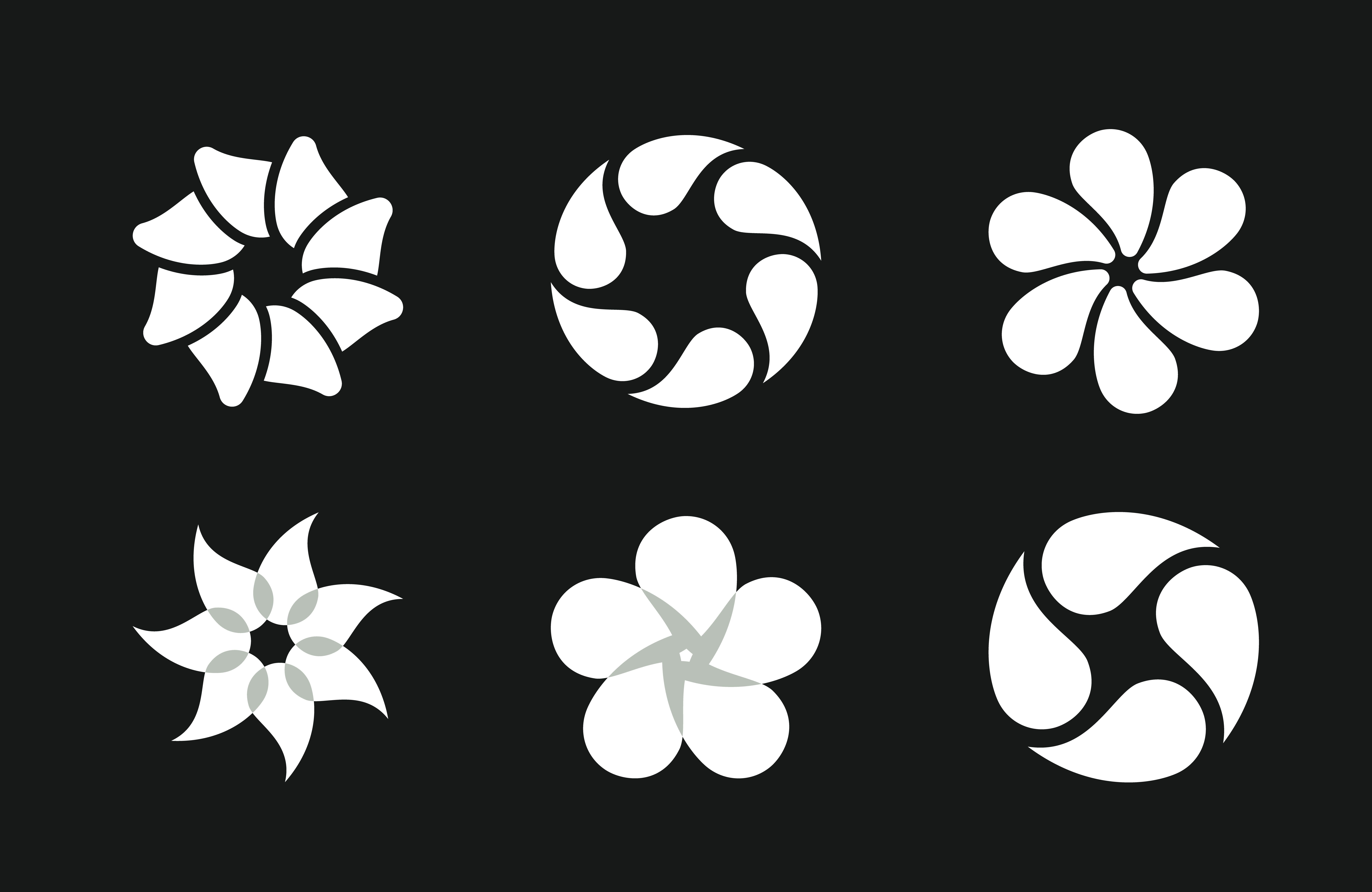
As for my other concepts, there was quite a few I really enjoyed - particularly the flower concept. There was a few issues though with the main one being it looked far too similar to the BP logo. This was completely unintentional and then it hit me, and all of a sudden the idea was rendered useless. On the bright side, the logo didn't really fit in with what I was trying to communicate anyways. I also tried a few other concepts (the white marks) which were fun experiments, but none of them felt quite right. They were either too corporate, unsuitable for the target market, or just bad designs.

Another experiment I tried was the development of my own brand typeface to match that of the word-mark. This way it could be used for titles and headings in promotional material. I gave it a quick go but found it's really ineffective with quite a few letters and I didn't really have time to waste on something not required by the brief.


Brand Style
After designing my logo, I felt like the brand style was coming together. The next step was to look at typography, colours, patterns, and illustrations.
Brand Style
Secondary Type
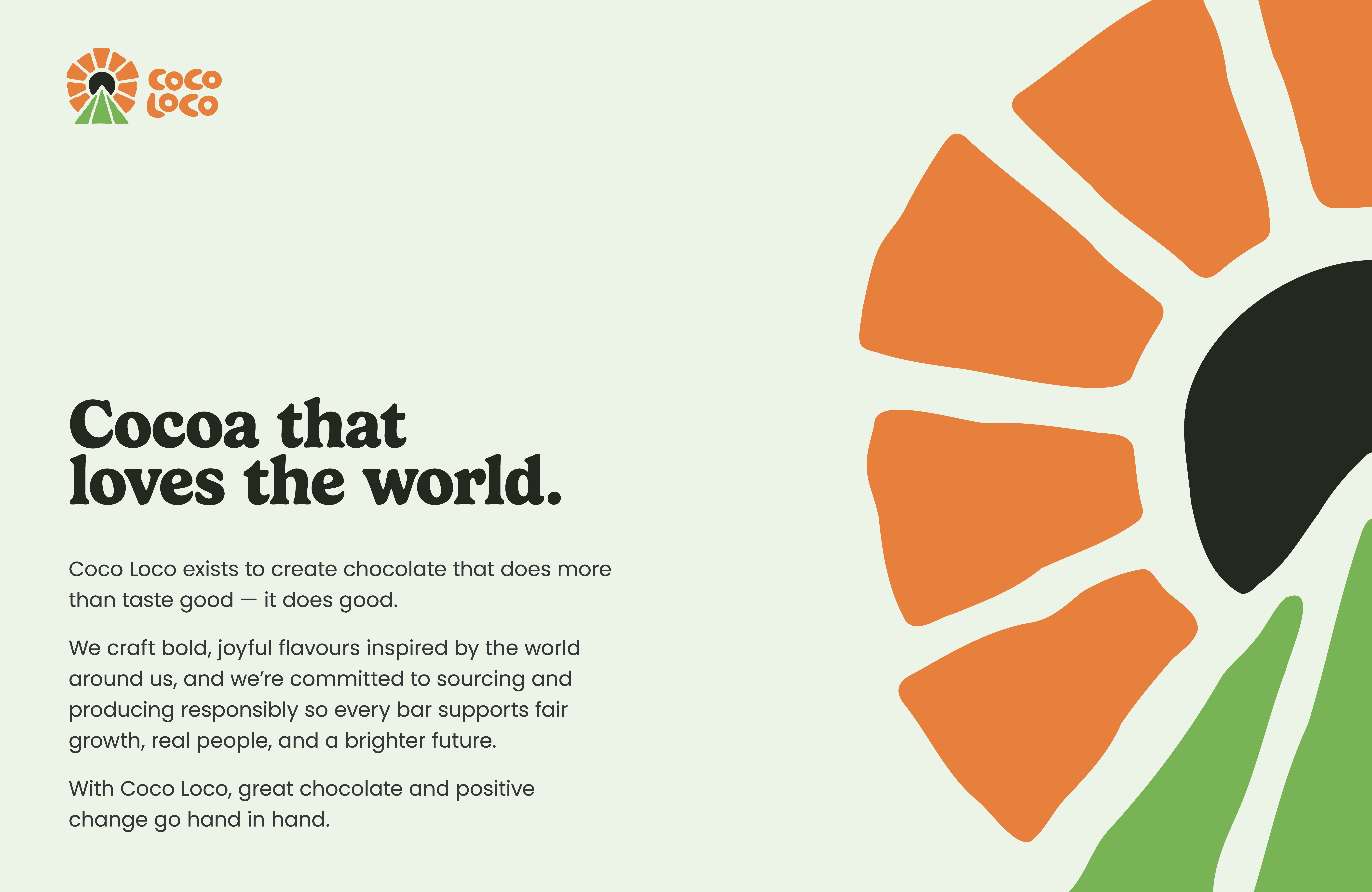
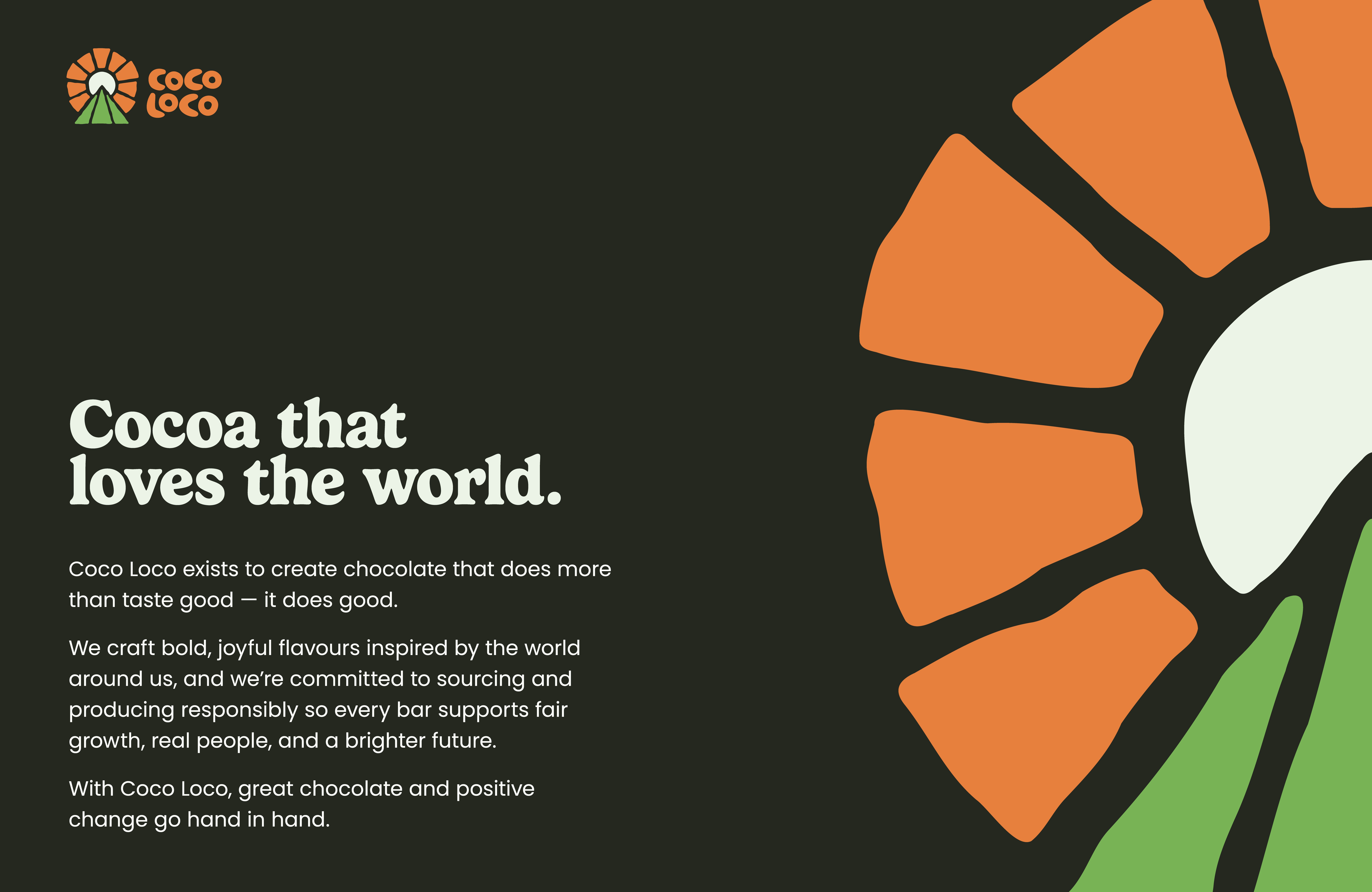
I new straight away that I wanted to use a bubbly, rounded serif font for my secondary type. Something like Cooper Black but more suitable for subtitles rather than just large headings.
I looked at a few options, but ultimately landed on Gelica Bold. It's the perfect mix of fun, professional, and legible. It matches the personality of the brand so far and functionally works when set as a subheading. It's not quite body copy, so a third typeface is necessary to complete the rule of three. It's commonly suggested to never use more than three typefaces in one design/visual vocabulary.
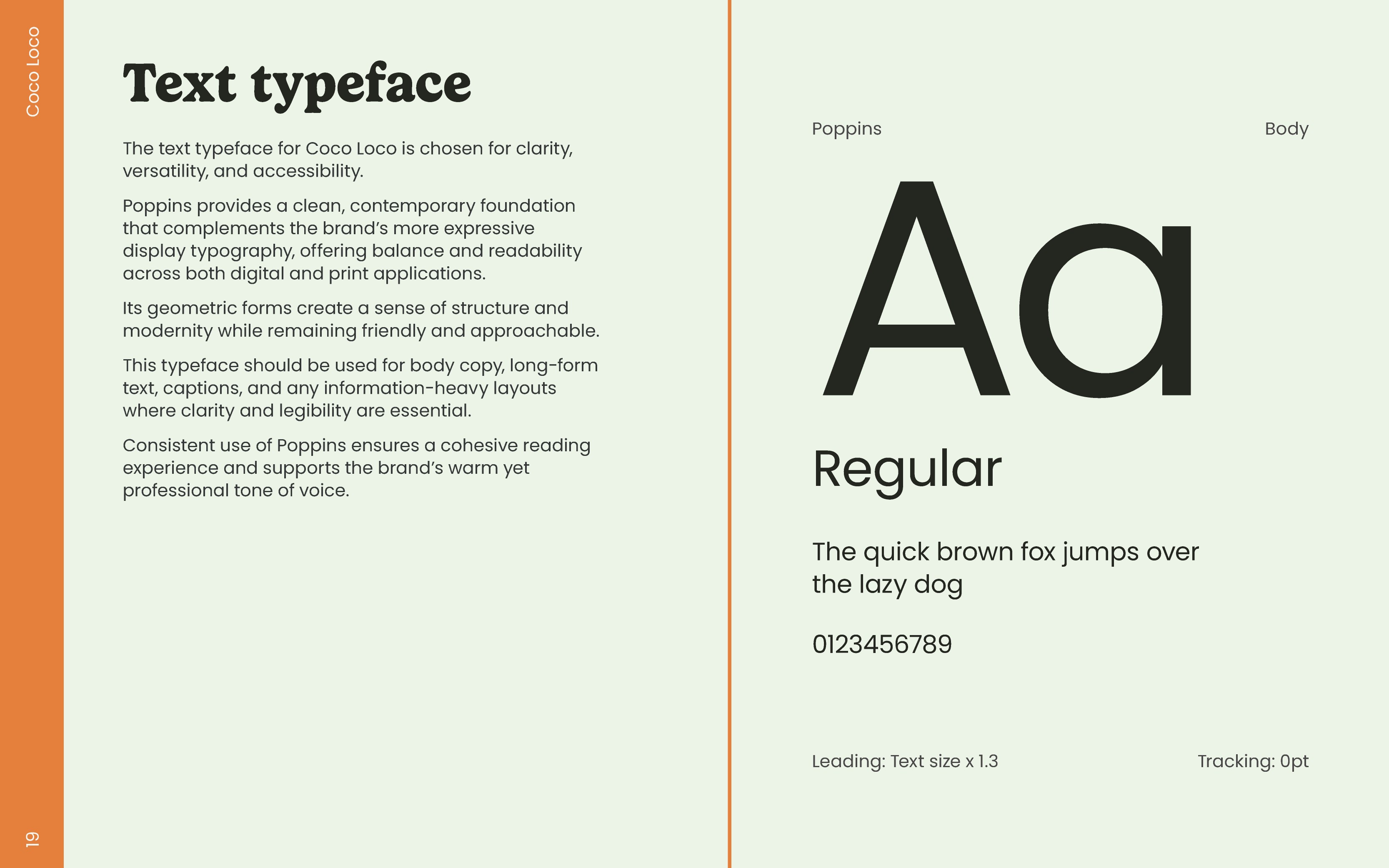
For the third typeface, I chose Poppins regular as it's a legible, yet not overly serious, sans-serif typeface that's suitable for longer bodies of text. I think Poppins is an ideal choice as it doesn't have a corporate tone like Arial, Helvetica, or Montserrat, but it does still convey professionalism whilst enriching the personality of the brand.
Brand Style
Colour Palette
The colour palette was quite tricky, as always. Being colour blind makes this a painful process but I through a collaborative process with lecturers, classmates and those close to me I can essentially peer review my colour choices to make sure that I haven't made any fundamental errors.
I originally looked at a basic green/yellow palette for the logo but once I started building on the brand identity, I knew this wouldn't be easily stretched across various touch-points and use cases because they were two very saturated colours and there was nothing to link it to a more neutral colour which is vital for backgrounds and text.
I wanted to go for one saturated colour as according to Allan Peters, logos that last tend to use saturated colours because they simply stand out from others when placed amongst competitor products.
I didn't want to use yellow as it wasn't very pleasing across a dark and light background. I'm taking this into account because it means the logo can be flexible in digital formats where there is often choice between dark and light themes.
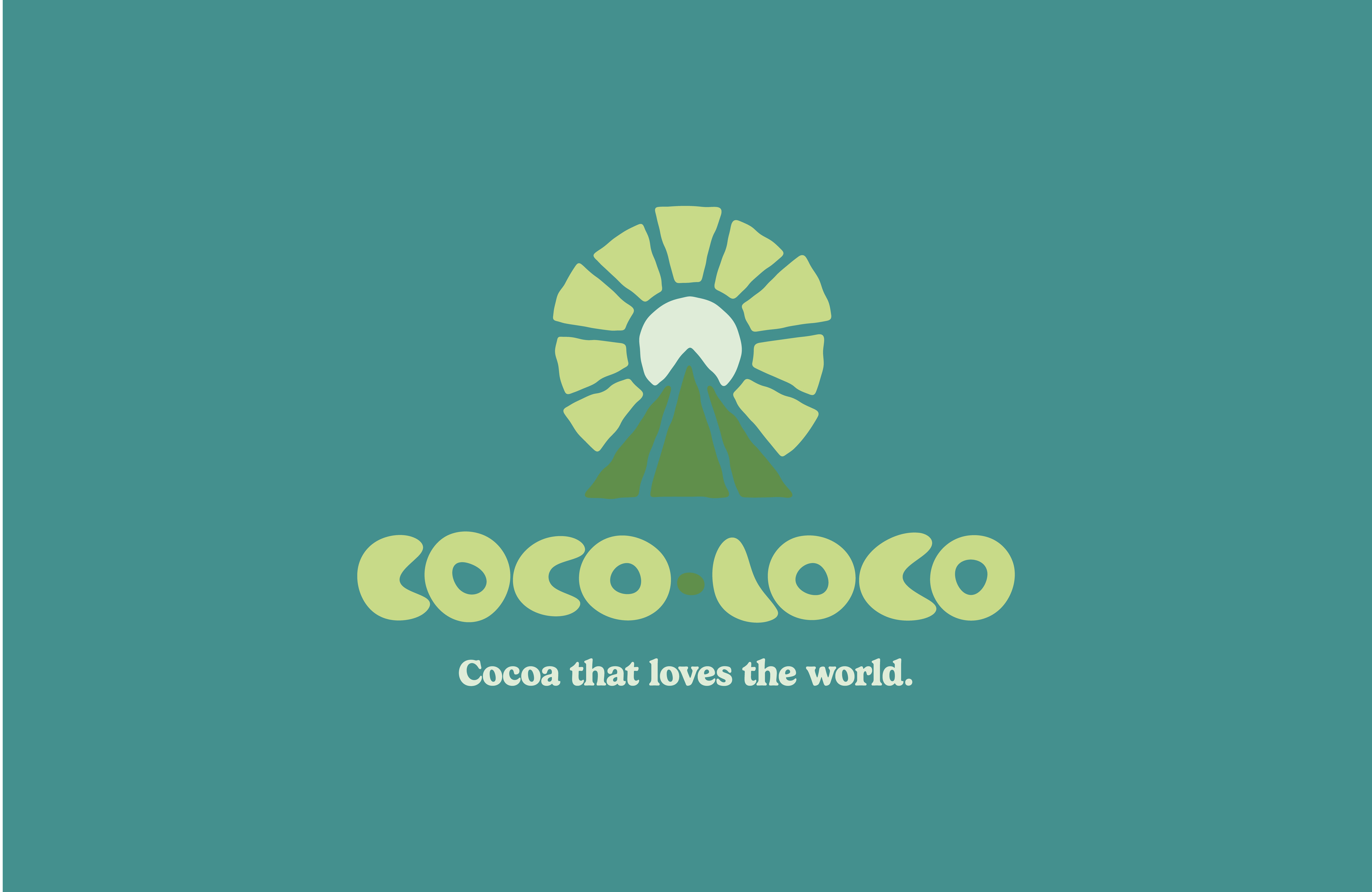
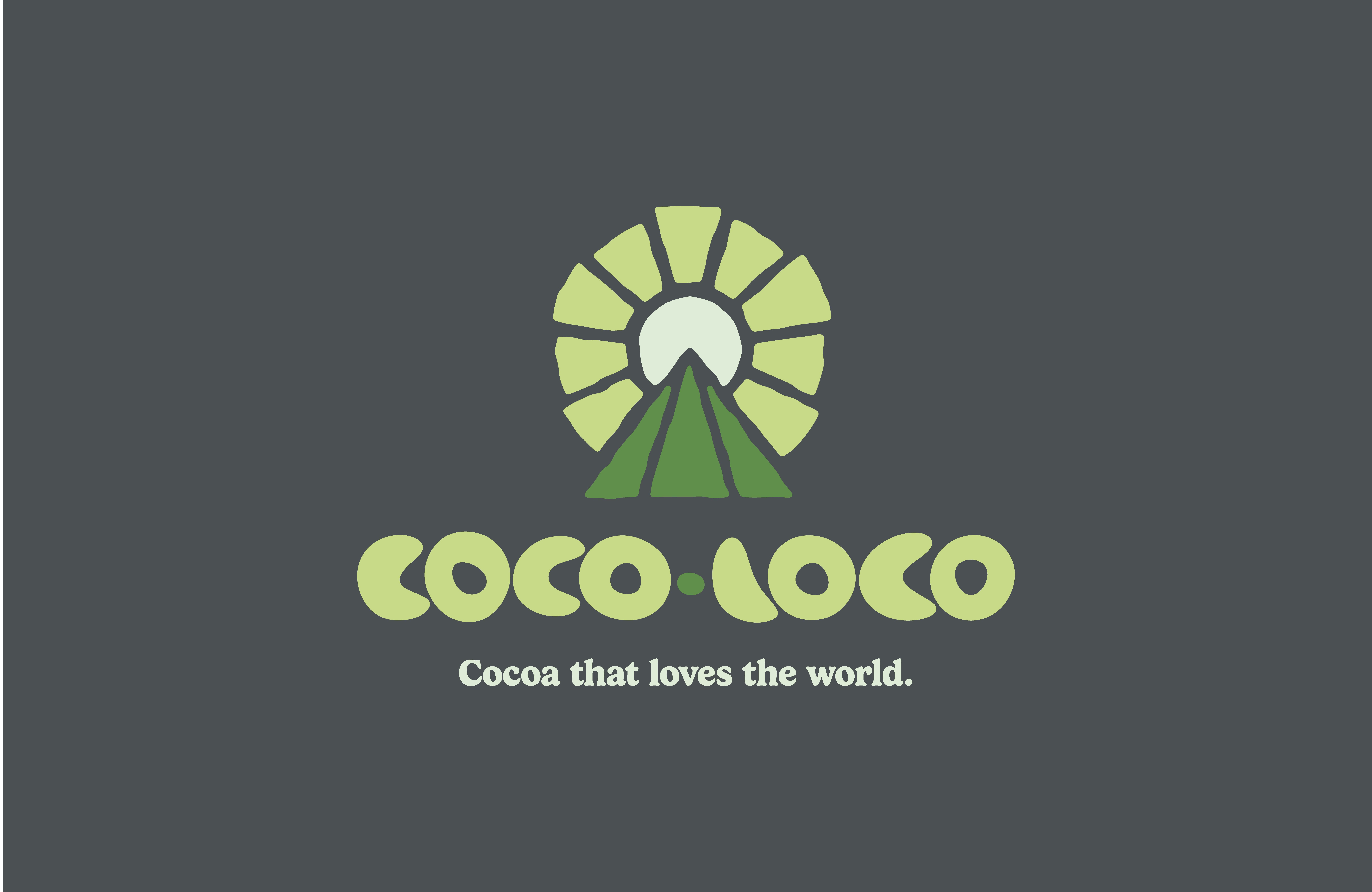
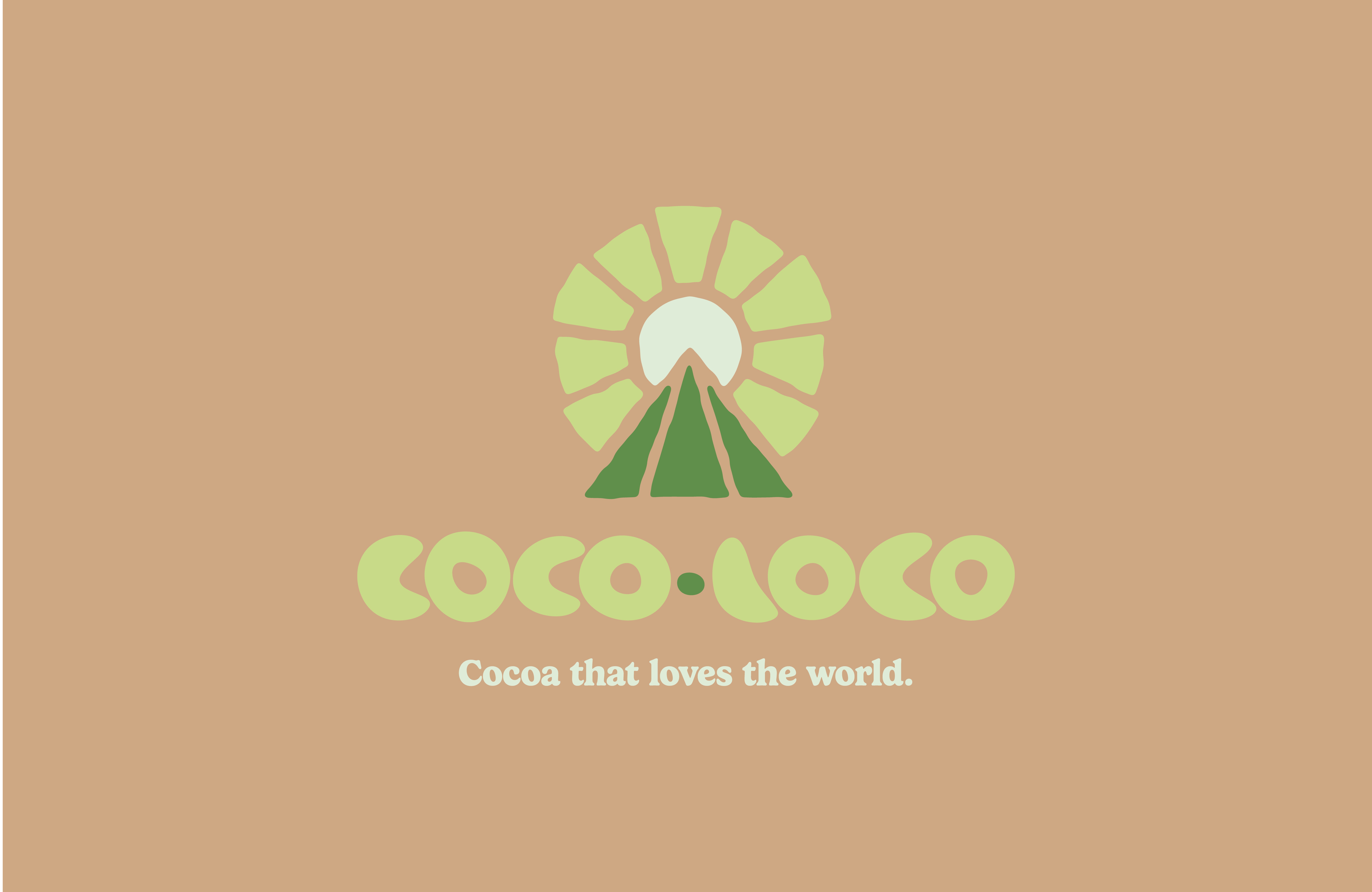
Orange was a perfect colour, but I had to find the right orange. Me and Sue spent a while looking through a variety of colours, and I landed on one in particular which is the colour you've been seeing so far. However, I had this alongside a green option instead which I shared with the class for feedback. I placed both on a variety of backgrounds and it was a unanimous vote for orange. Orange it was!
Please bear in mind, the logo seen below is prior to further refinements.
Brand Style
Brand Pattern
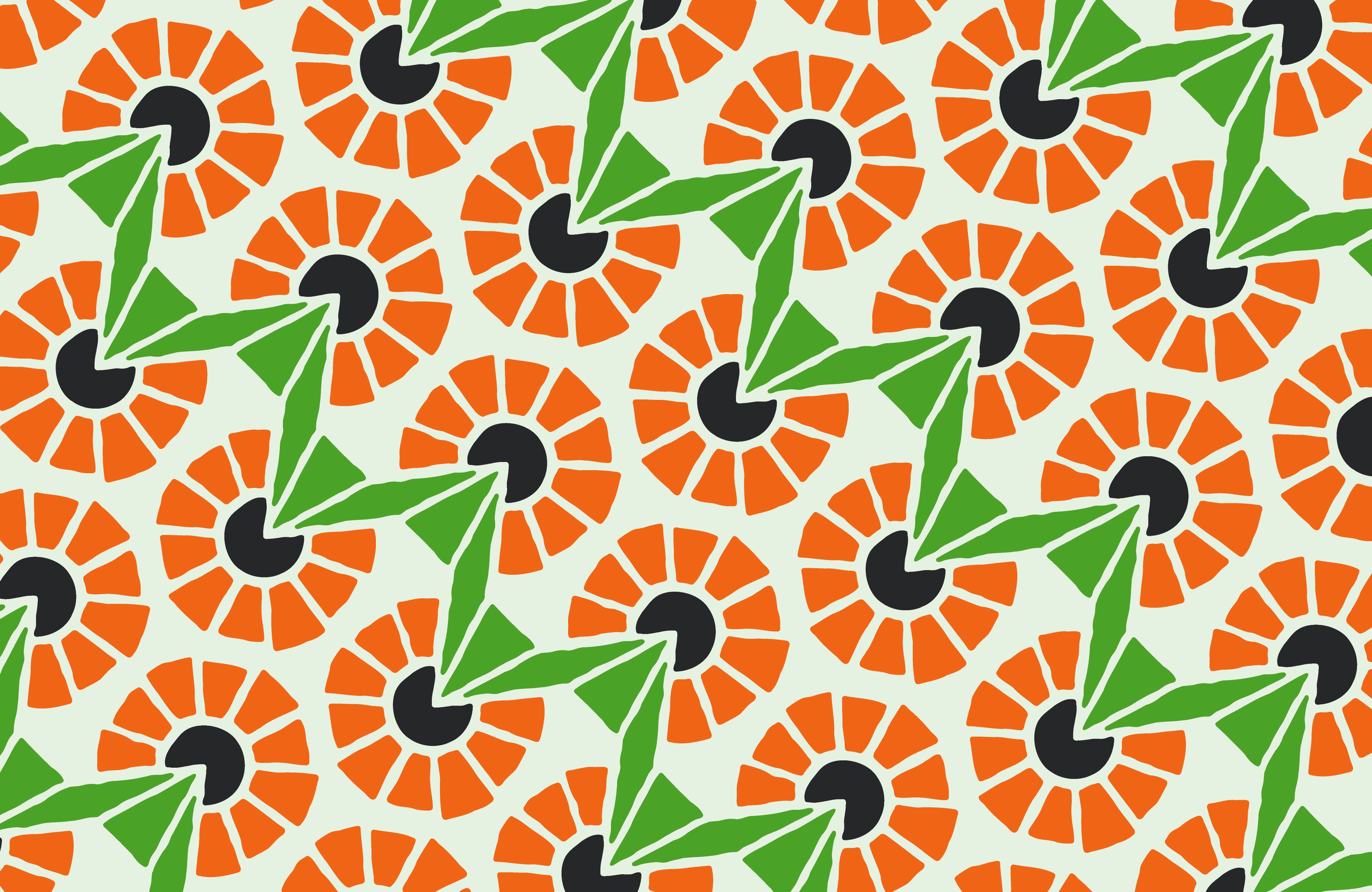
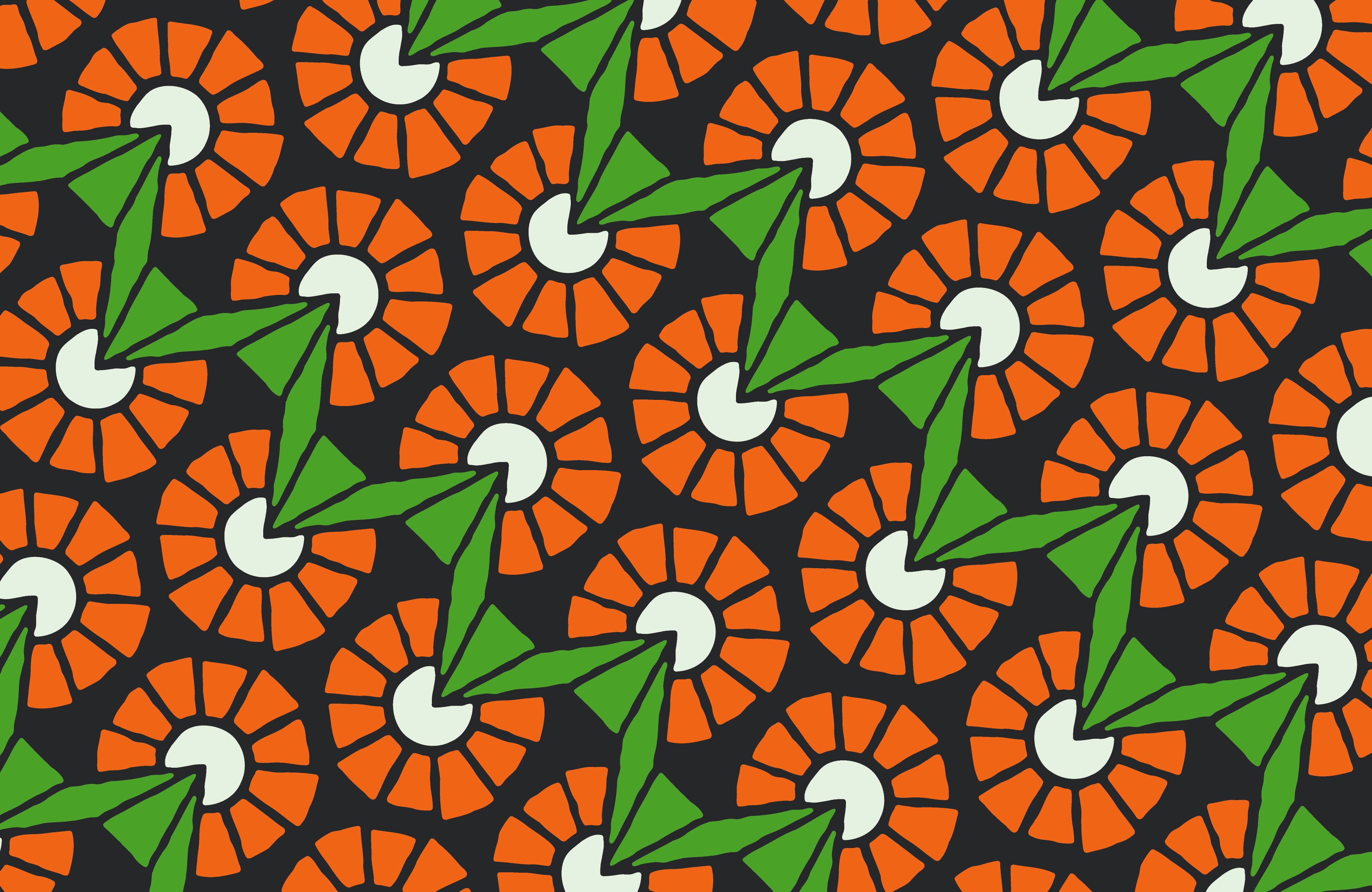
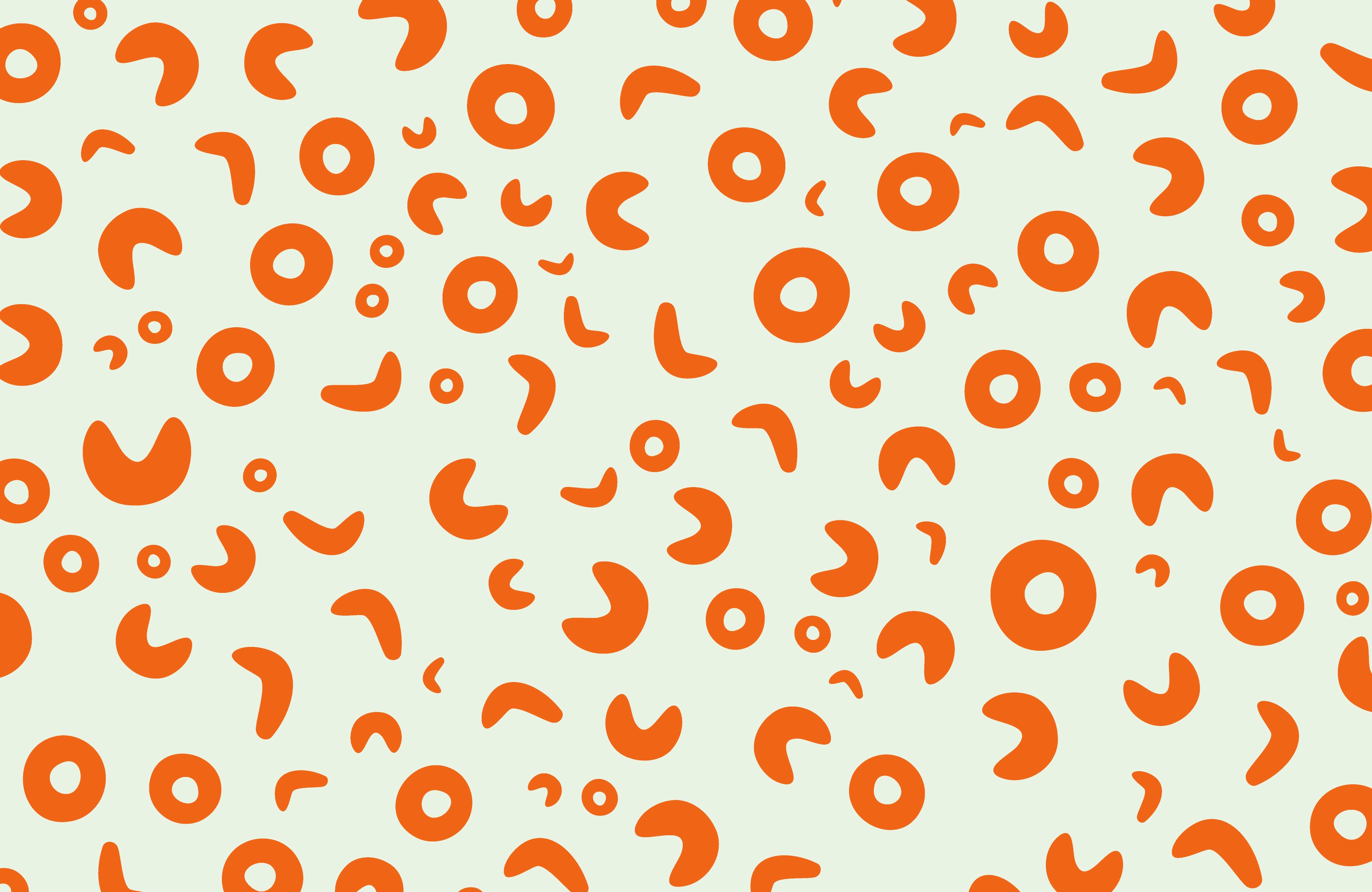
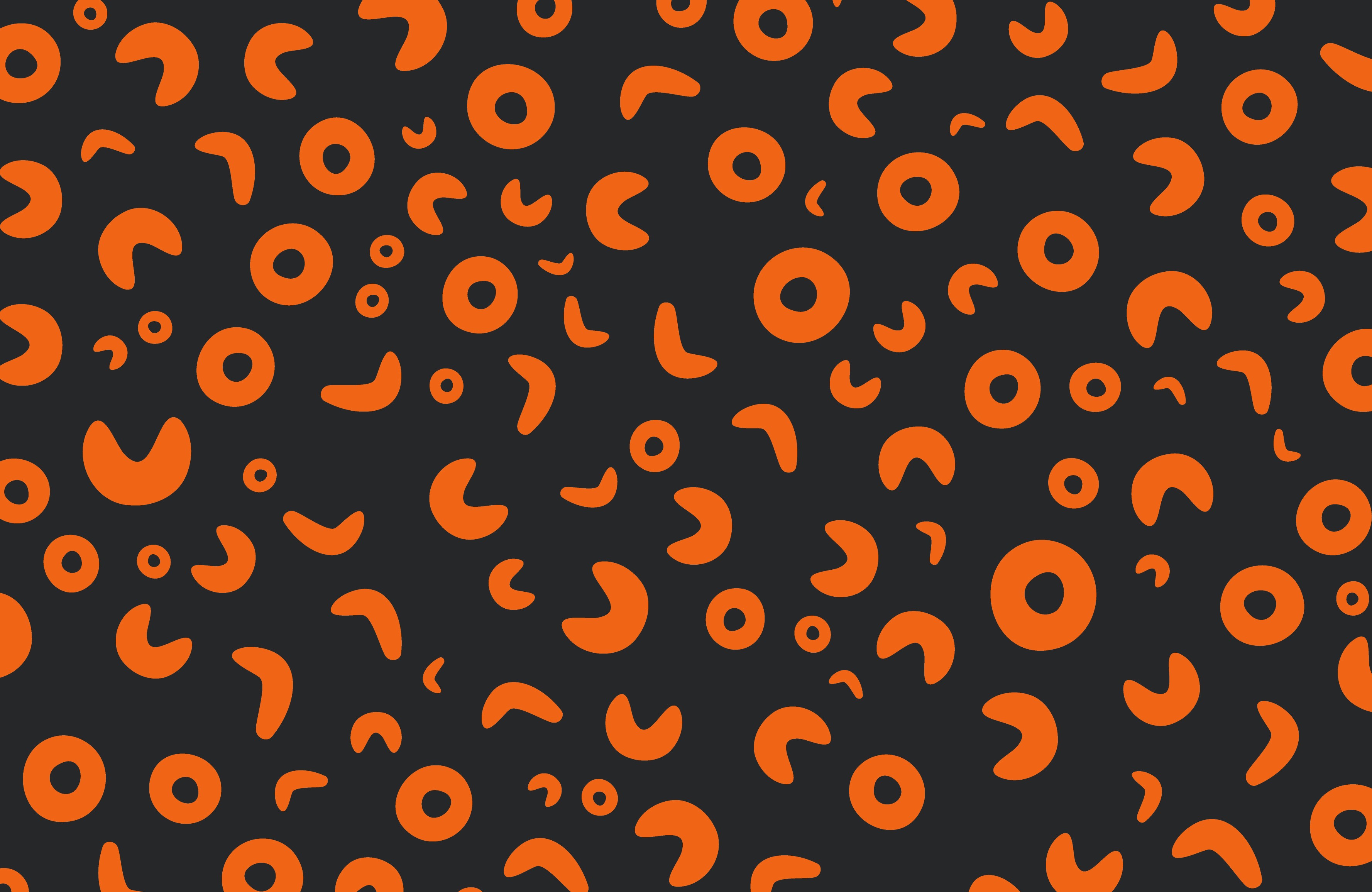
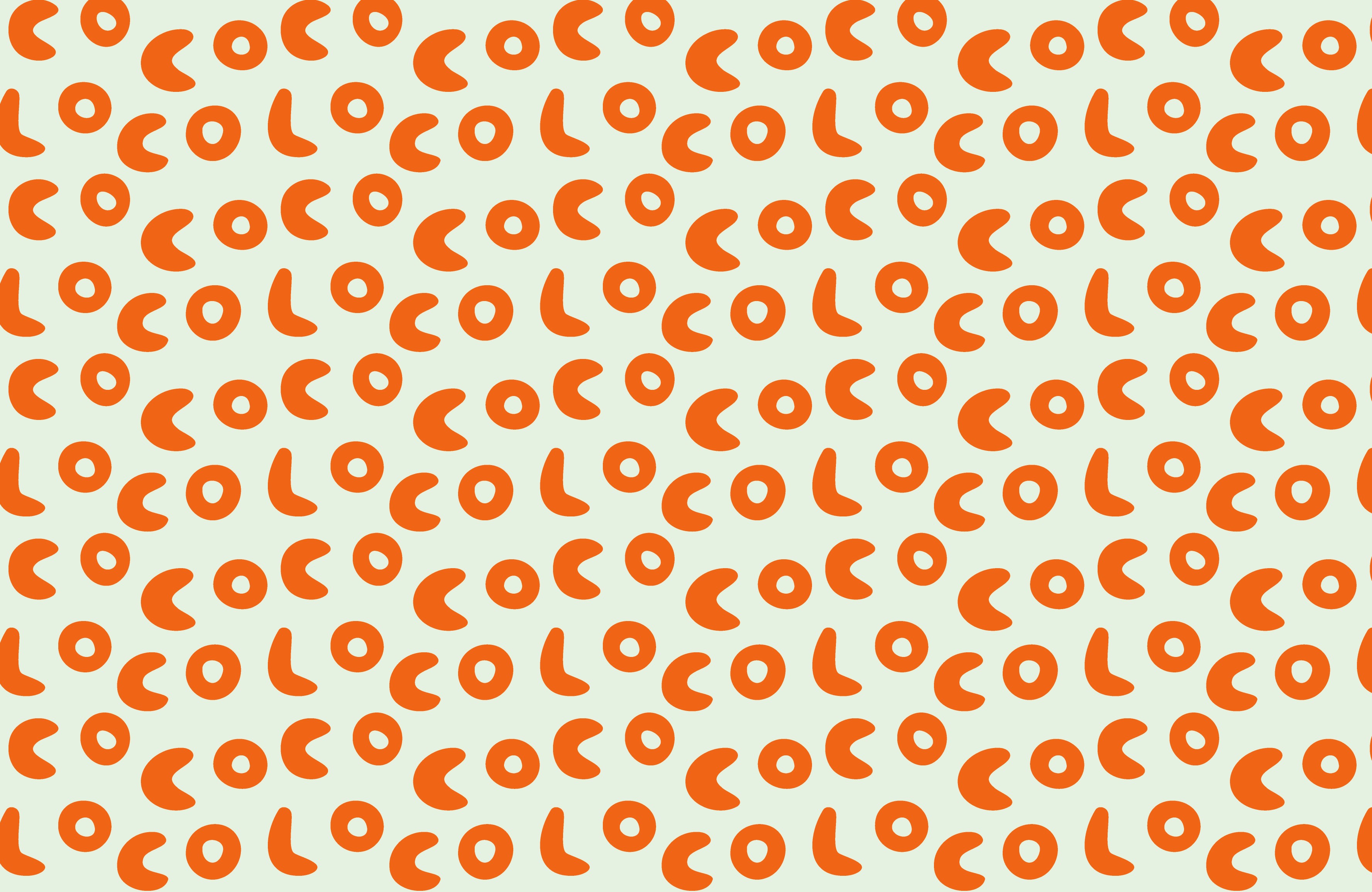
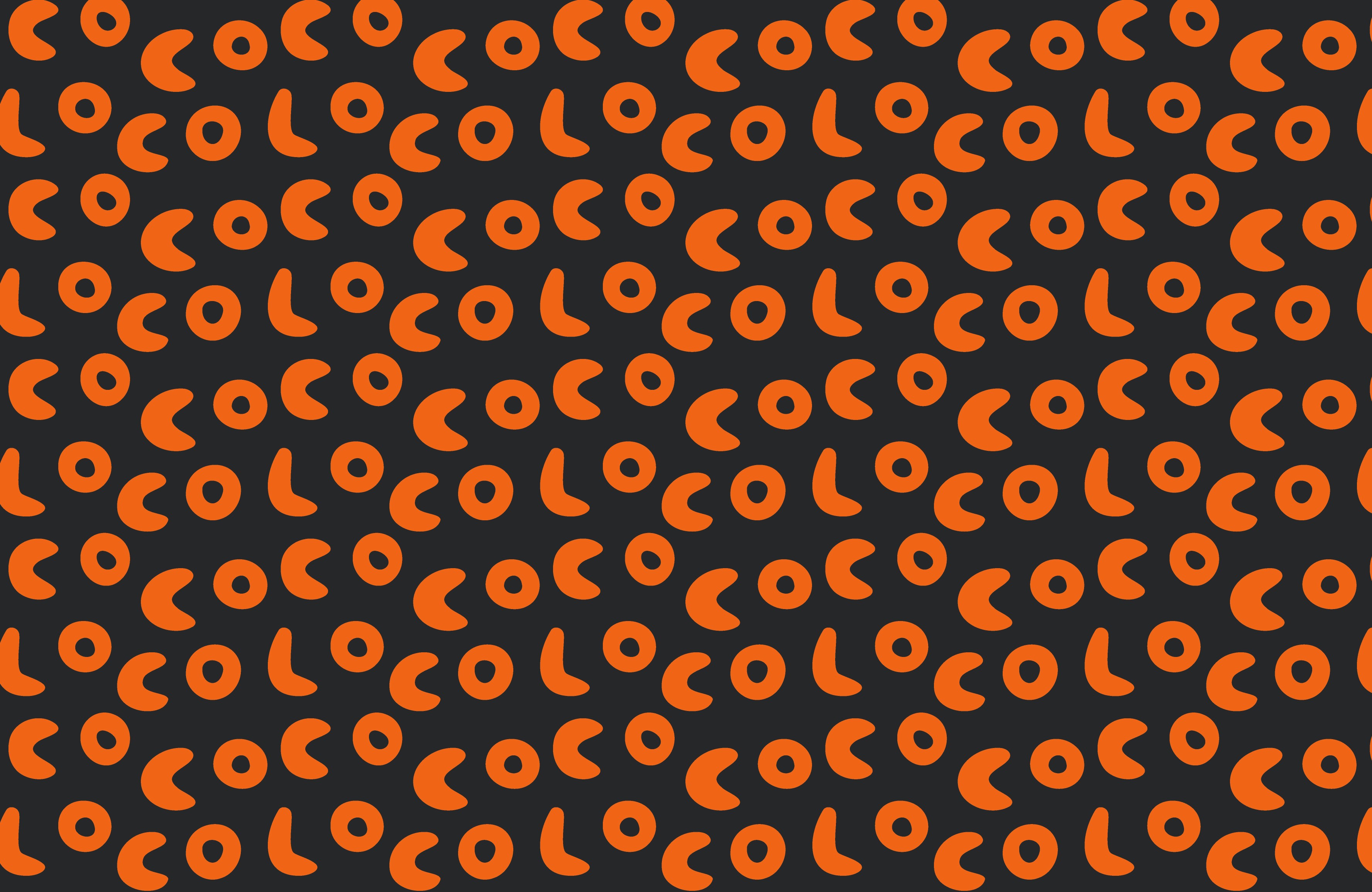
Brand patterns provide a way to add branding to many other touch-points that might feel a little overlooked if you were to just slap a logo on. For example, the top of a facebook page, product wrapping paper, or overlays for flyers/business cards. Brand patterns can be made through repeating the logo, or using the geometry of the logo to form a pattern that reminds of the logo to make it feel on brand.
Below are some experiments of patterns that could be used for Coco Loco, but the first one is my favourite.


Brand Style
Illustration Style
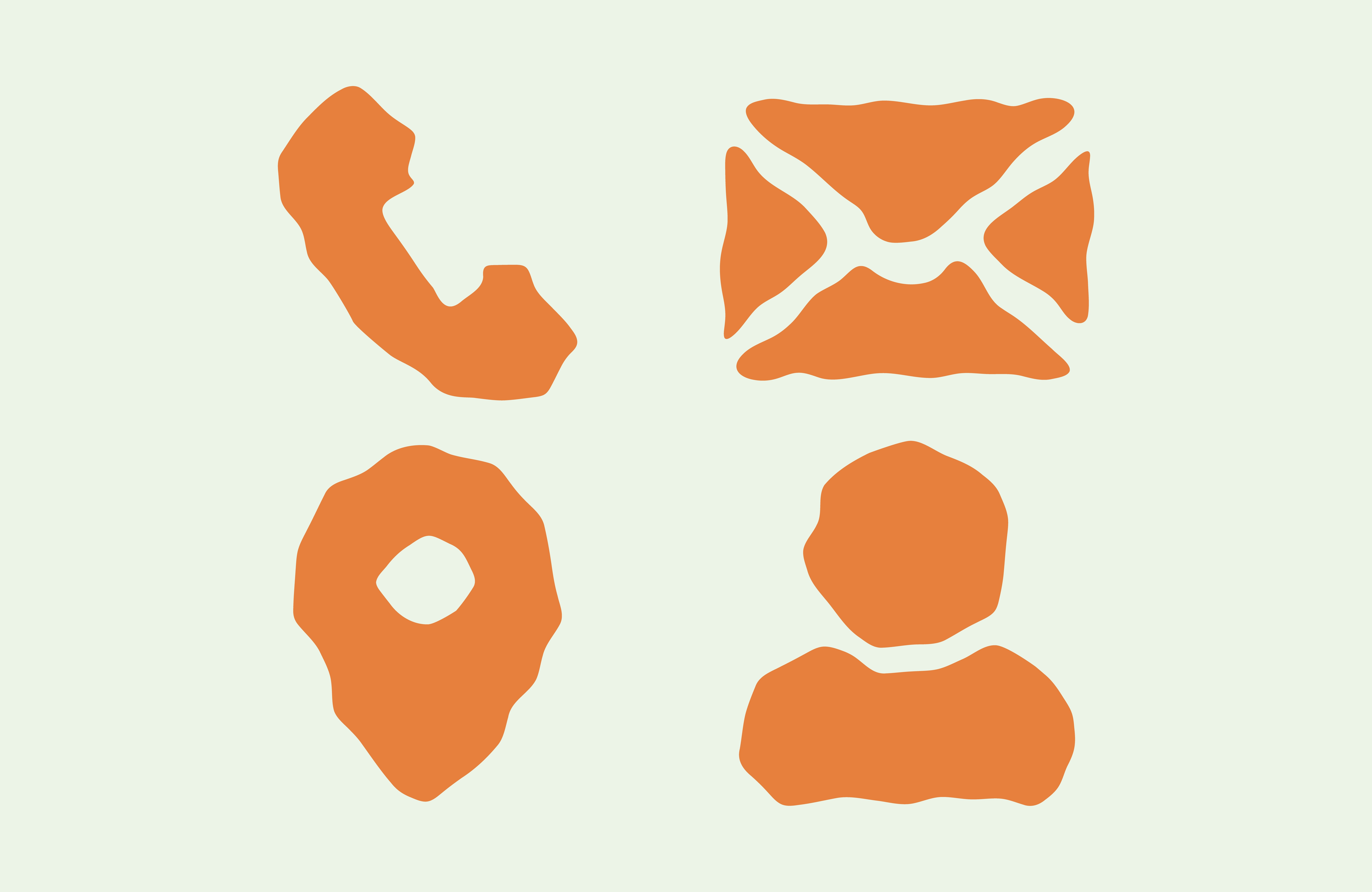
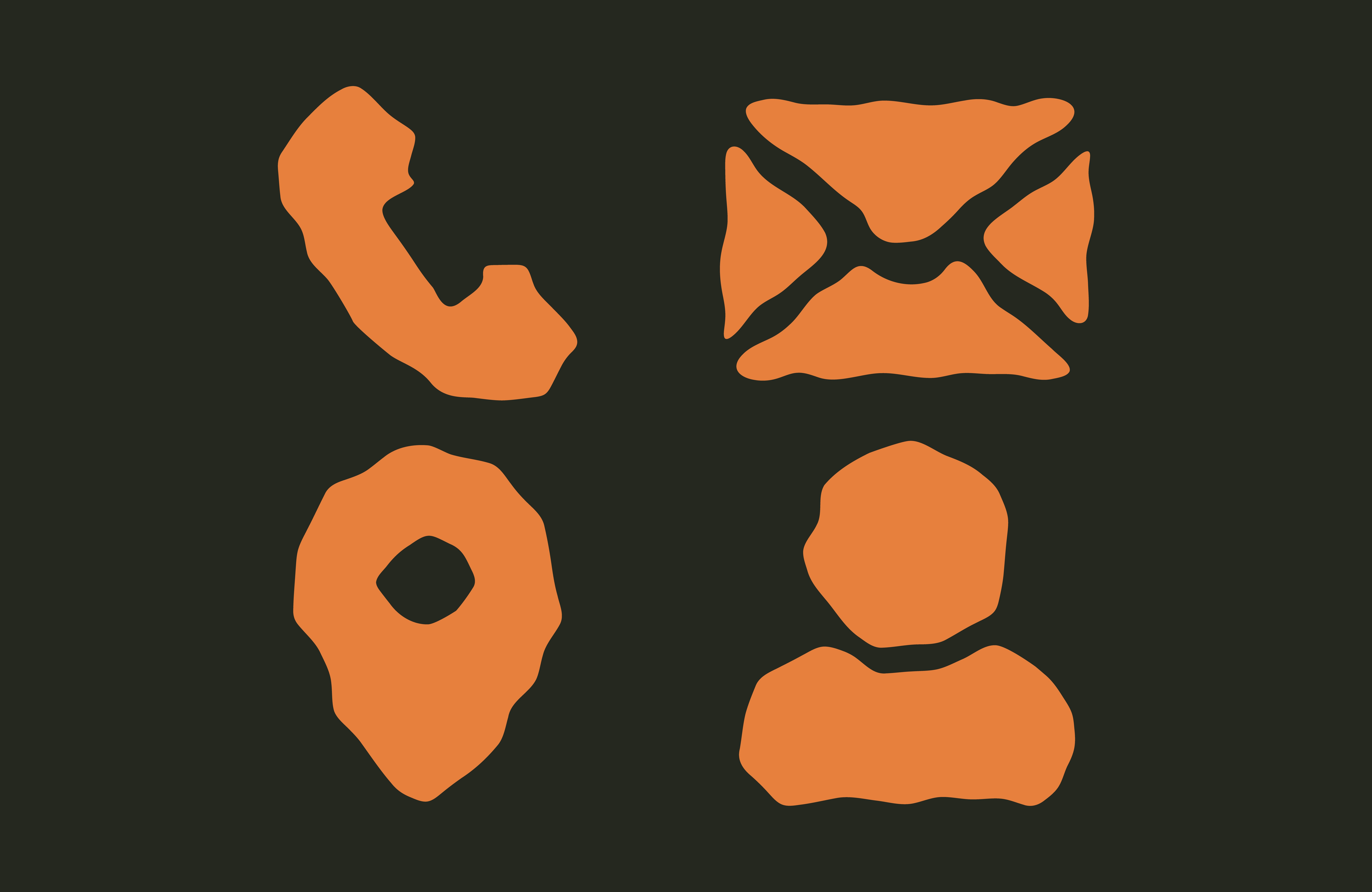
At first I tried making the illustration/icon style the same as the Coco Loco type but for similar reasons to the typeface idea from before, it wasn't effective. Instead, I took the same rustic look from the icon of the logo and applied it to a variety of icons to highlight the illustration style that Coco Loco should follow.


Style Guide
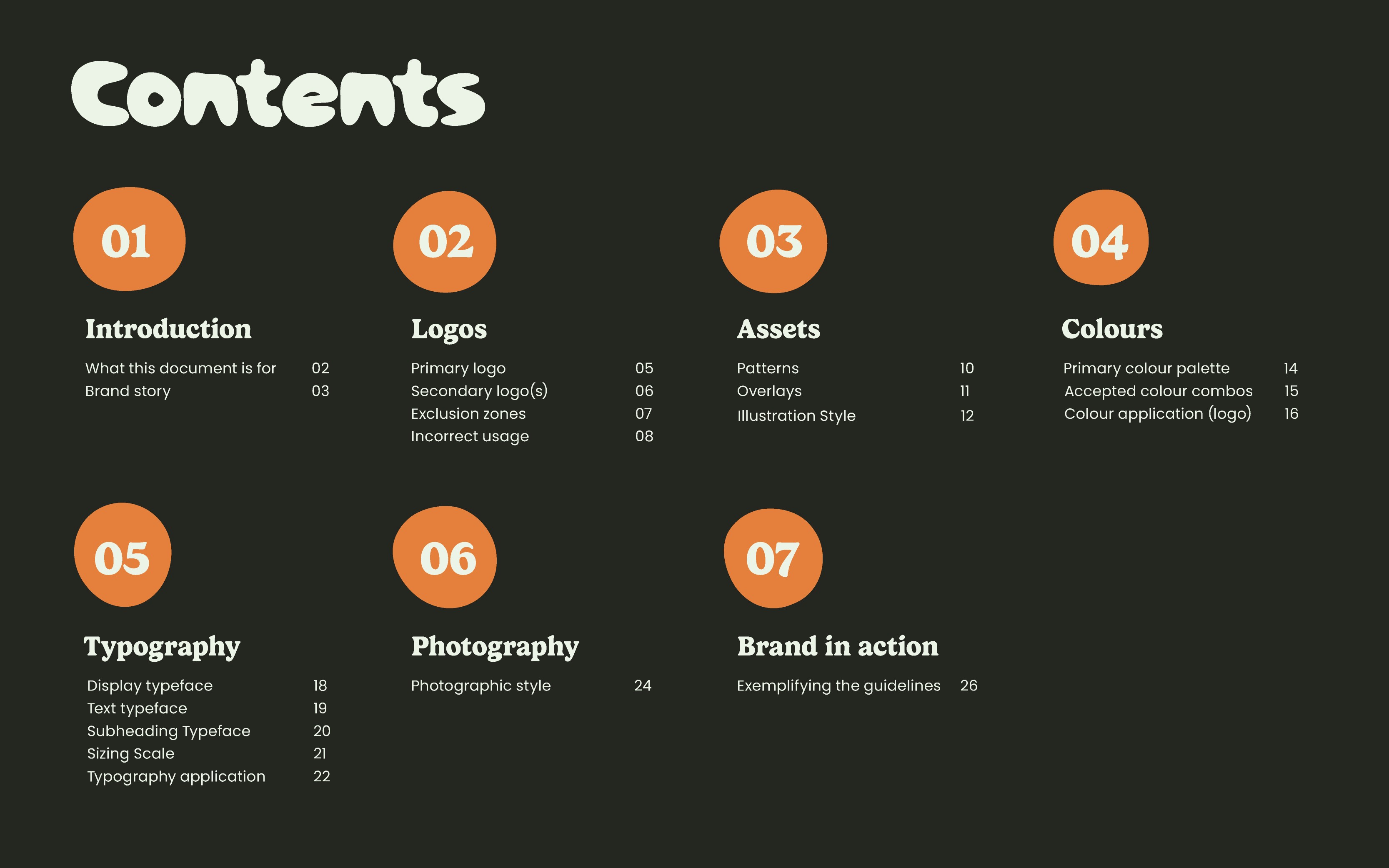
Below you can see the brand style guide that compiles all of the brand style information into a single document.
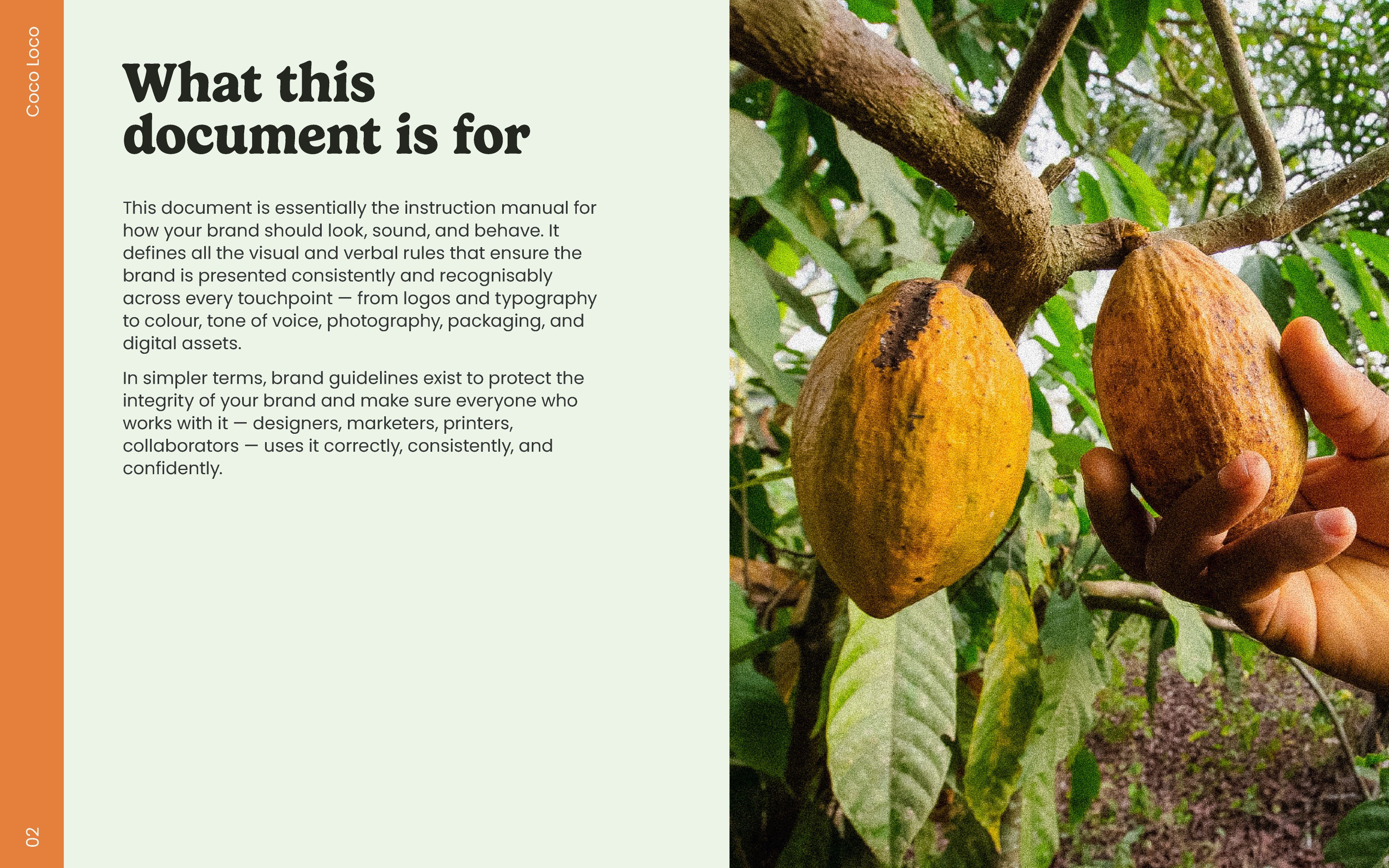
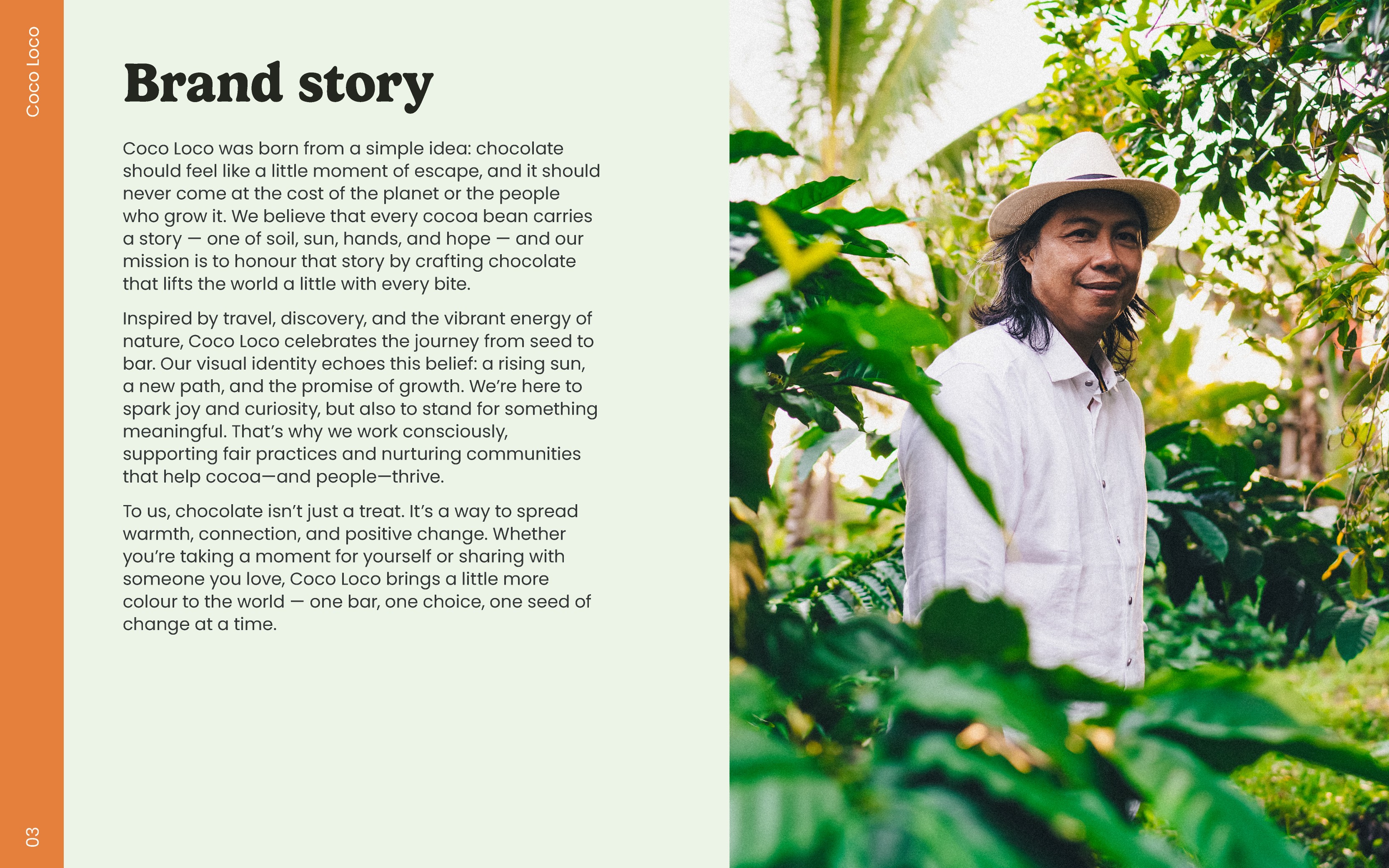
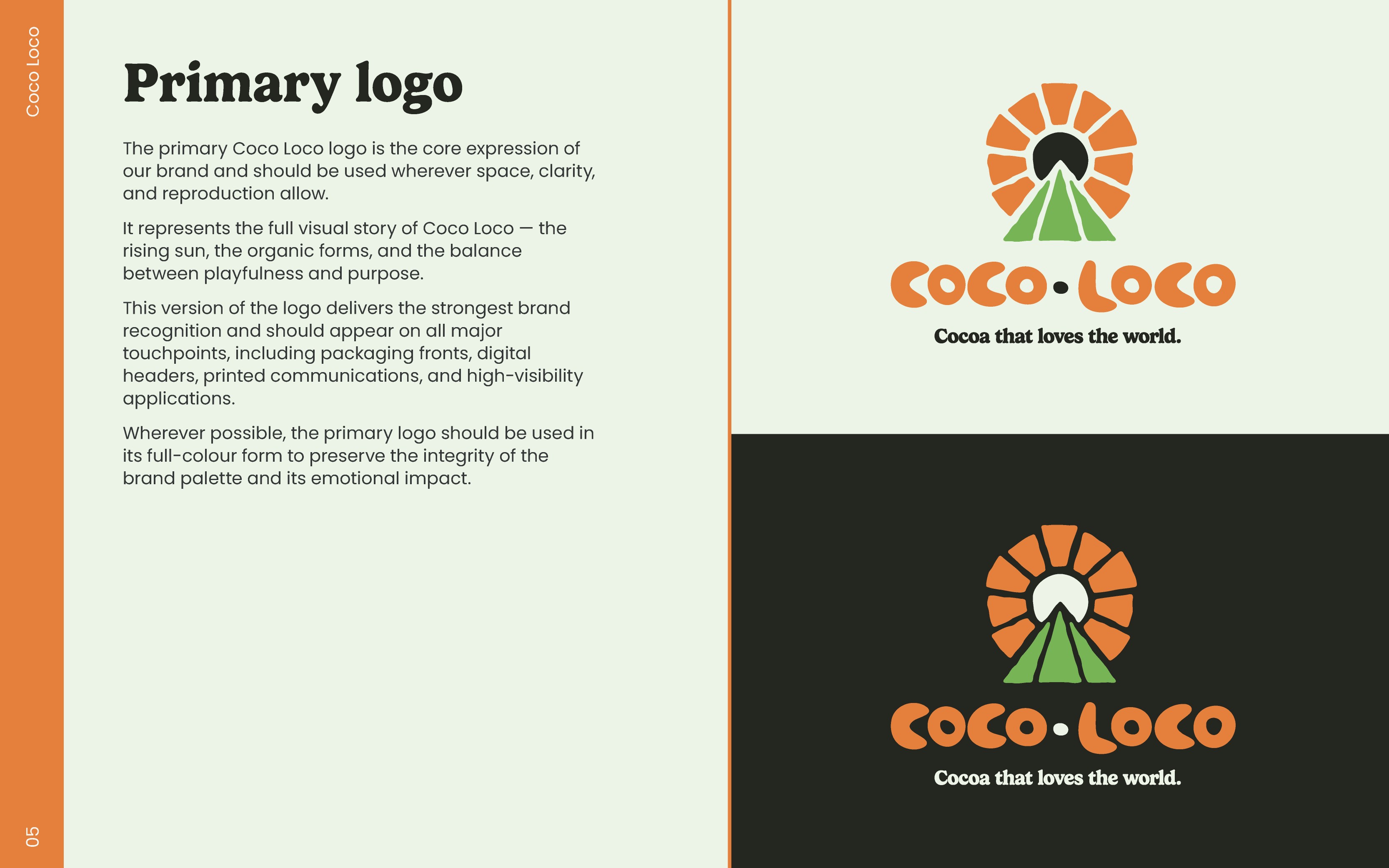
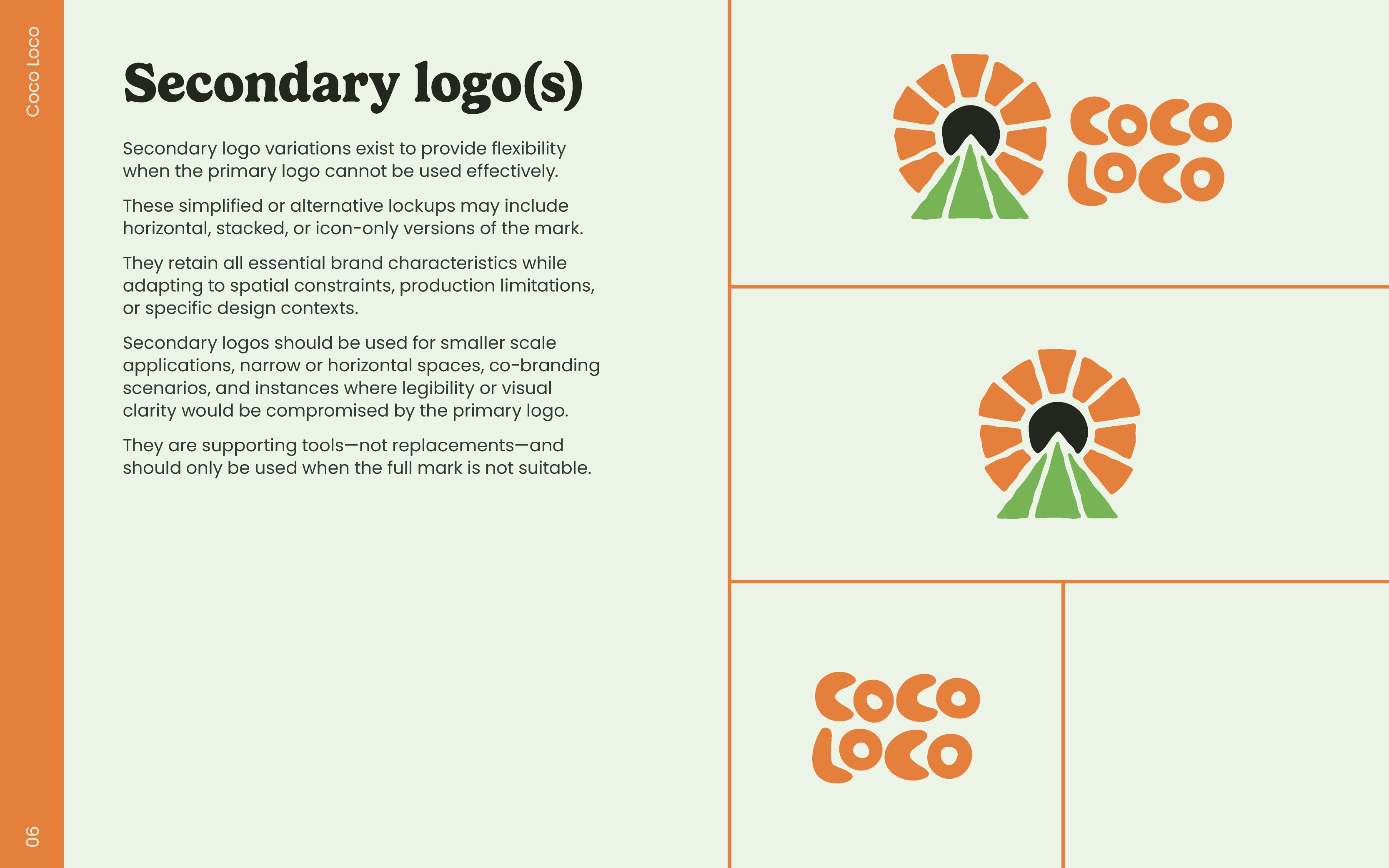
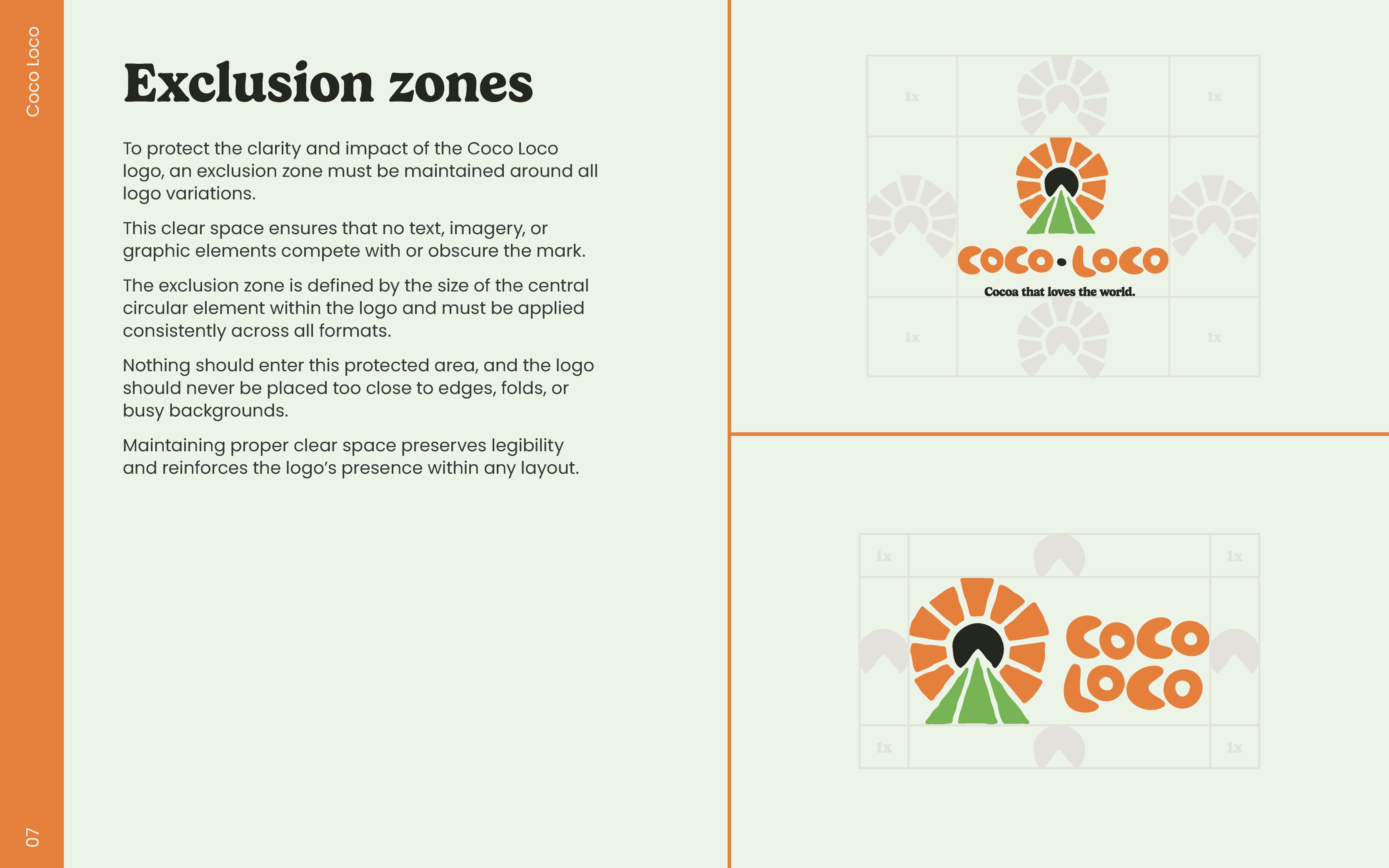
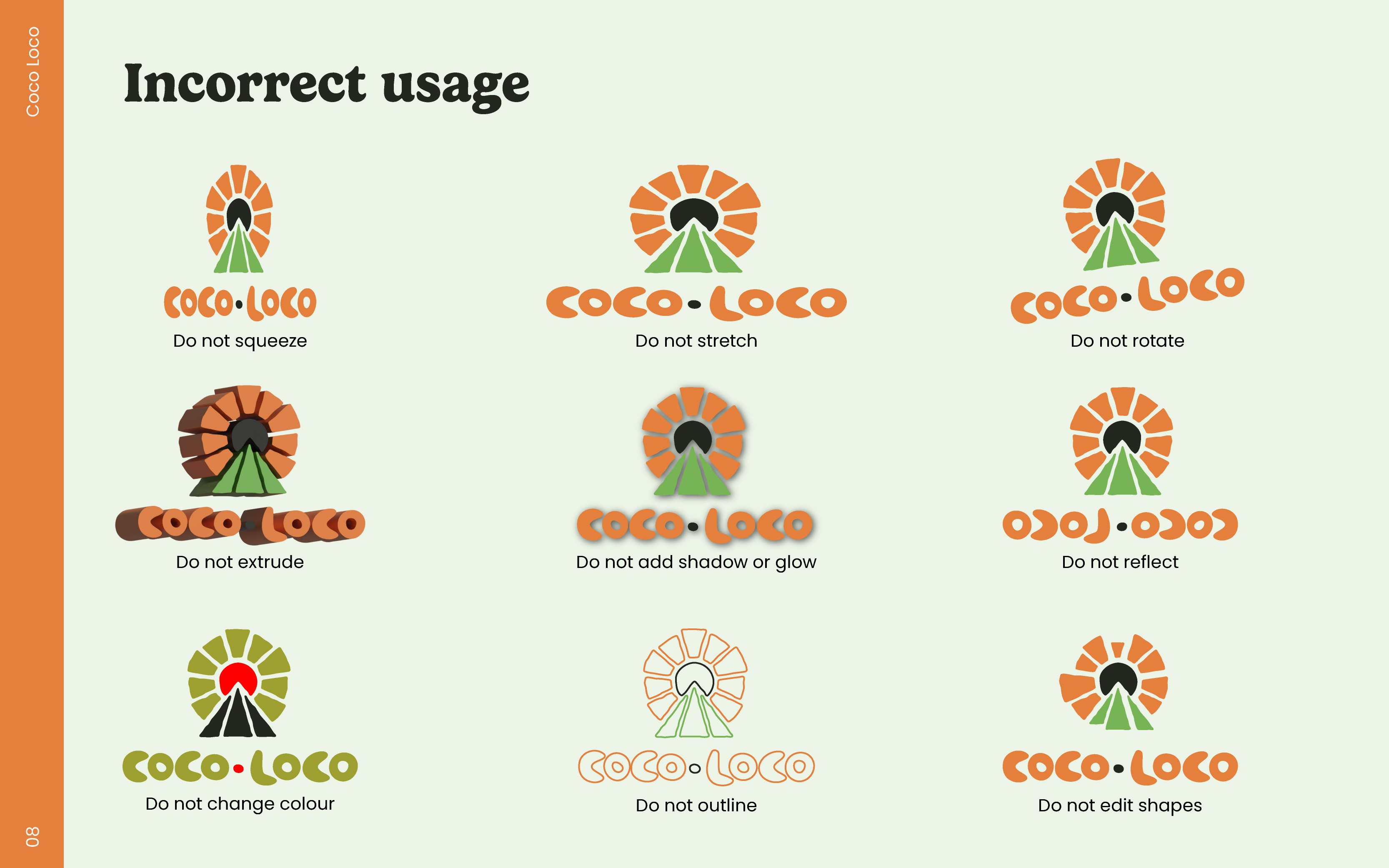

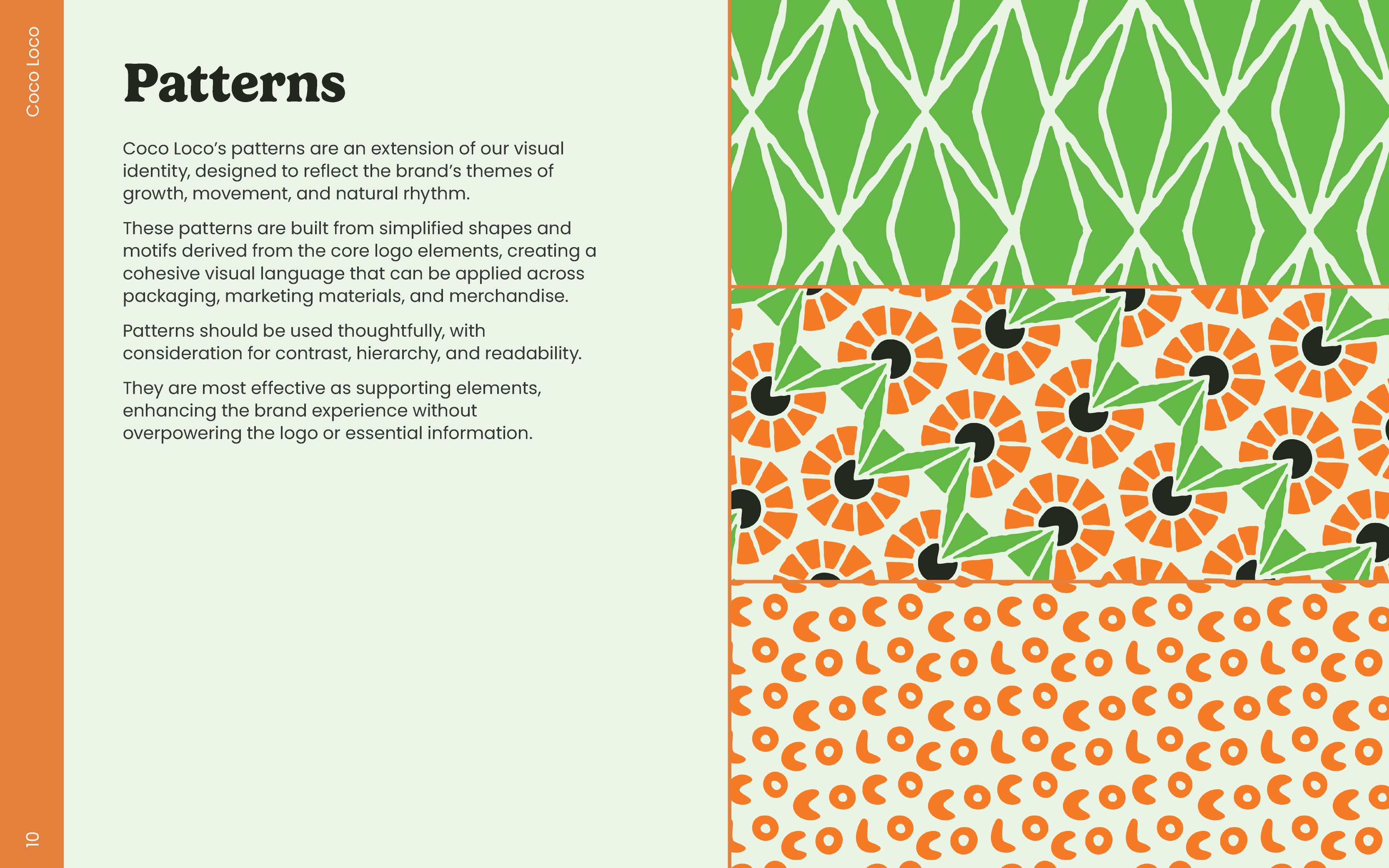
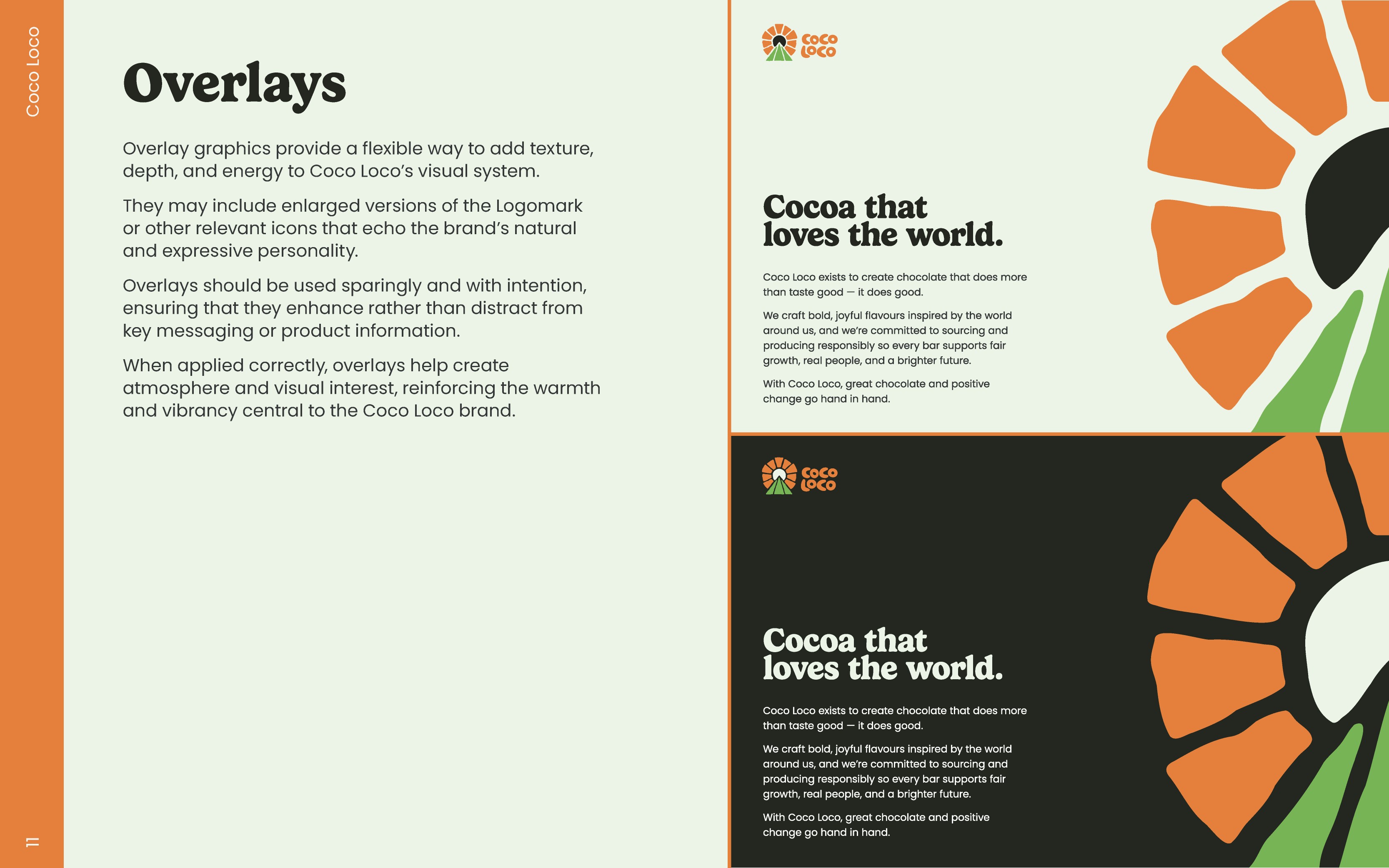
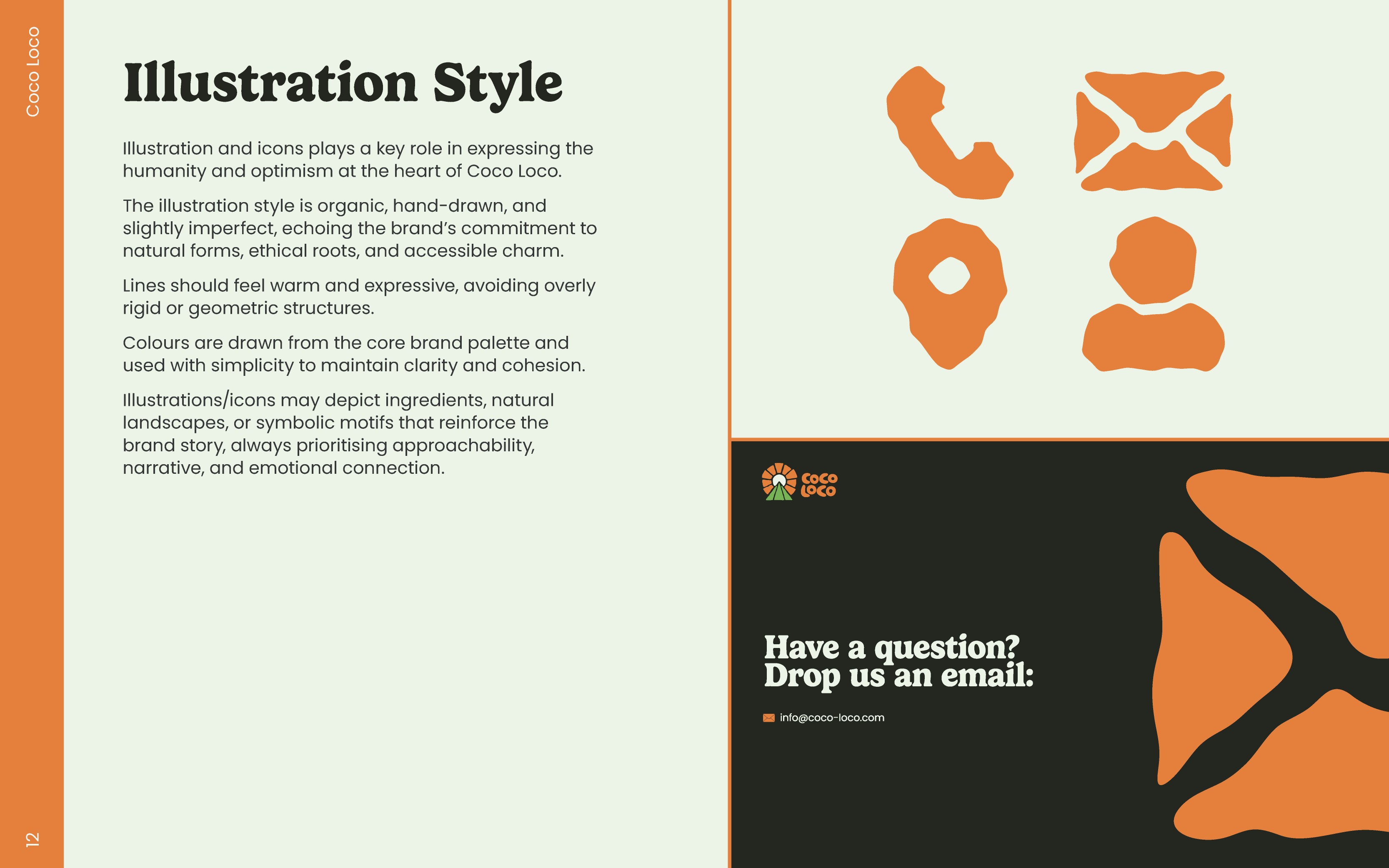

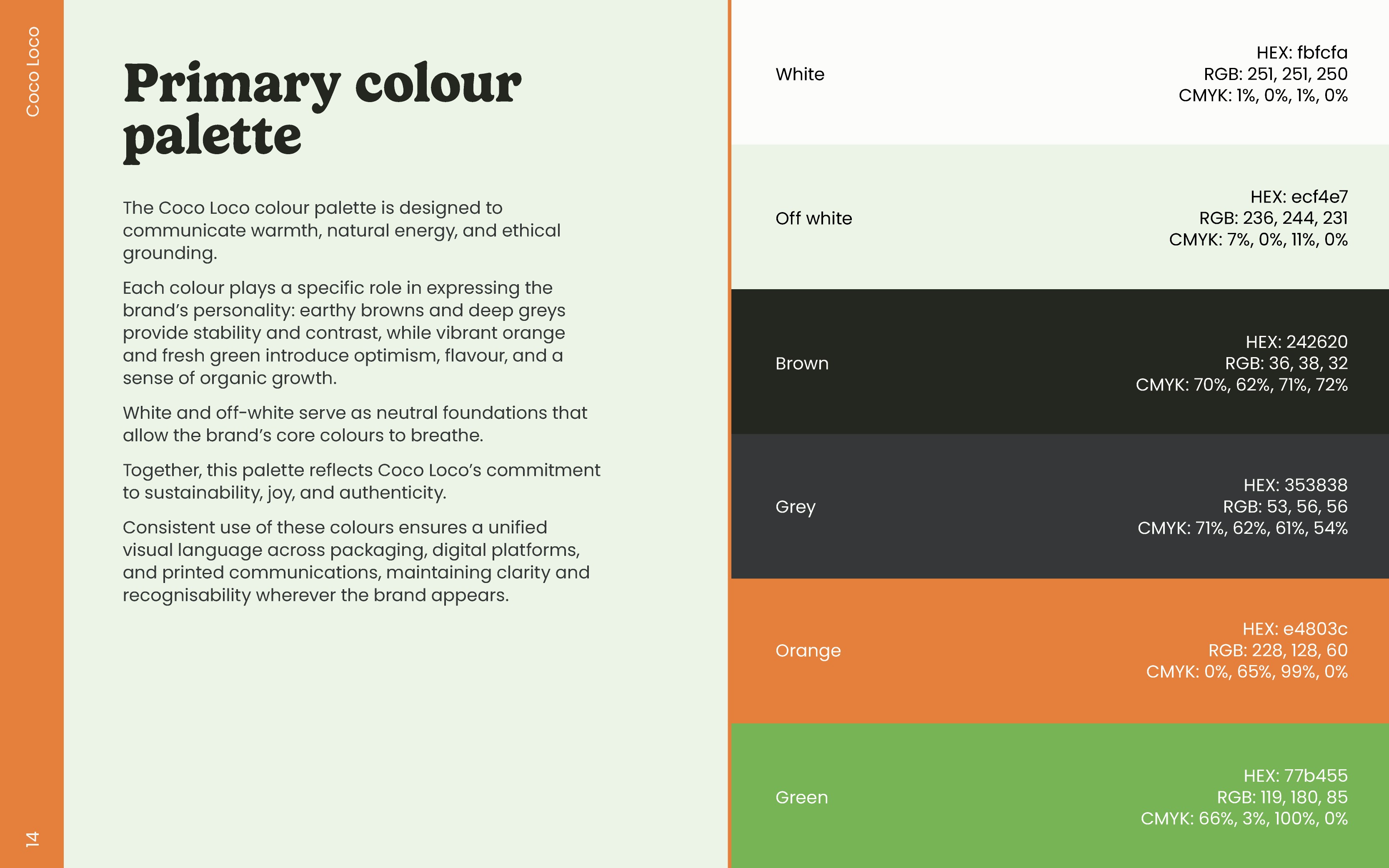
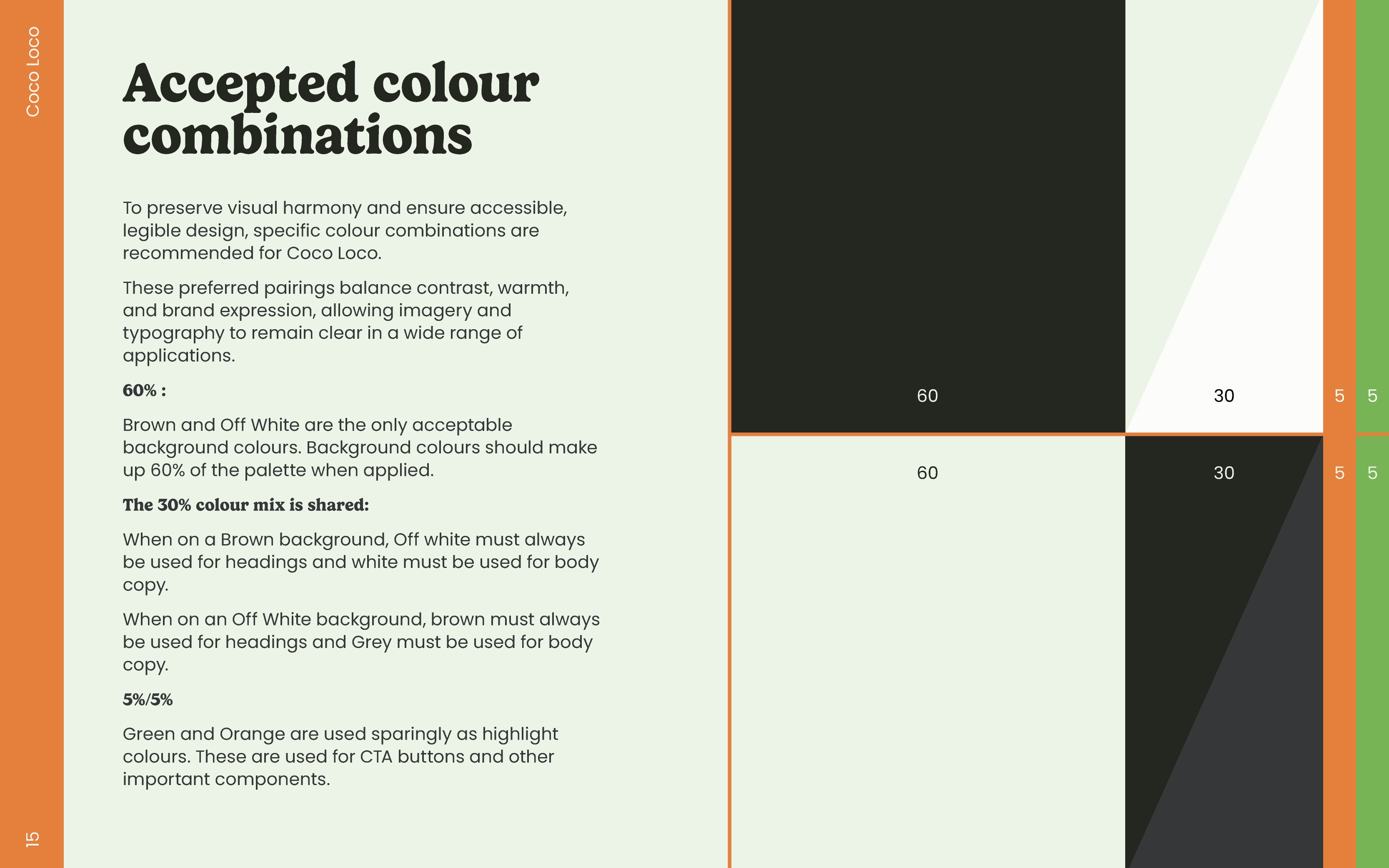
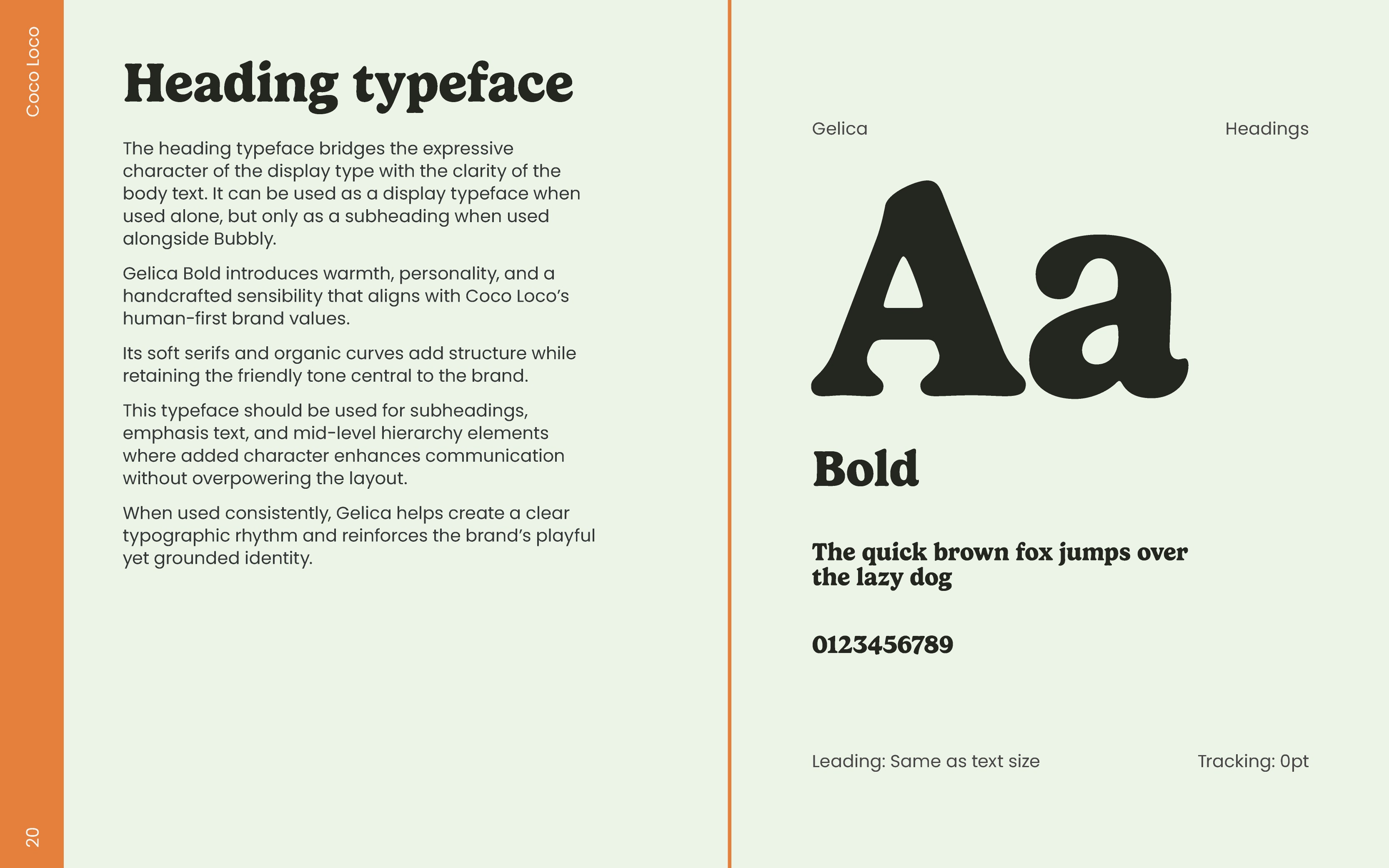
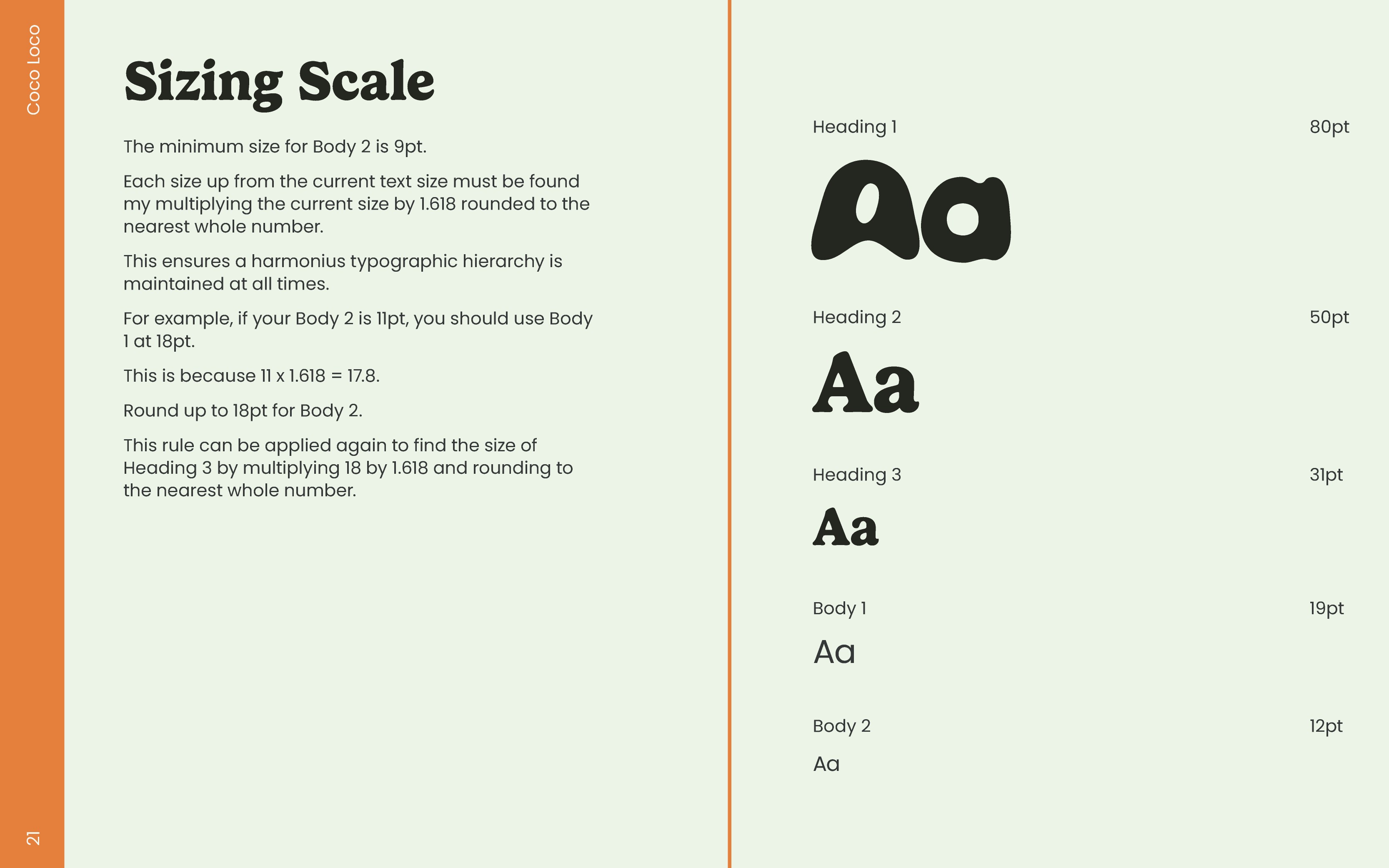
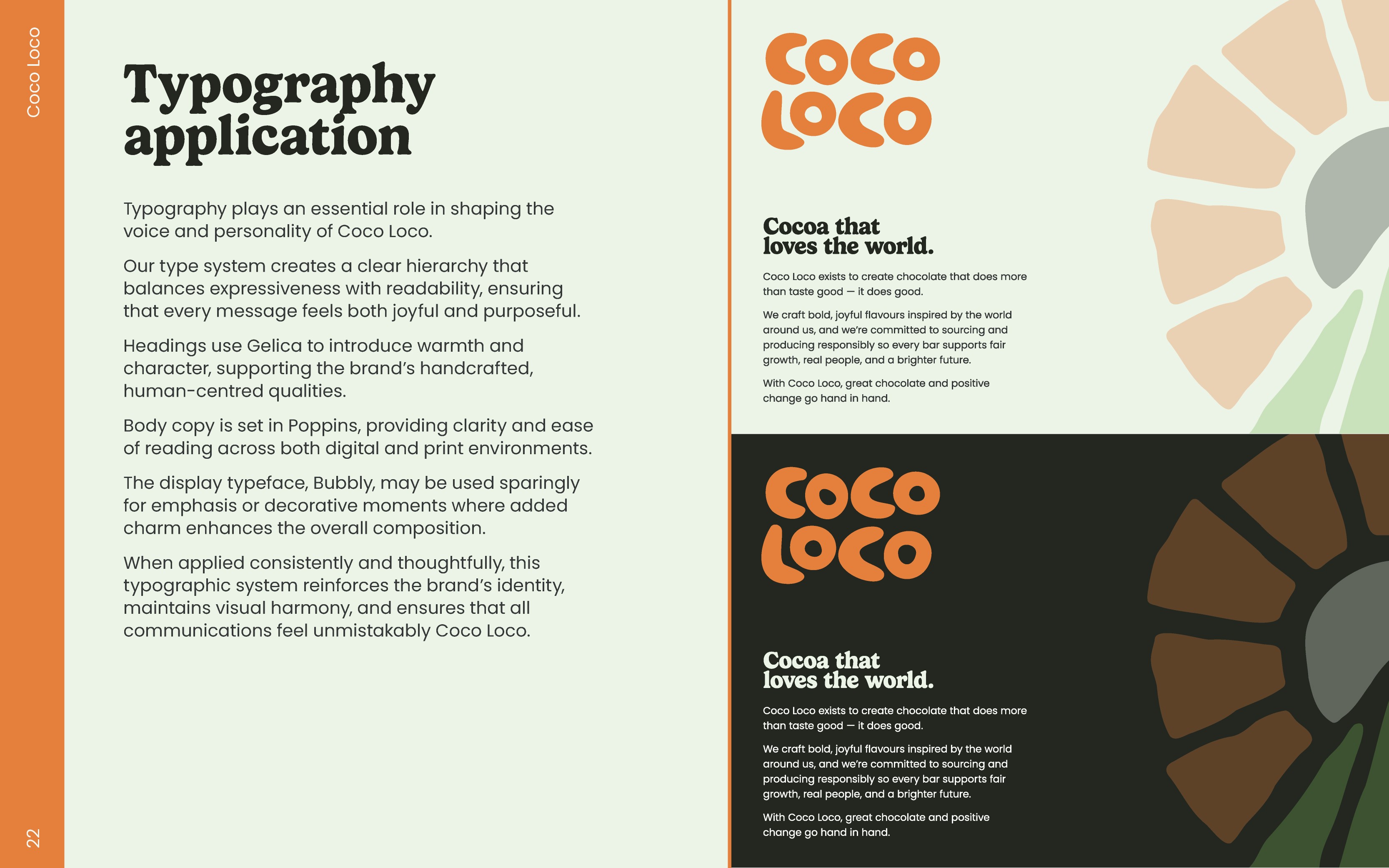
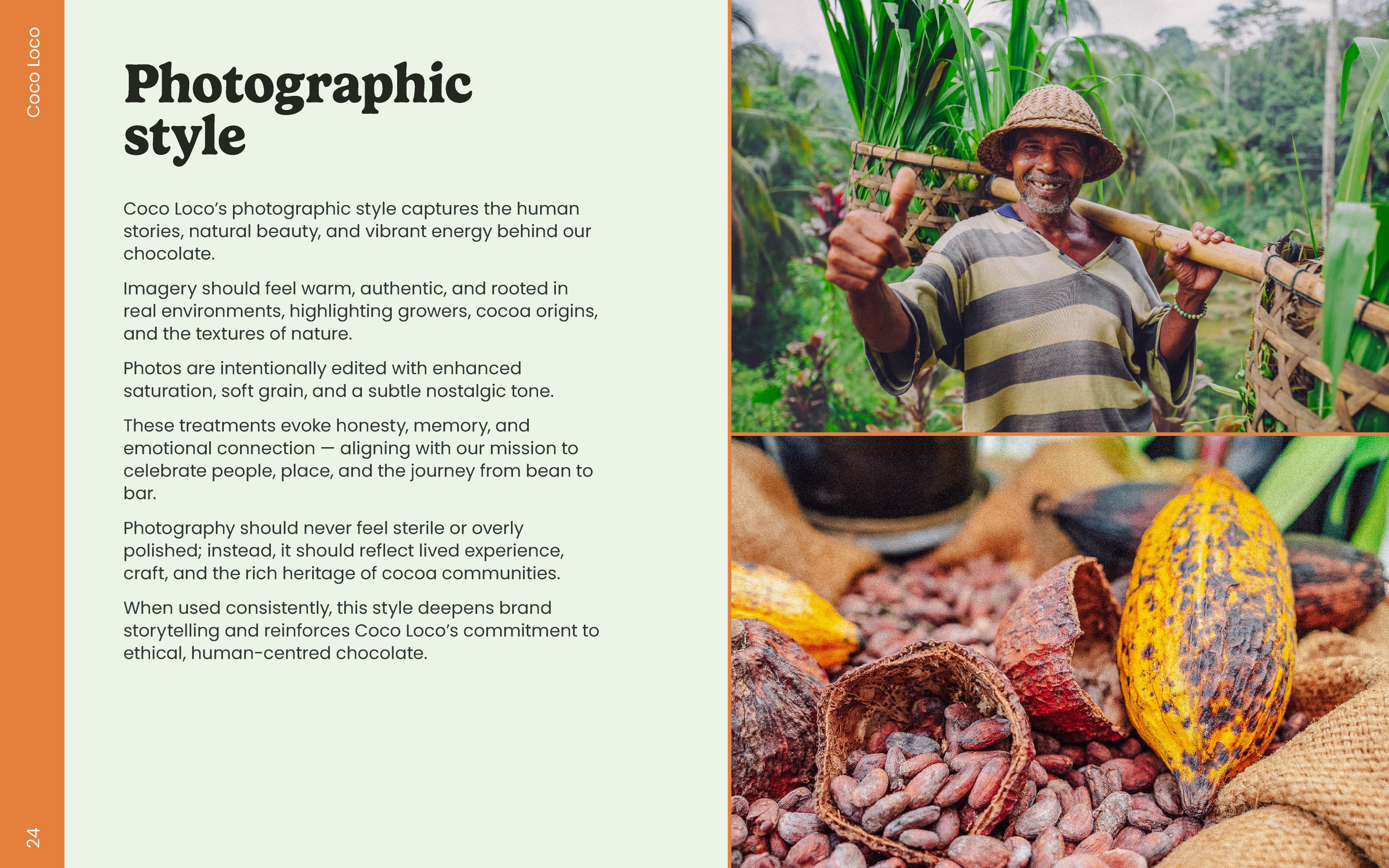
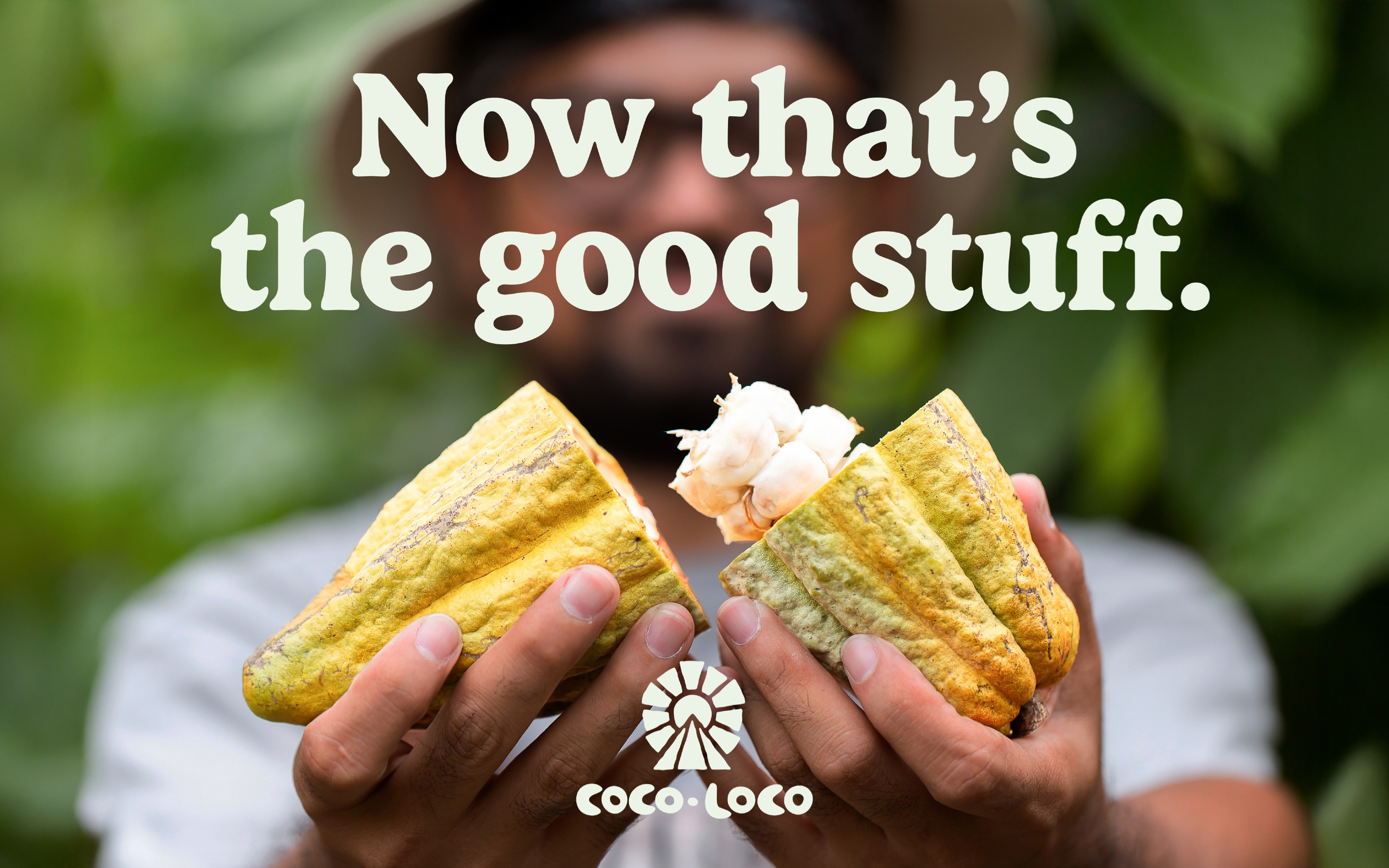
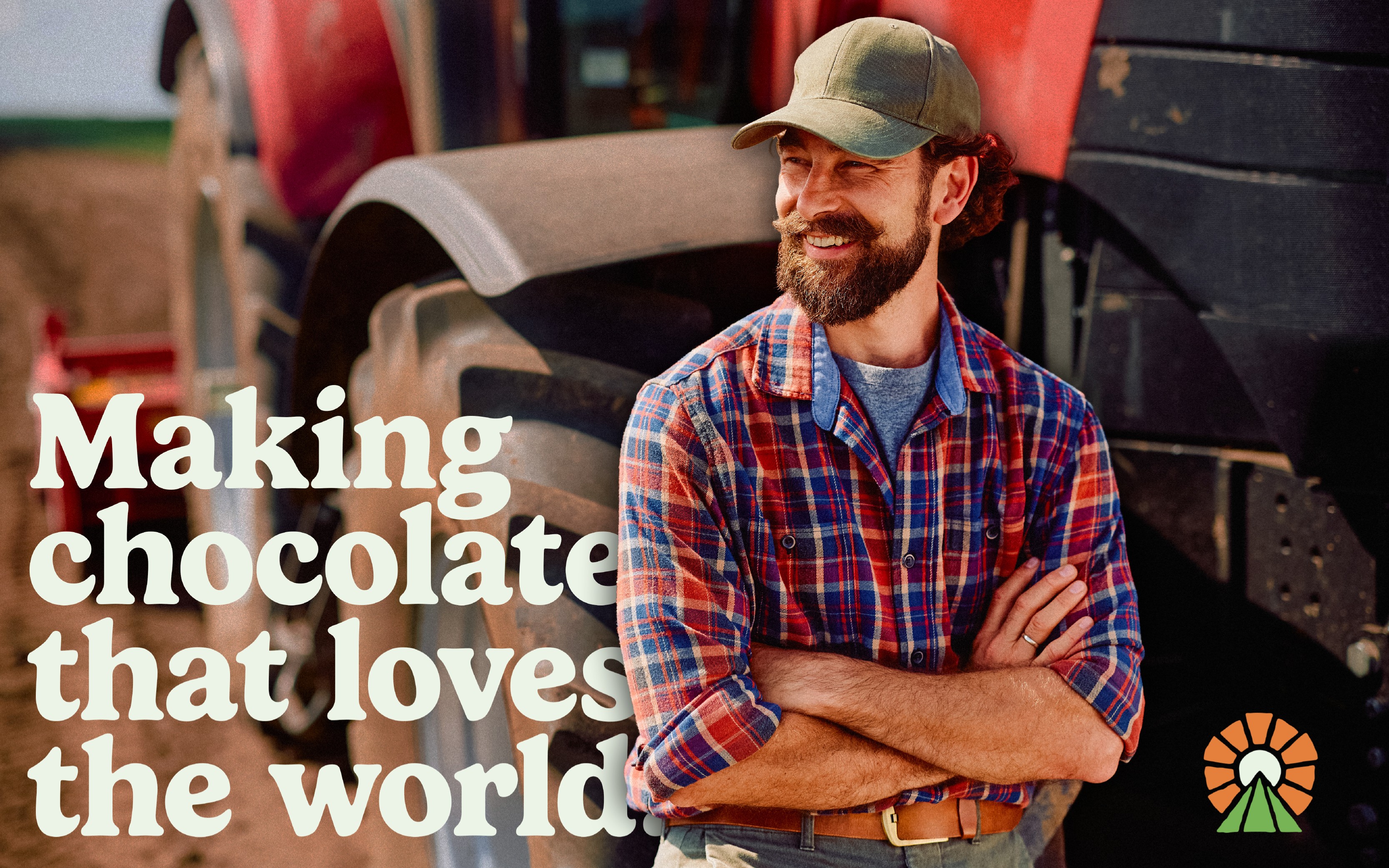
Style Guide
Logo Variants
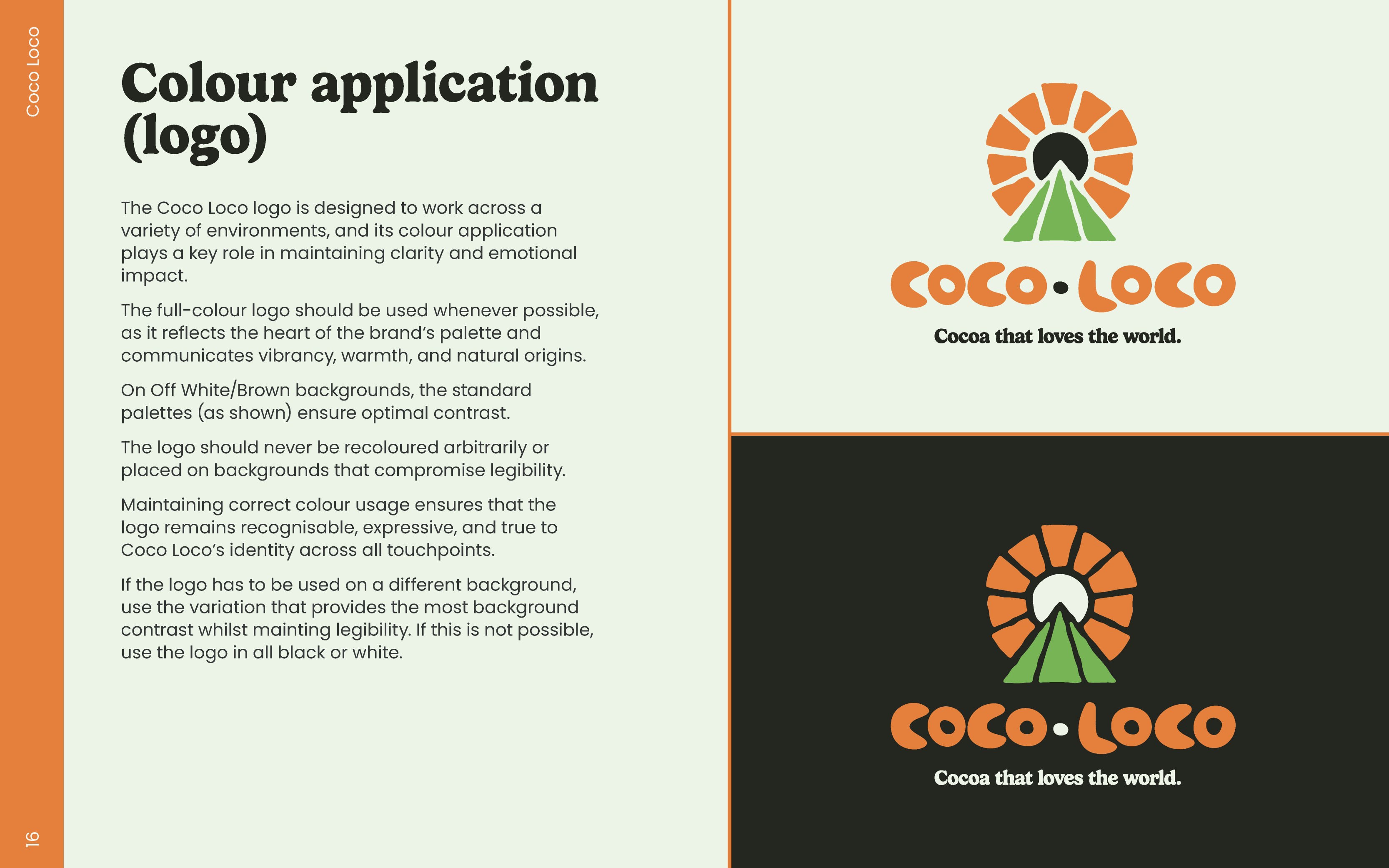

Below are my final logo variants after any and all refinements. I've created multiple logo variants that can be suitably used across various scenarios.
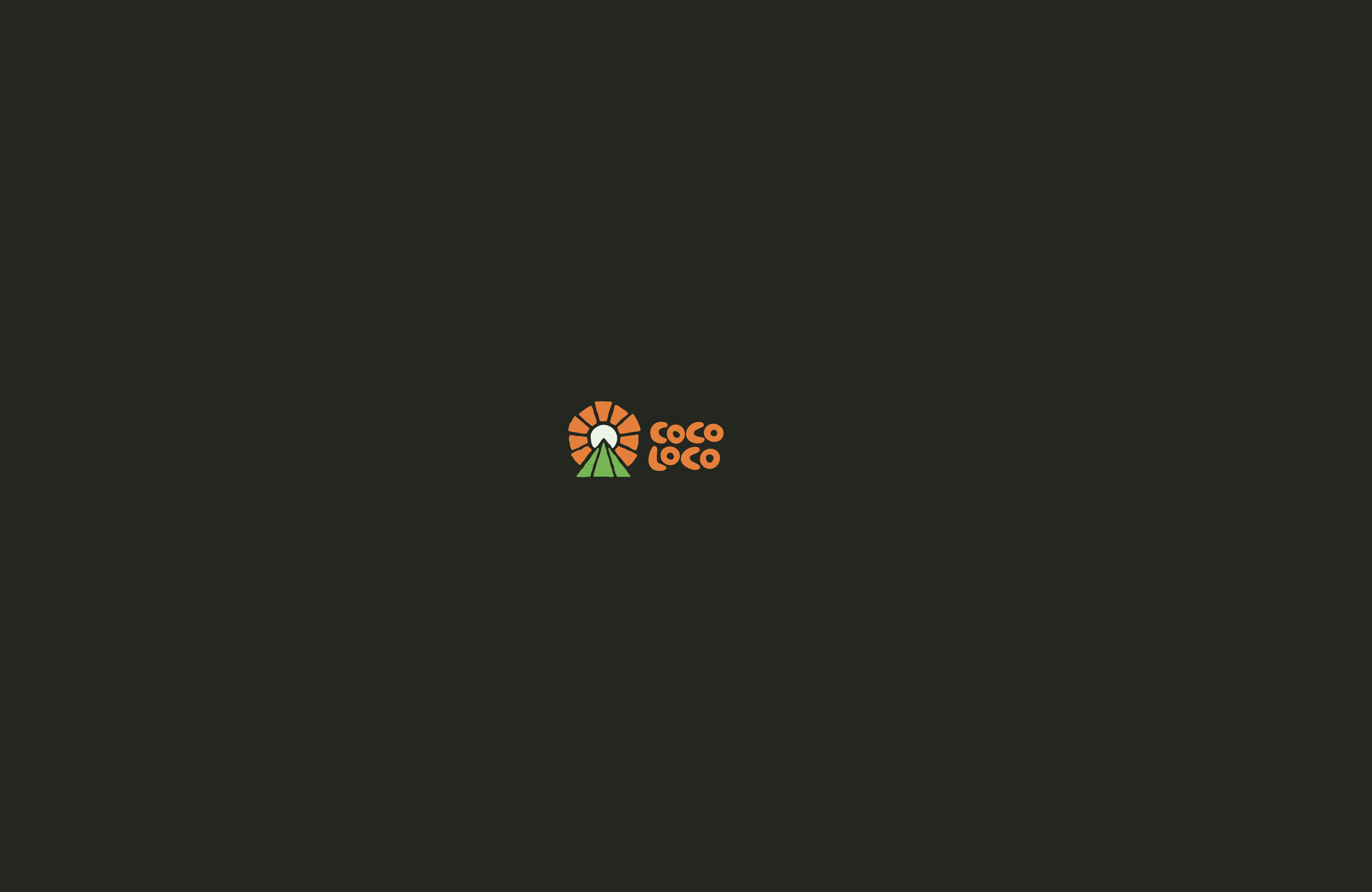
The first is the primary logo. When there's enough space, for example gift boxes, sleeves, or shippers, this logo will be used. When consumers see products for the first time, they need as much information from the logo as possible so they can make the correct preconceptions of Coco Loco. This logo can also be used without the strap-line if necessary.
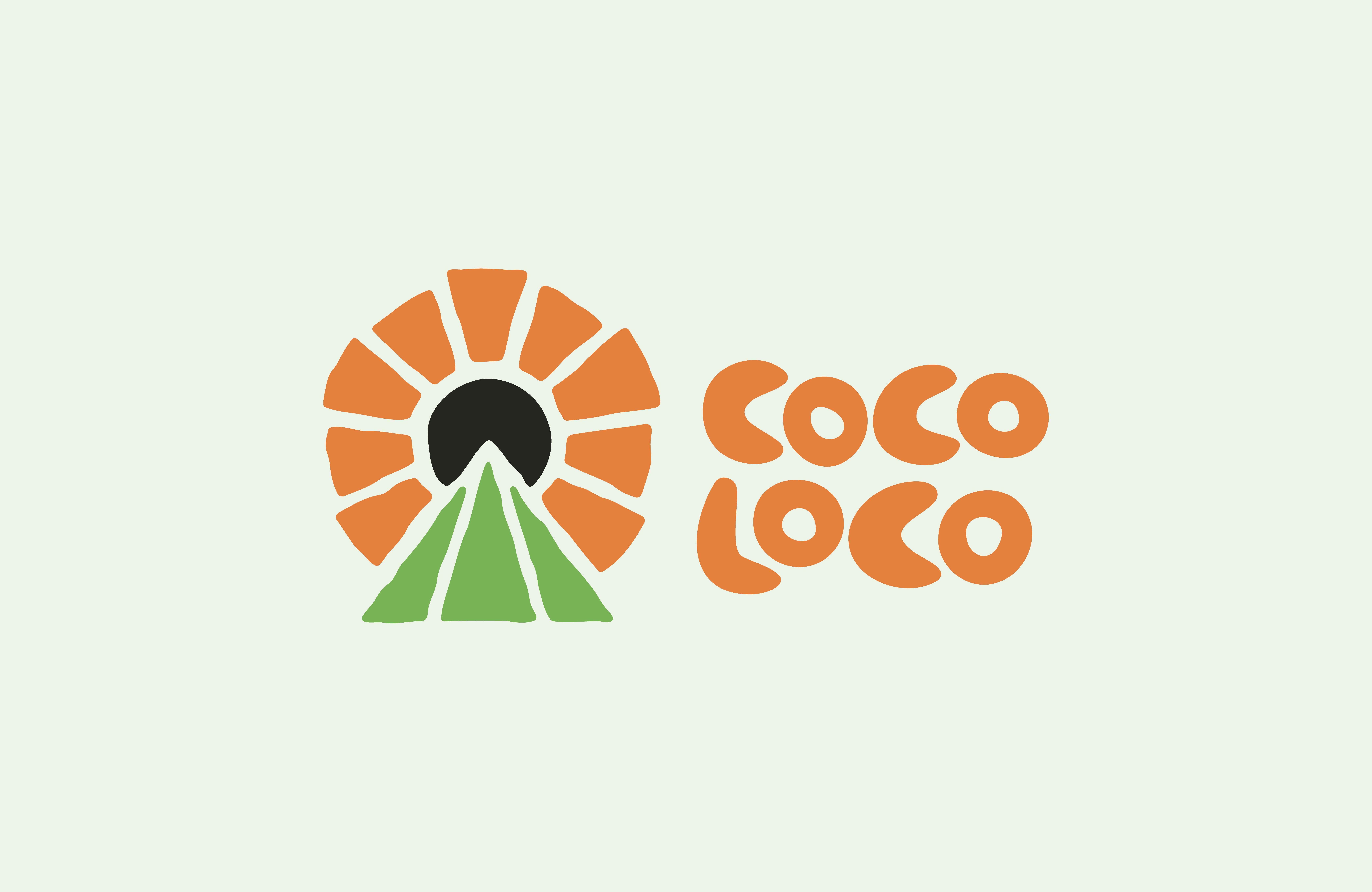
The secondary logo is a horizontally stacked version with fewer details but still explains who Coco Loco is. This is for use where space is limited but the logo is still a vital piece of information. For example bar wrappers, shelving facings, stickers, desktop web header, and invoices.
For the icon alone, this is to be utilised as a favicon, social media profile images, stickers, app icon (if it became applicable), and on the back of product packs.
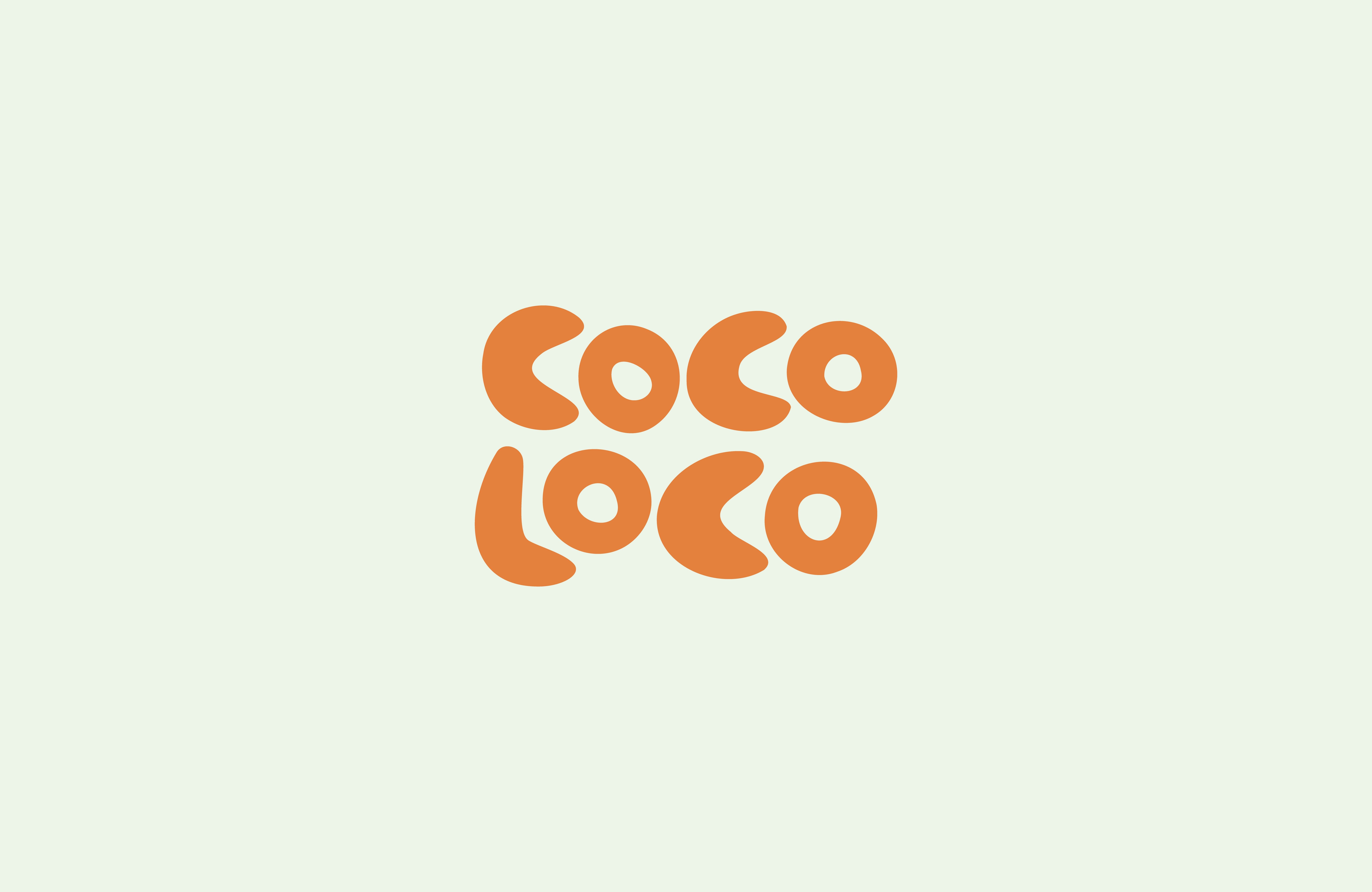
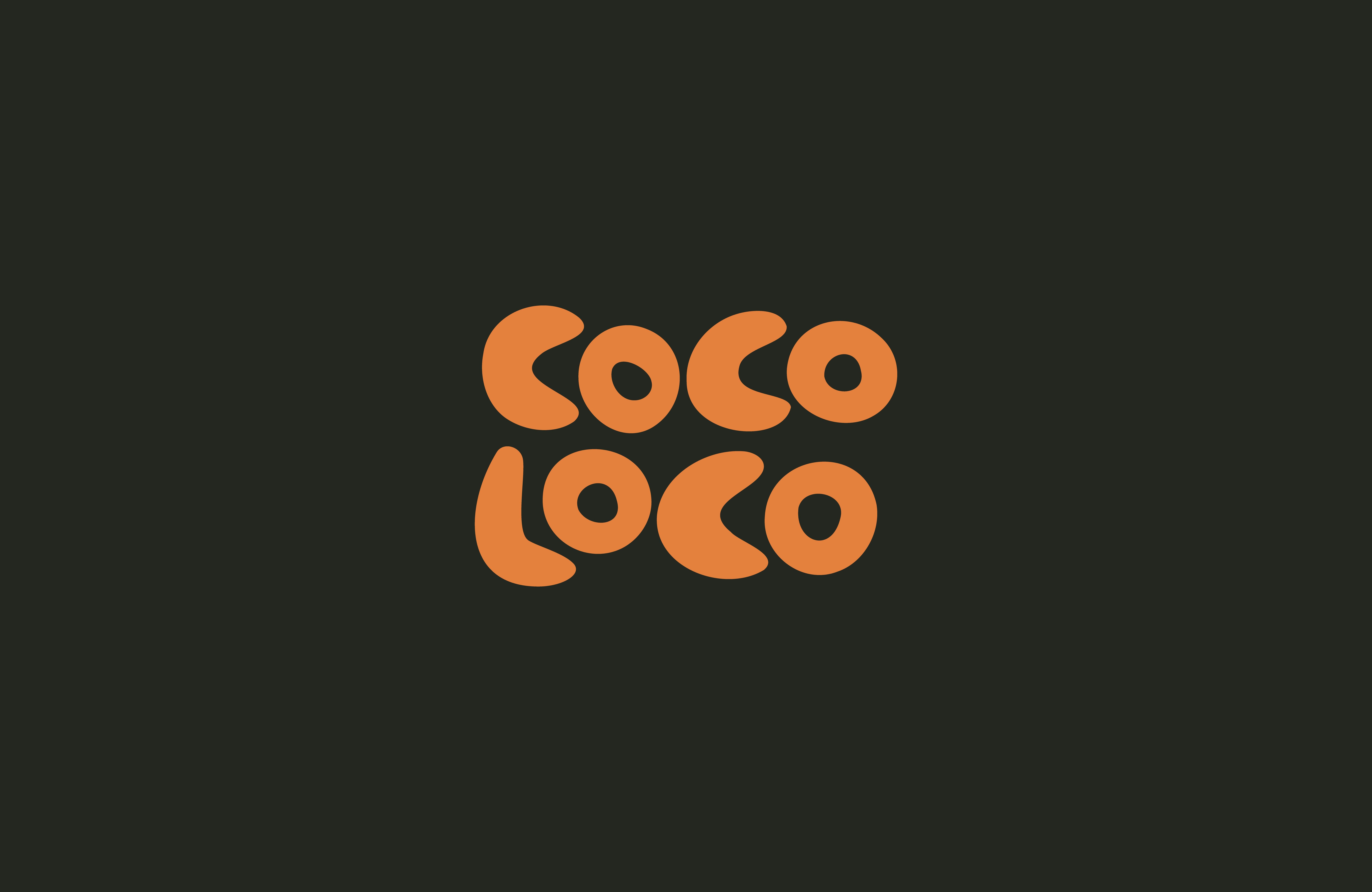
The wordmark is essentially the same, however this would also be used as the web header on mobile to make the website responsive across breakpoints. I have made two versions of the wordmark as this can be used big and small. The small version has enlarged counters to make sure they don't feel too full when shrunk to smaller sizes. Otherwise, they begin to get lost making "Coco Loco" hard to read at small sizes.


Task 2
You must take the brand further by designing packaging for Coco-Loco. The packaging must have a footprint no larger than A5 with no restrictions on height. Consider how the product sits inside the packaging and how it will be presented on shelves.
Research
Considering shelf presence, structure, internal packaging, sustainability, brand storytelling, and social-media presentation is essential when designing contemporary chocolate packaging, as these factors directly influence both consumer perception and purchasing behaviour.
Strong shelf presence ensures immediate recognition and differentiation in a competitive retail environment, while thoughtful structural design and internal packaging protect the product, enhance the unboxing experience, and elevate perceived value.
Sustainability is no longer optional within the premium confectionery market, with material choices and environmental messaging playing a key role in building consumer trust.
Brand storytelling allows packaging to communicate values and personality beyond aesthetics, creating emotional connection, while social-media friendly design extends the life of the product beyond the shelf, encouraging sharing, visibility, and engagement in digital spaces.
With these considerations, companies can ensure packaging functions not only as protection, but also a powerful marketing and brand-building tool.
Research
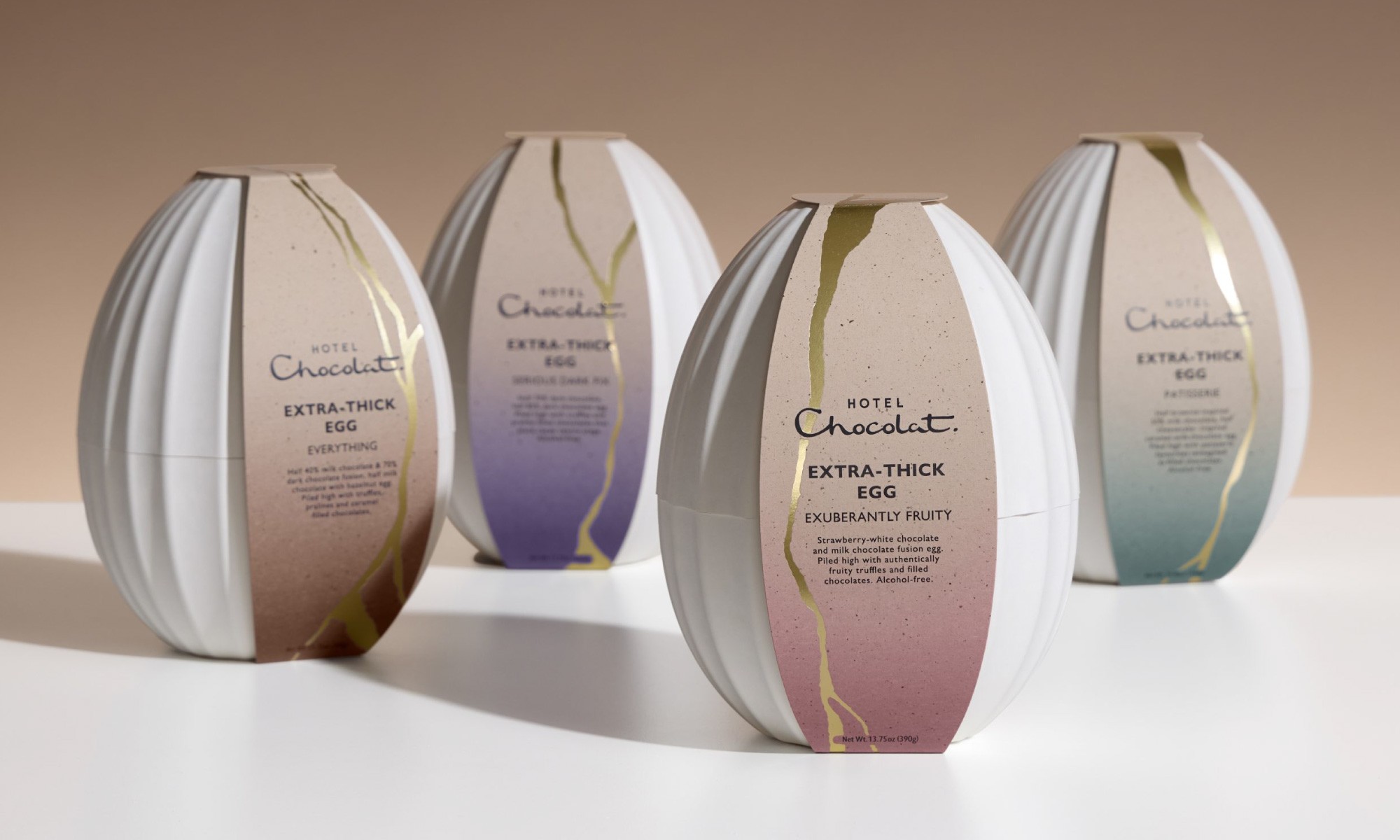
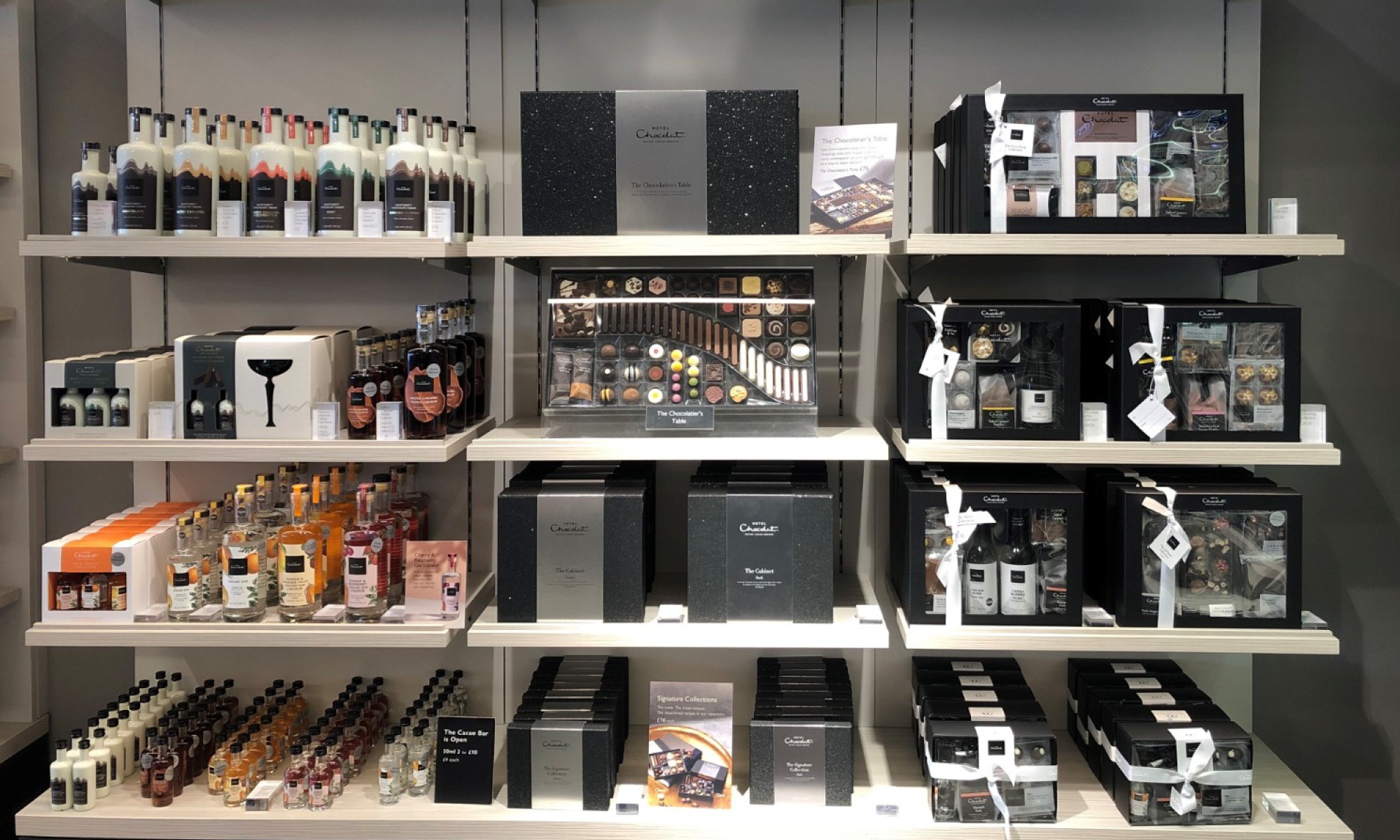
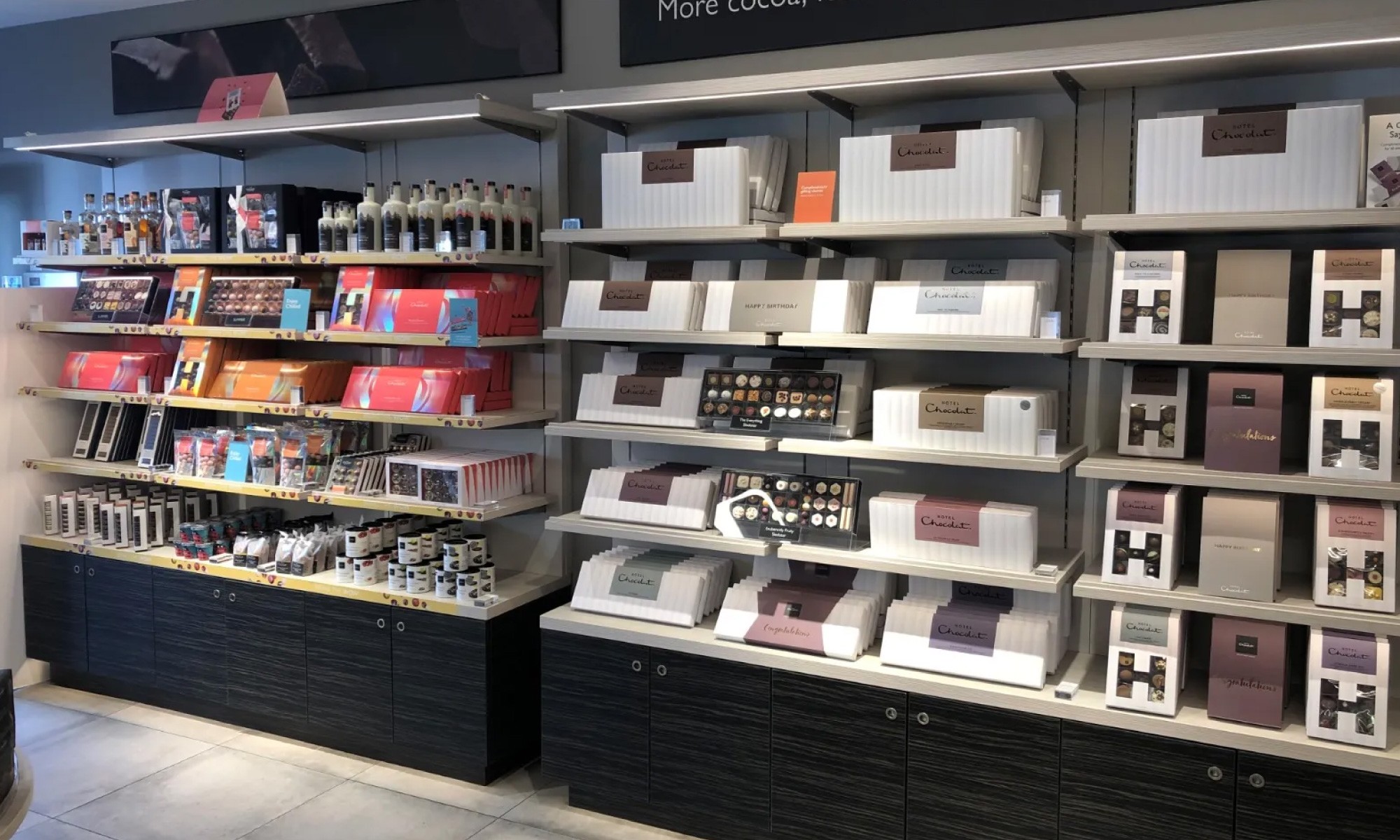
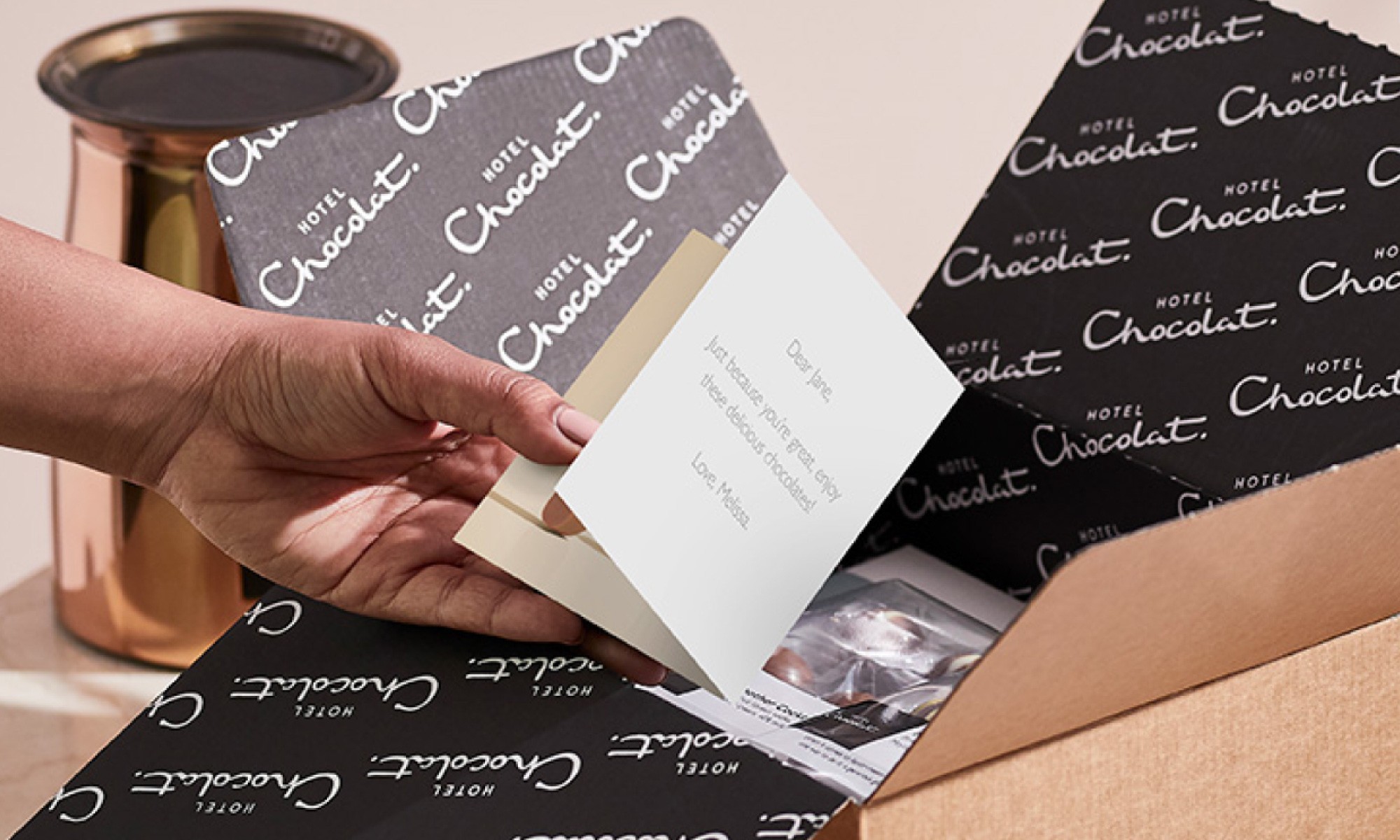
Hotel Chocolat
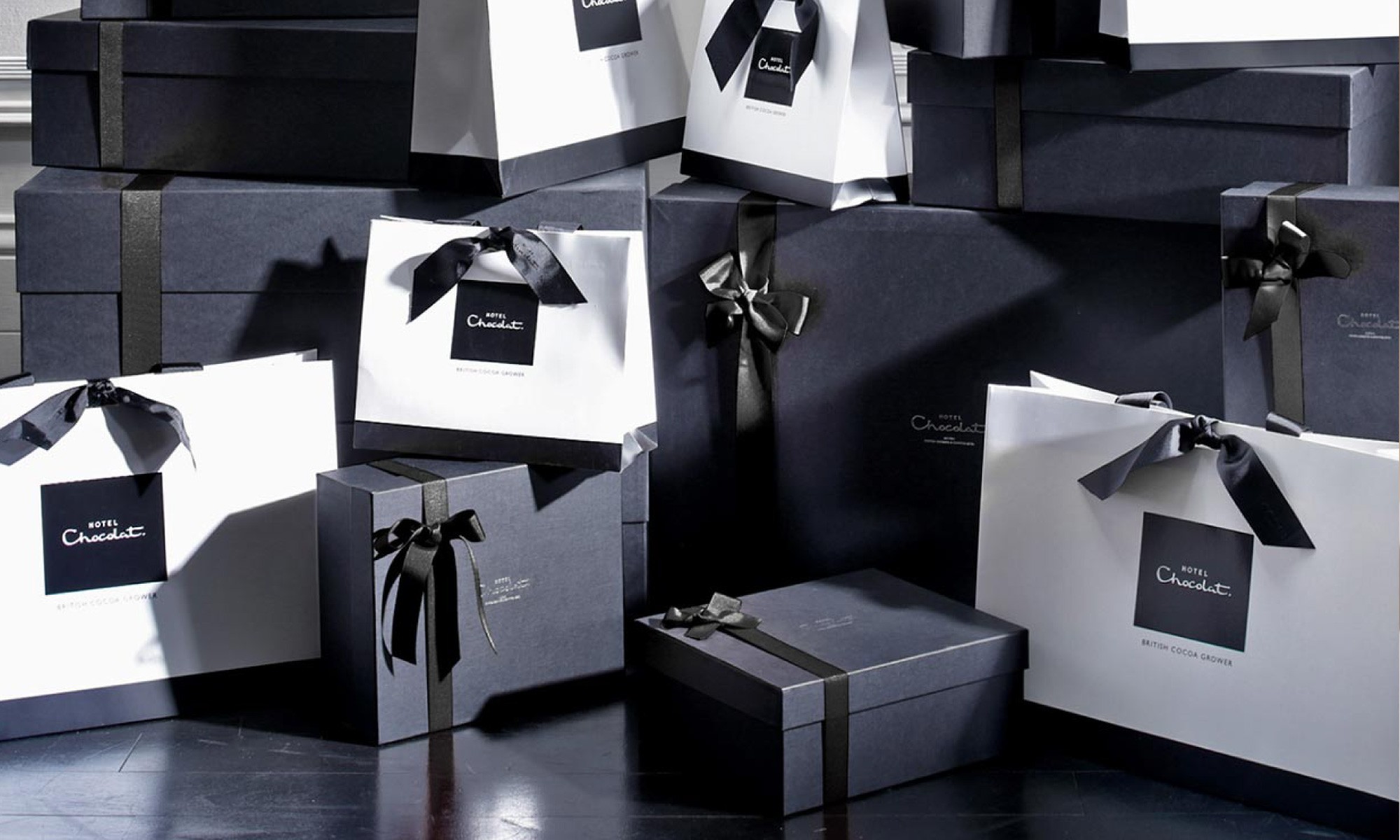
Hotel Chocolat’s packaging is positioned firmly within the premium gifting market, using structured folding cartons and rigid boxes to create a sense of quality and occasion.
On shelf, the brand relies on restrained colour palettes, strong typographic hierarchy, and generous use of negative space to stand out without appearing loud.
Sustainability is communicated subtly through material choices such as recyclable cardboard and minimal plastic use, rather than overt environmental messaging.
Internally, products are typically housed in card trays or paper-based dividers that separate and protect individual items while reinforcing the premium unboxing experience.
The packaging photographs cleanly and consistently, making it well suited to both shelf display and social media presentation.
Research
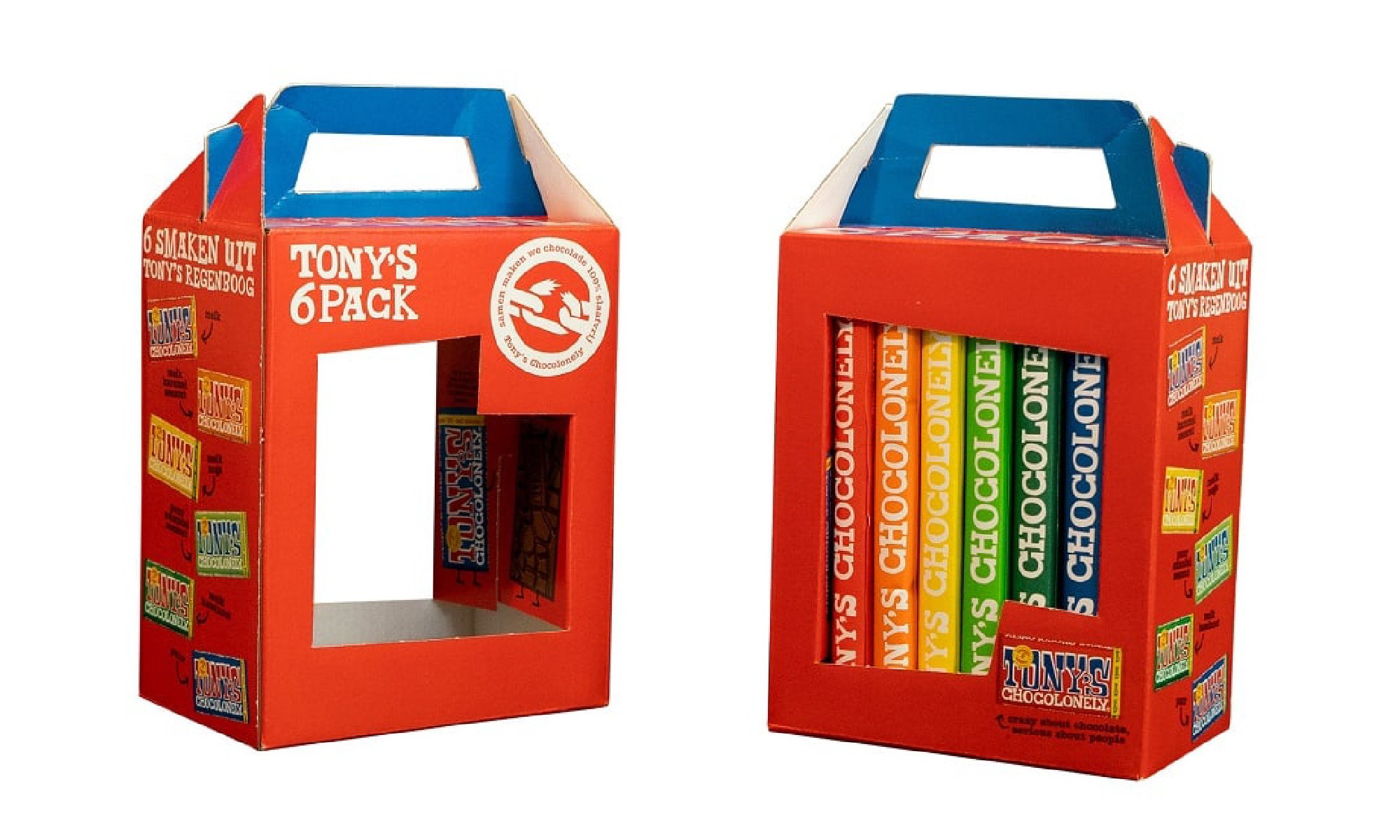
Tony's Chocolonely
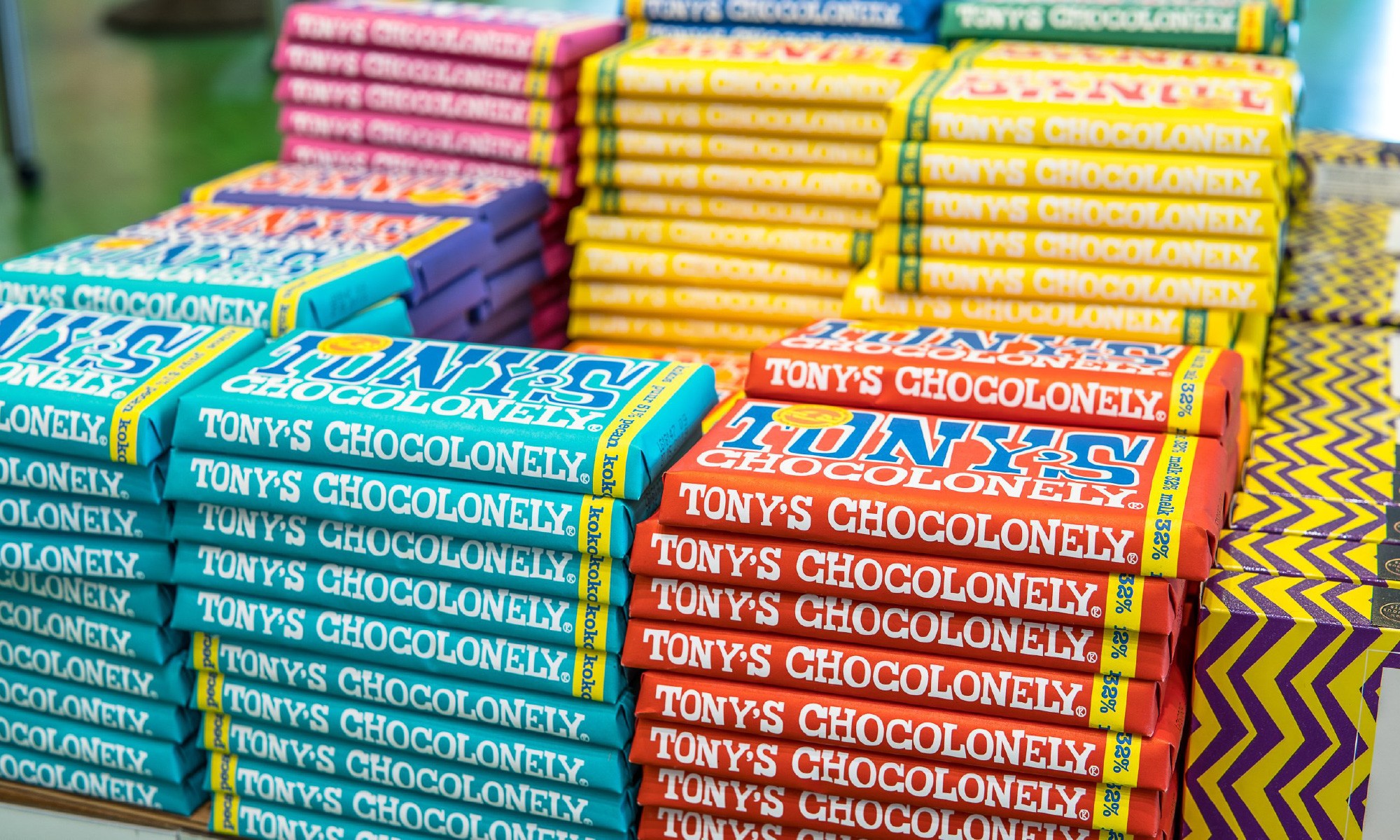
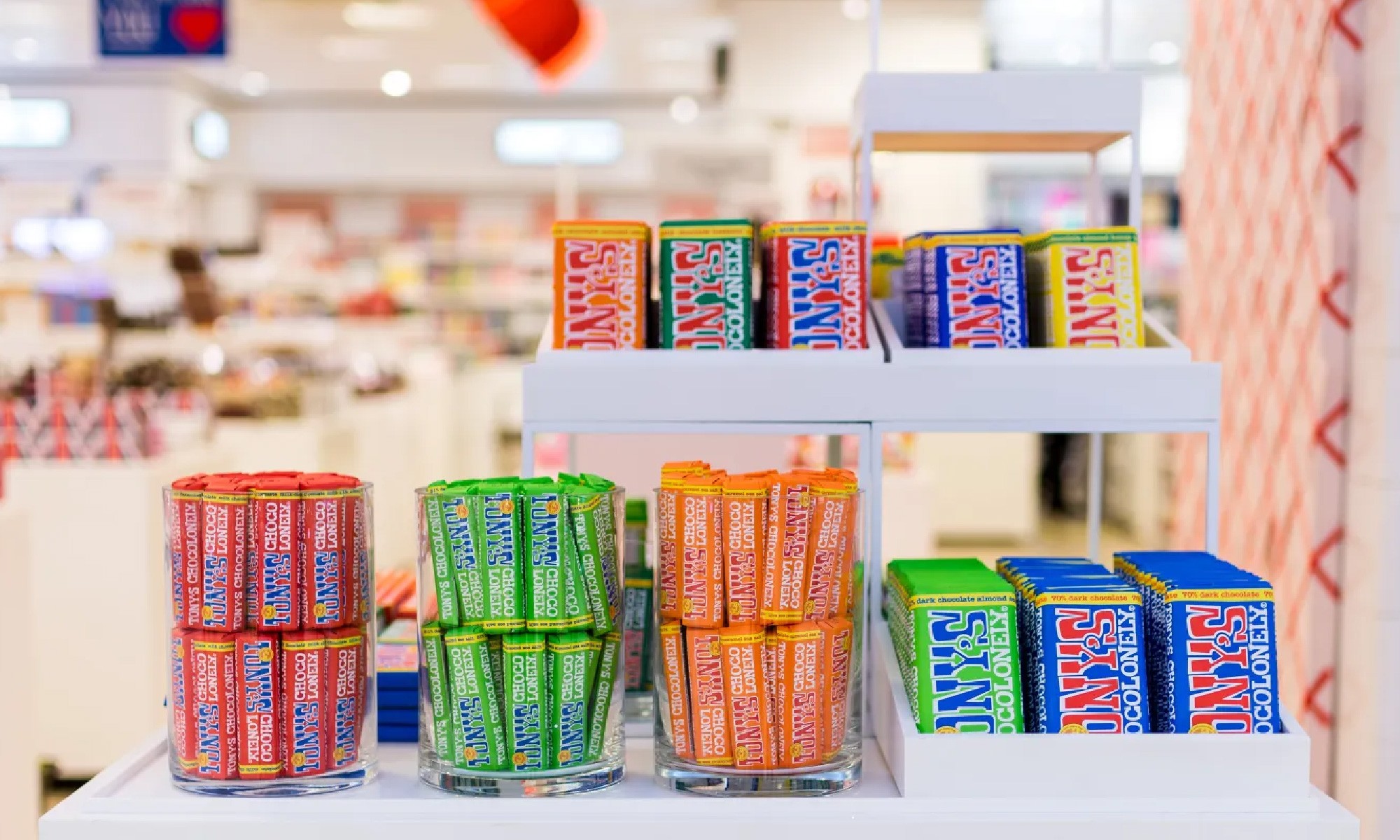
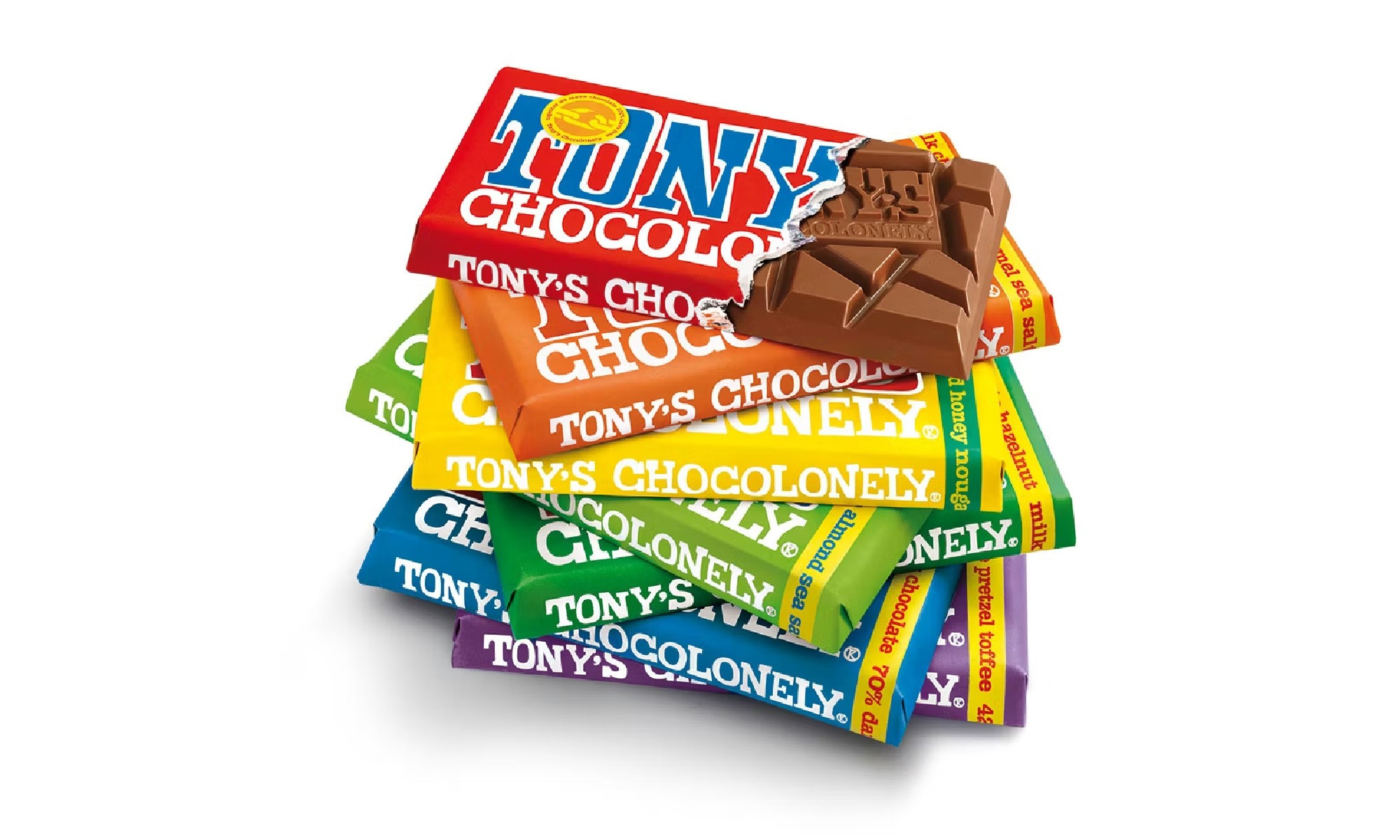
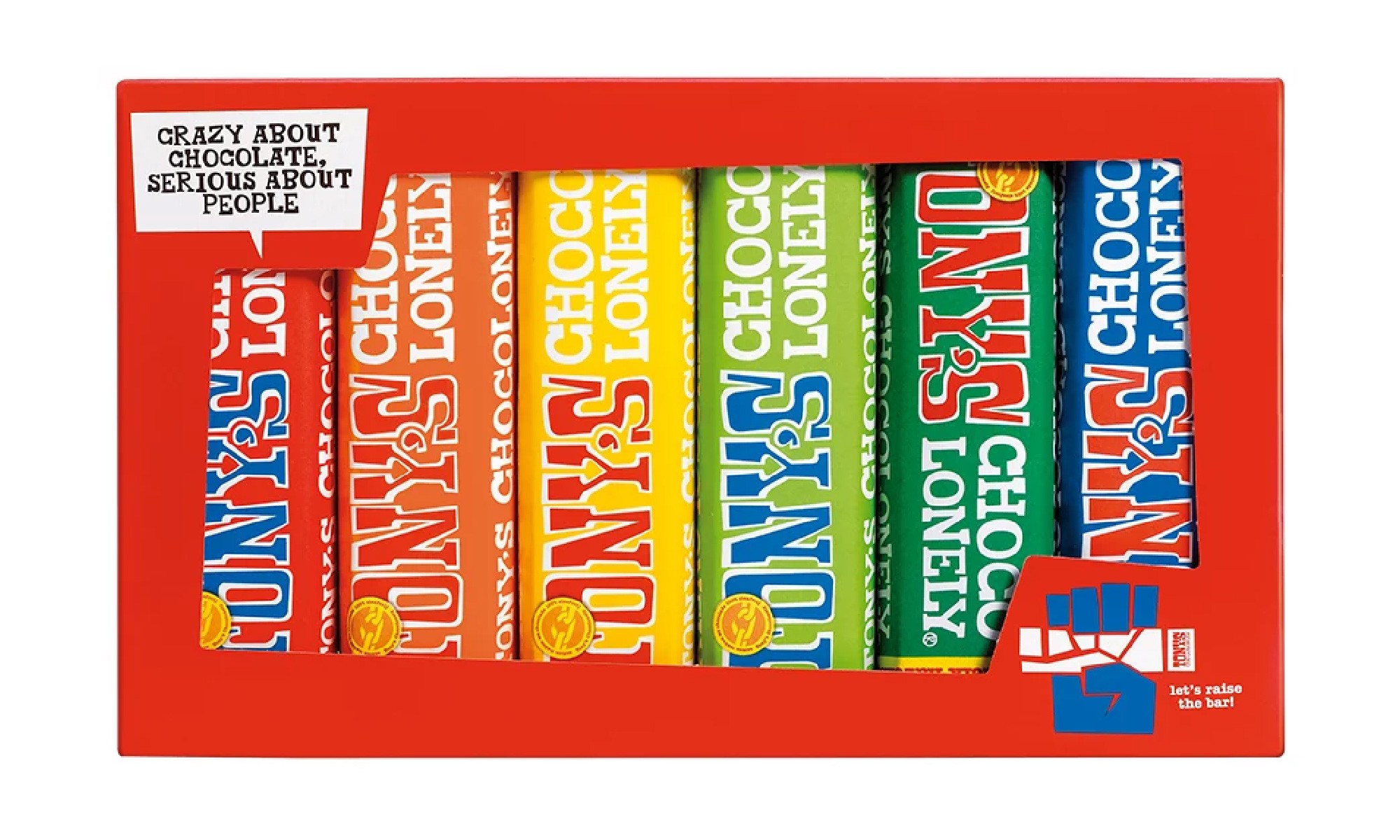
Tony’s Chocolonely adopts a radically different approach, prioritising bold colour blocking and oversized typography to achieve instant shelf impact.
Its packaging structure is relatively simple, flat bar wrappers or basic cartons, but this simplicity supports the brand’s ethical mission by reducing excess material.
Sustainability is a core part of Tony’s visual language, communicated through playful copy, symbolic design choices, and transparent messaging rather than premium finishes.
Internally, protection is minimal due to the nature of single-bar packaging, placing greater emphasis on the wrapper itself.
The bright colours and distinctive layouts make Tony’s packaging highly recognisable and extremely effective on social media, particularly in flat-lay and stacked compositions.
Research
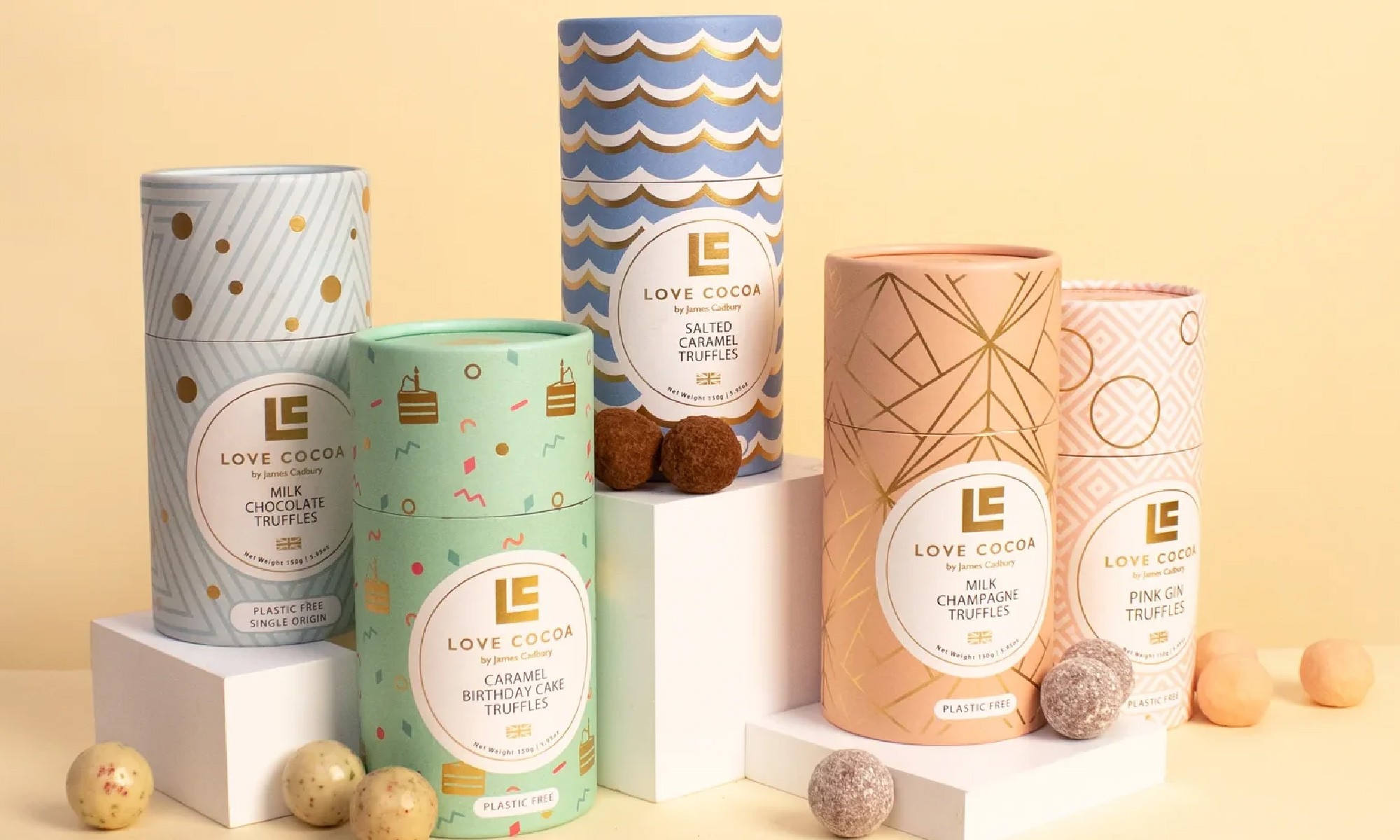
Love Cocoa
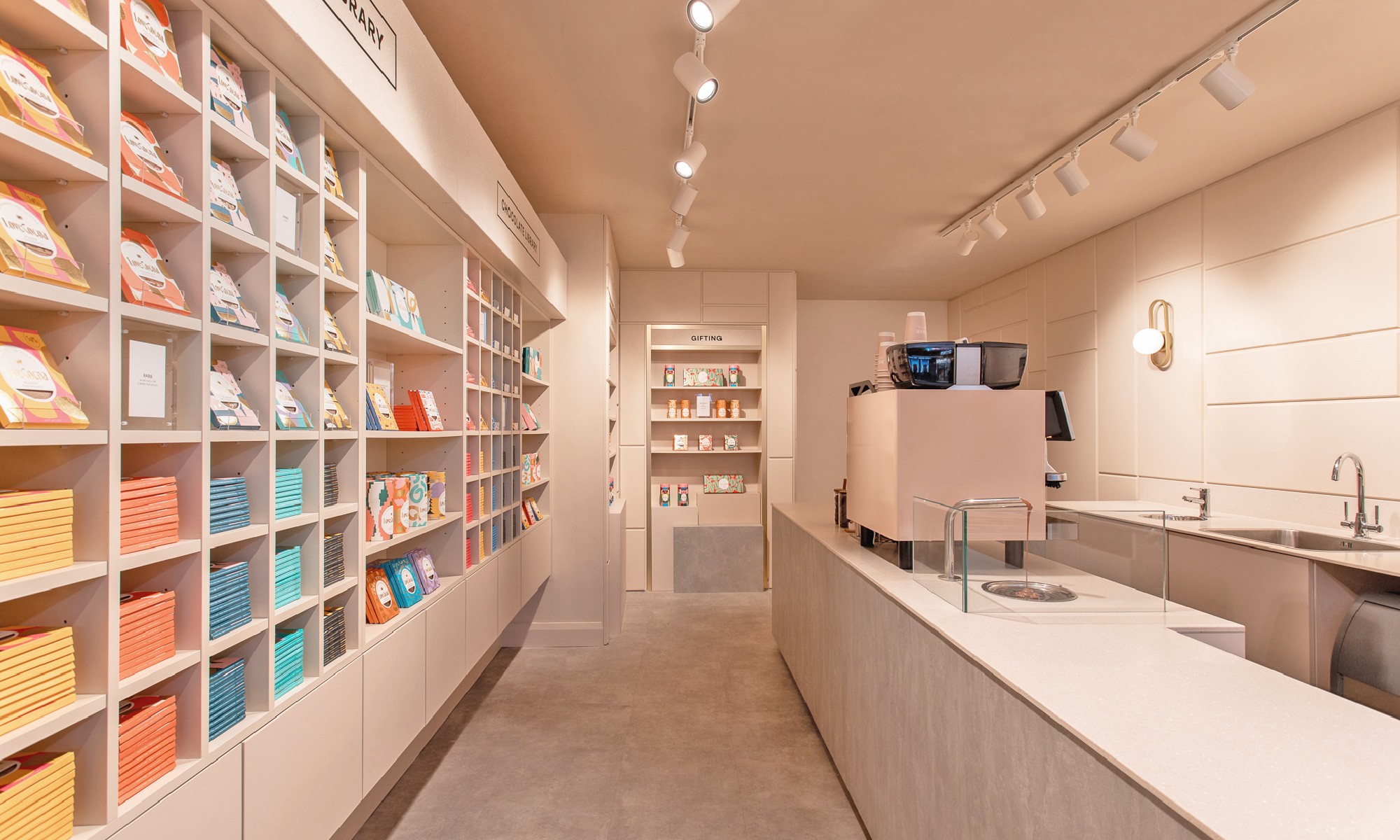
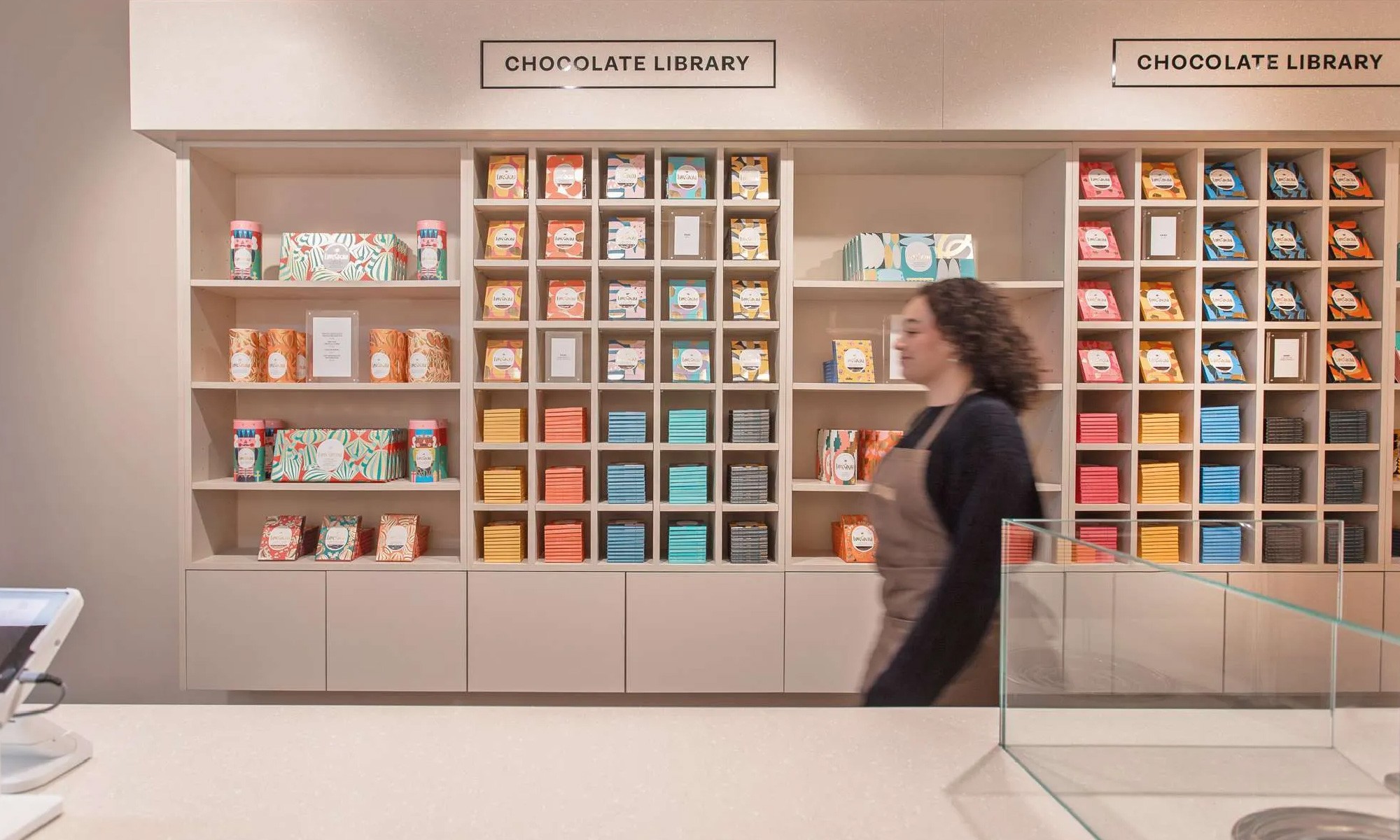
Love Cocoa positions itself as a design-led, ethical gifting brand, with packaging that balances refinement and approachability.
Boxes are often slim, letterbox-friendly, and designed to sit comfortably within smaller footprints, making them relevant references for an A5 constraint.
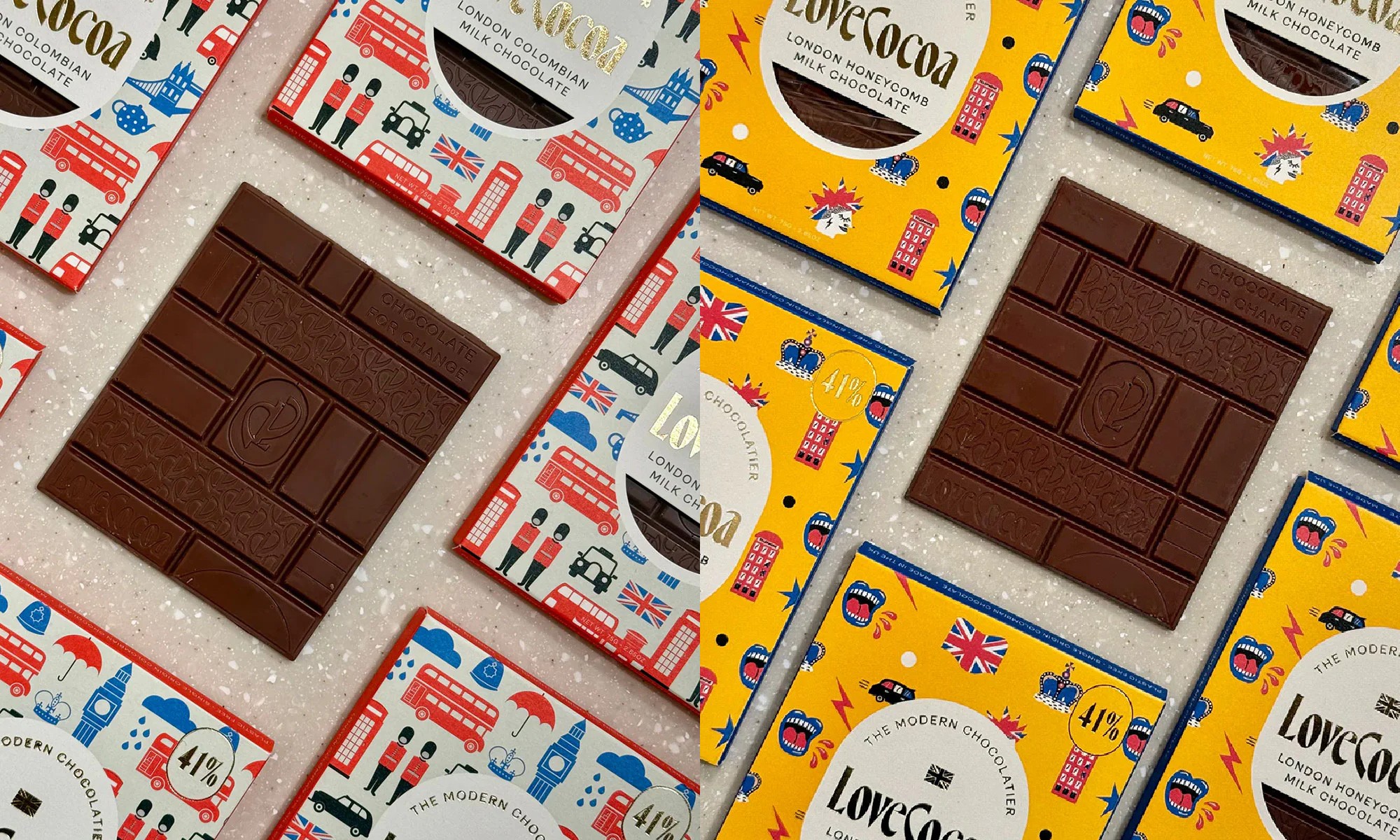
Sustainability is communicated through recyclable materials, muted colour palettes, and tasteful pattern design rather than bold claims.
Internally, products are carefully arranged using card inserts that prevent movement and enhance presentation.
Love Cocoa’s packaging is clearly designed with photography in mind, using soft tones, elegant typography, and repeatable patterns that translate well to digital and social platforms.
Research
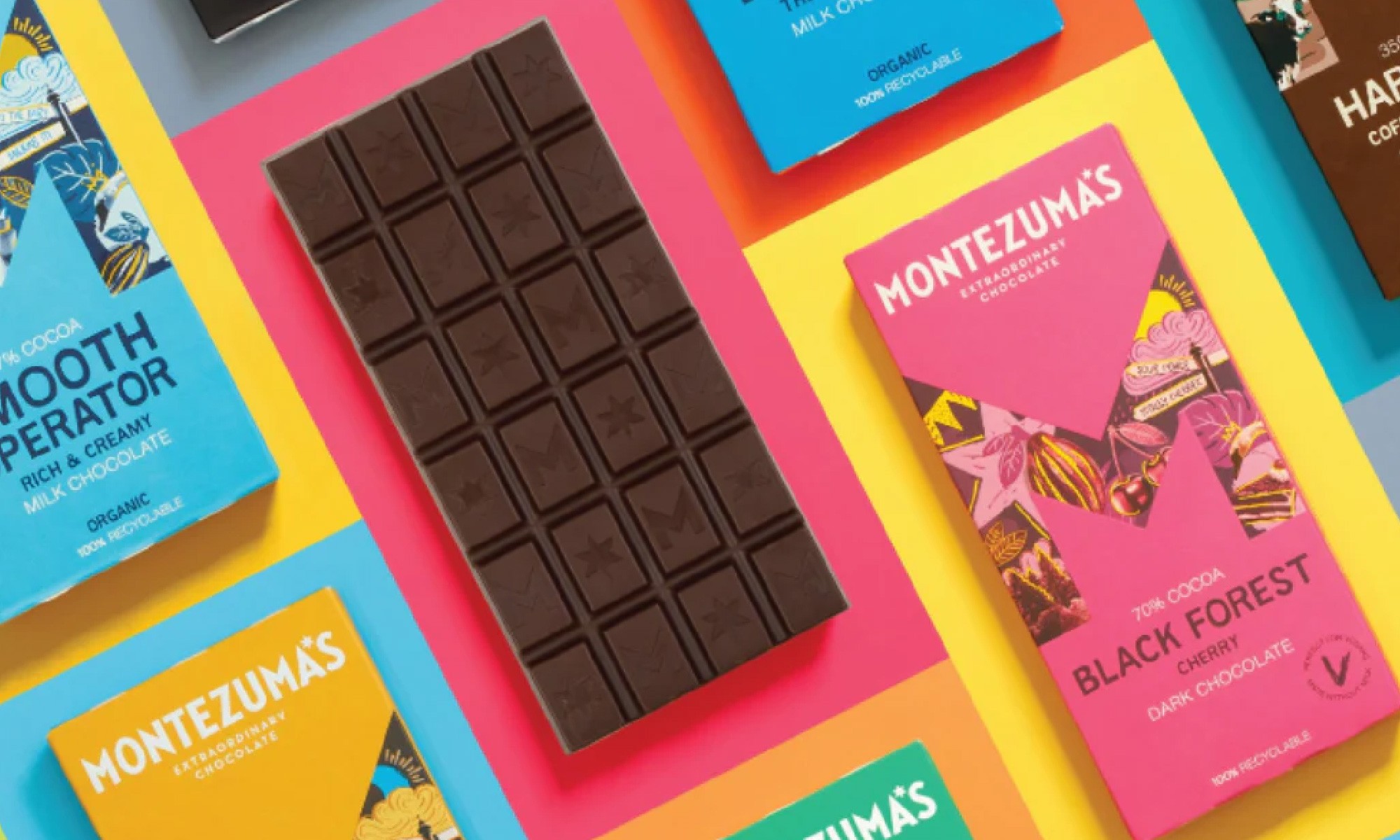
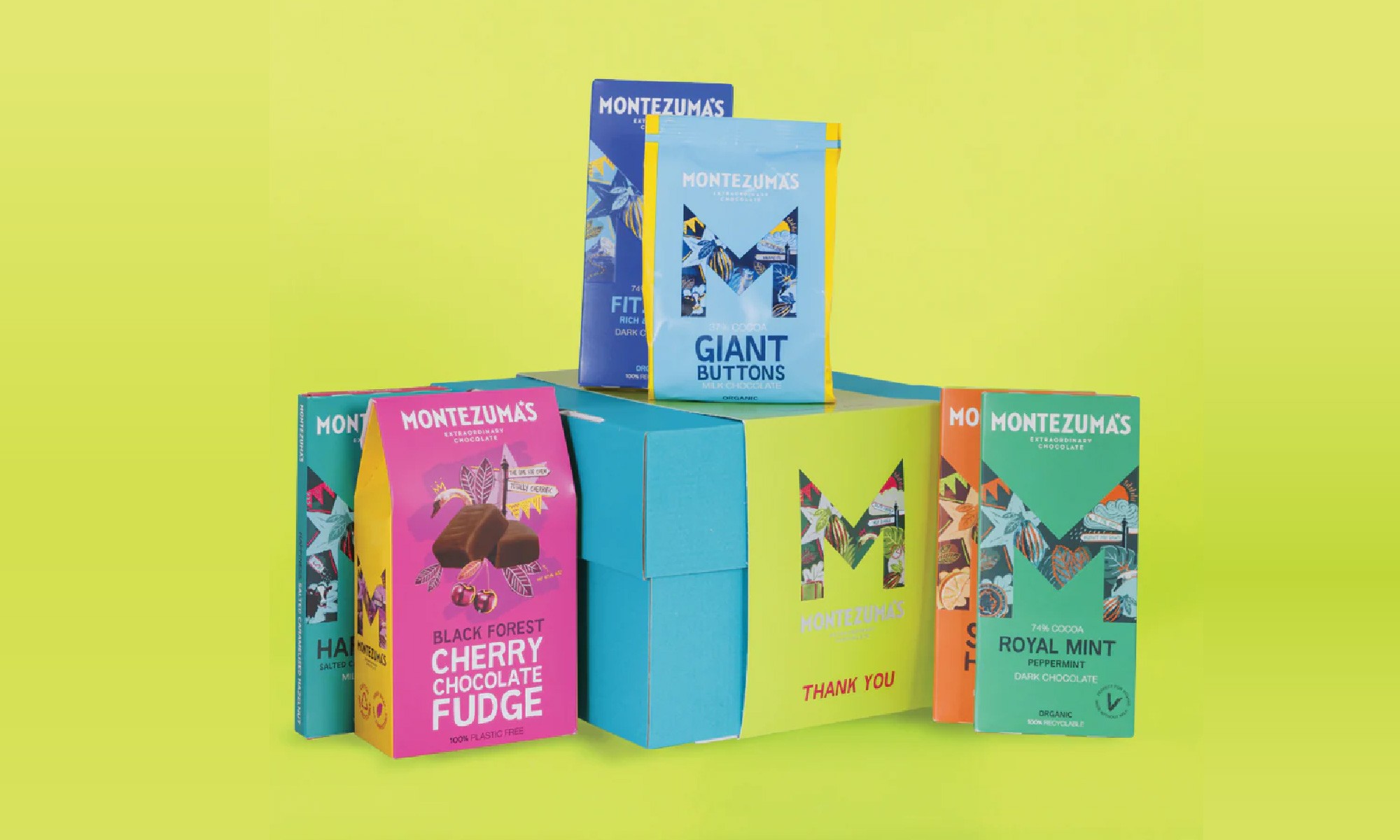
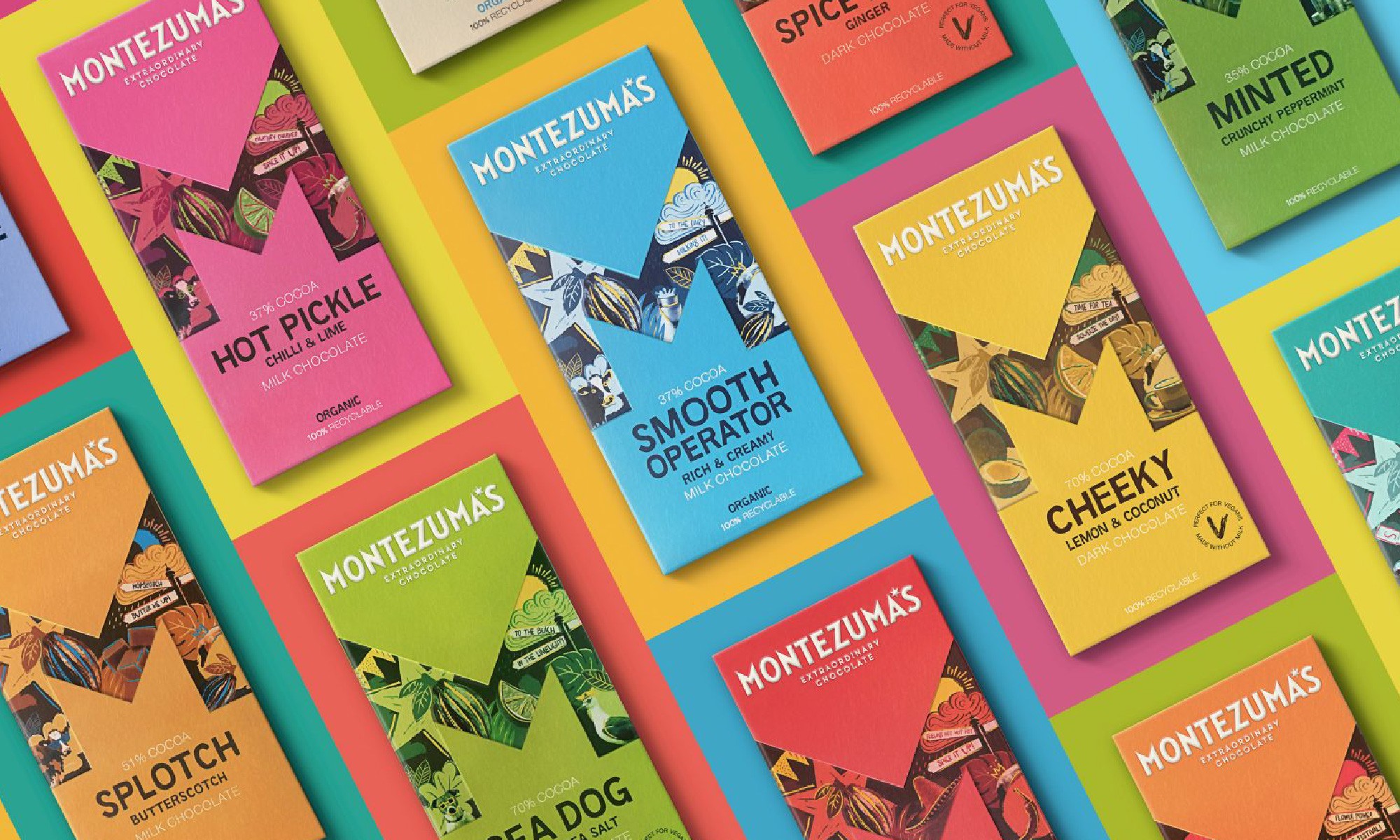
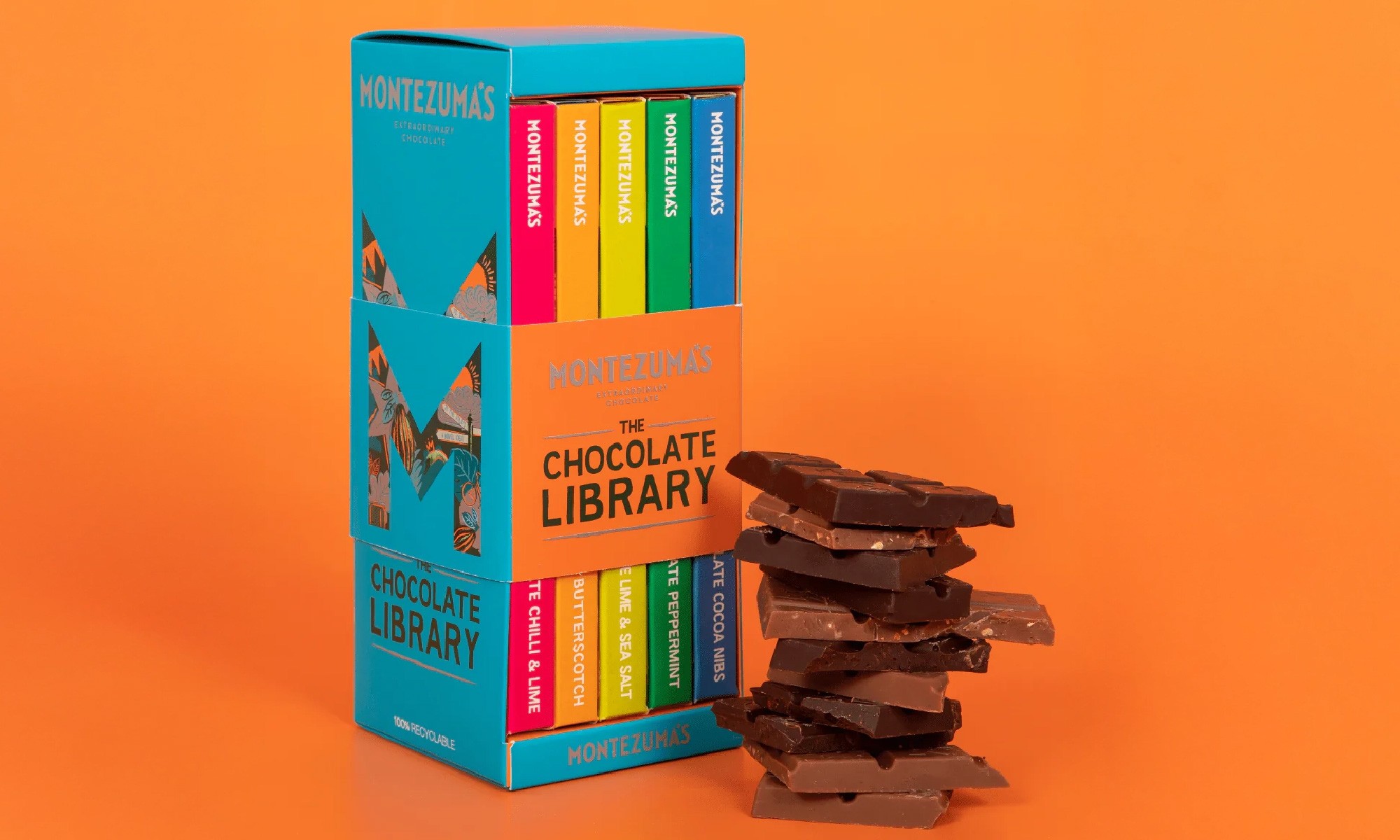
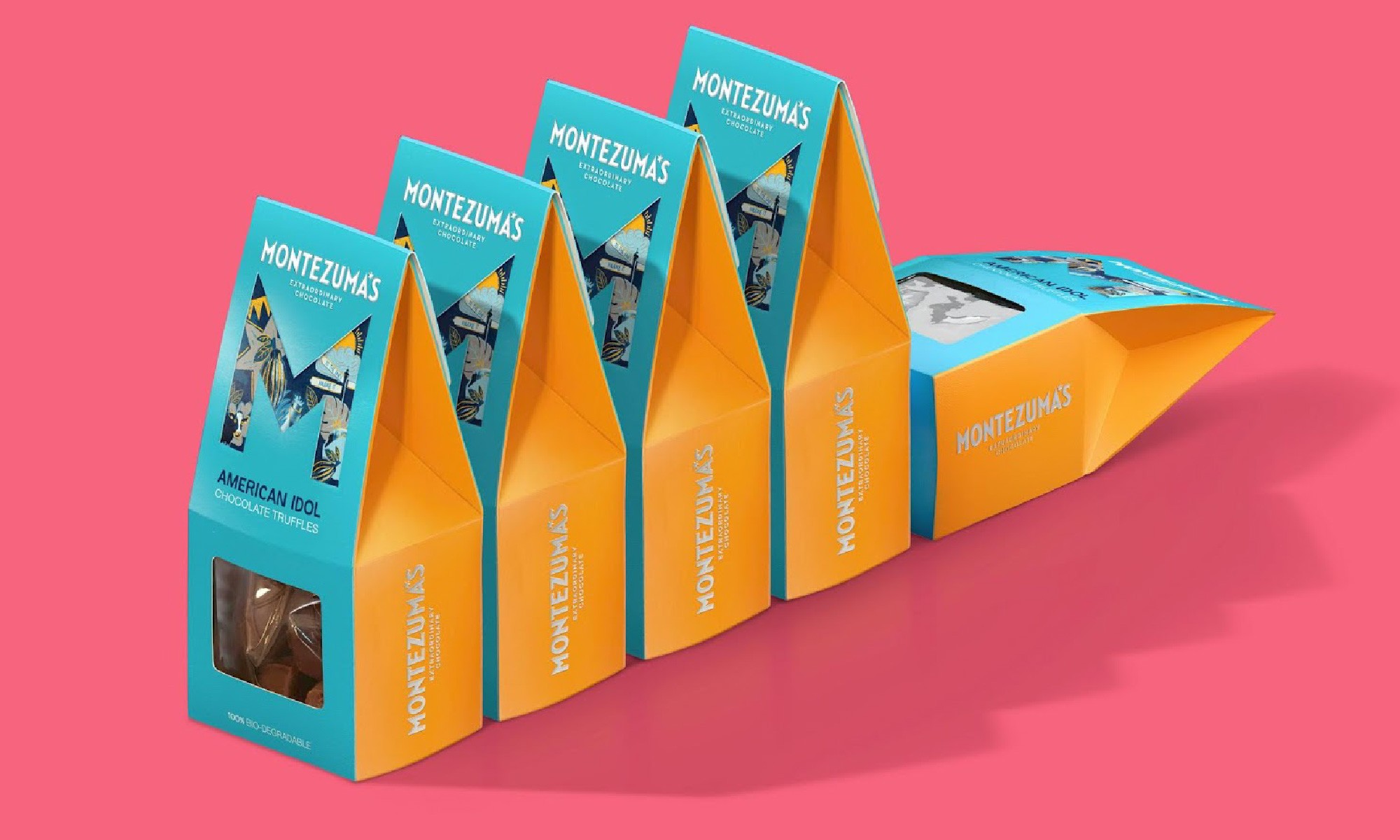
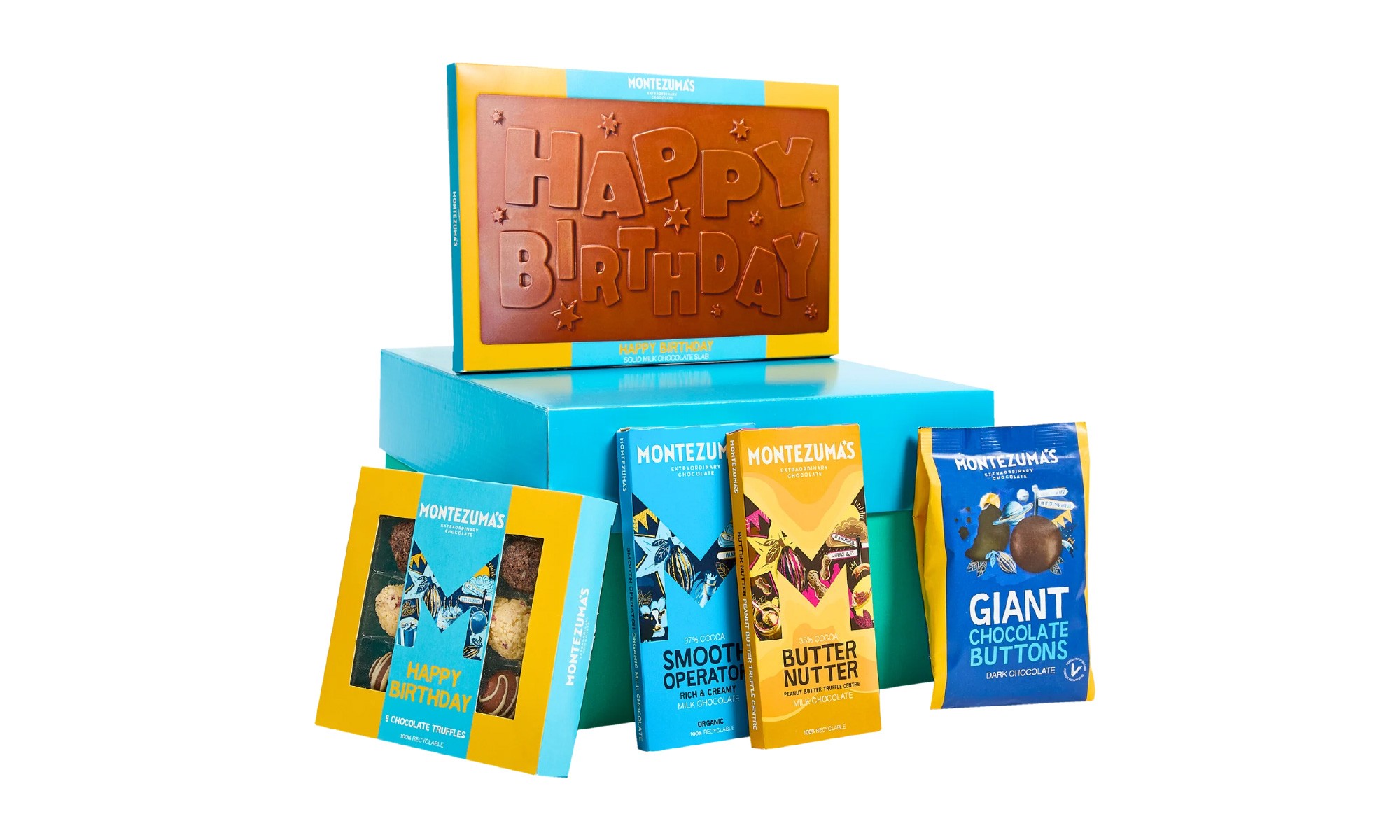
Montezumas
Montezuma’s packaging combines premium cues with a playful, independent spirit.
On shelf, the brand stands out through adventurous colour combinations, expressive typography, and clear flavour differentiation.
The structural approach is generally straightforward, using folding cartons and bar wrappers that prioritise efficiency and recyclability.
Sustainability is reinforced through messaging around organic ingredients and ethical sourcing, supported by simple material choices.
Internally, packaging is functional rather than luxurious, focusing on protection rather than elaborate presentation.
The brand’s bold visuals and distinctive tone make it effective for social media, particularly when highlighting flavour variety and product range.
Research
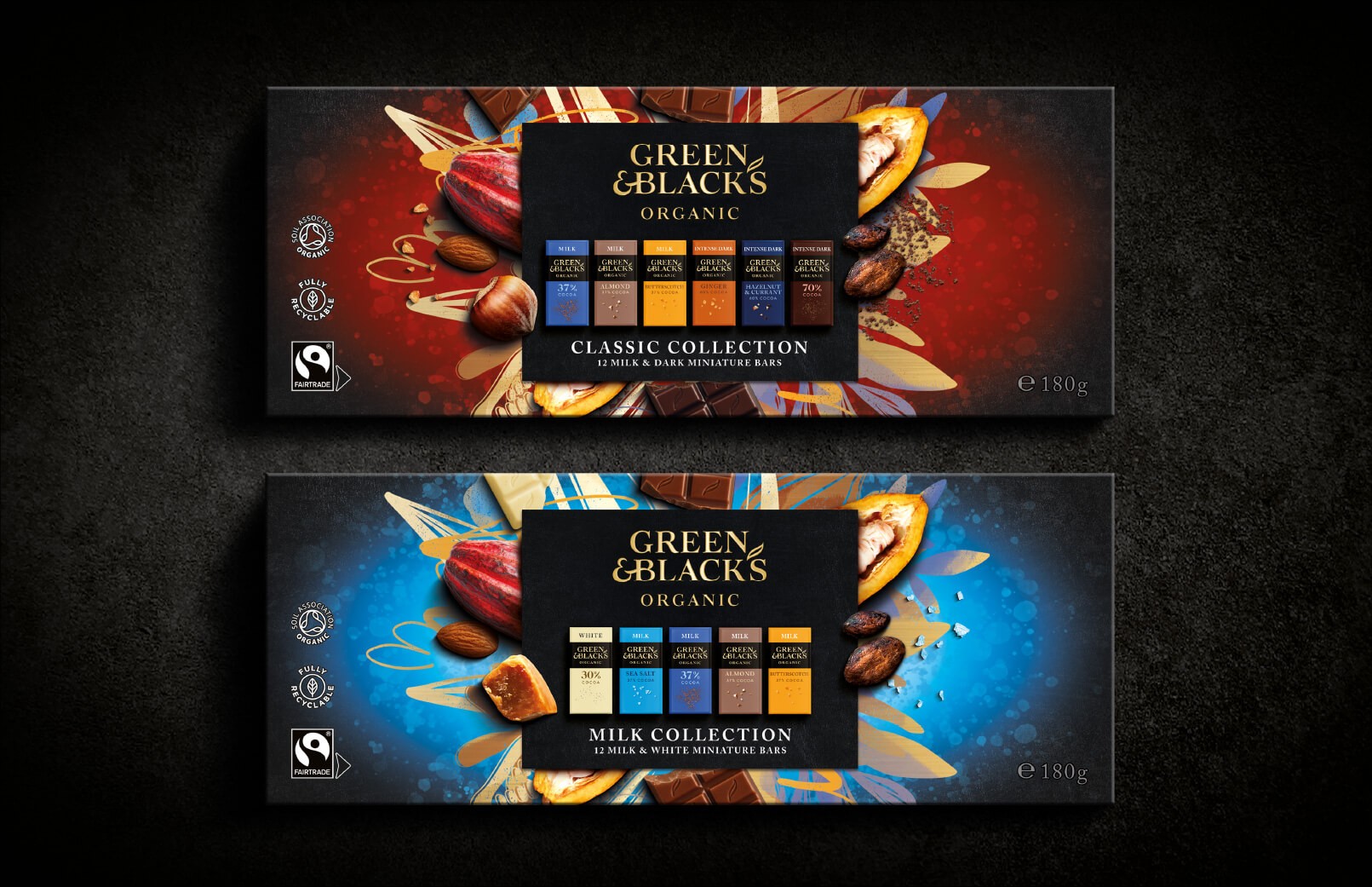
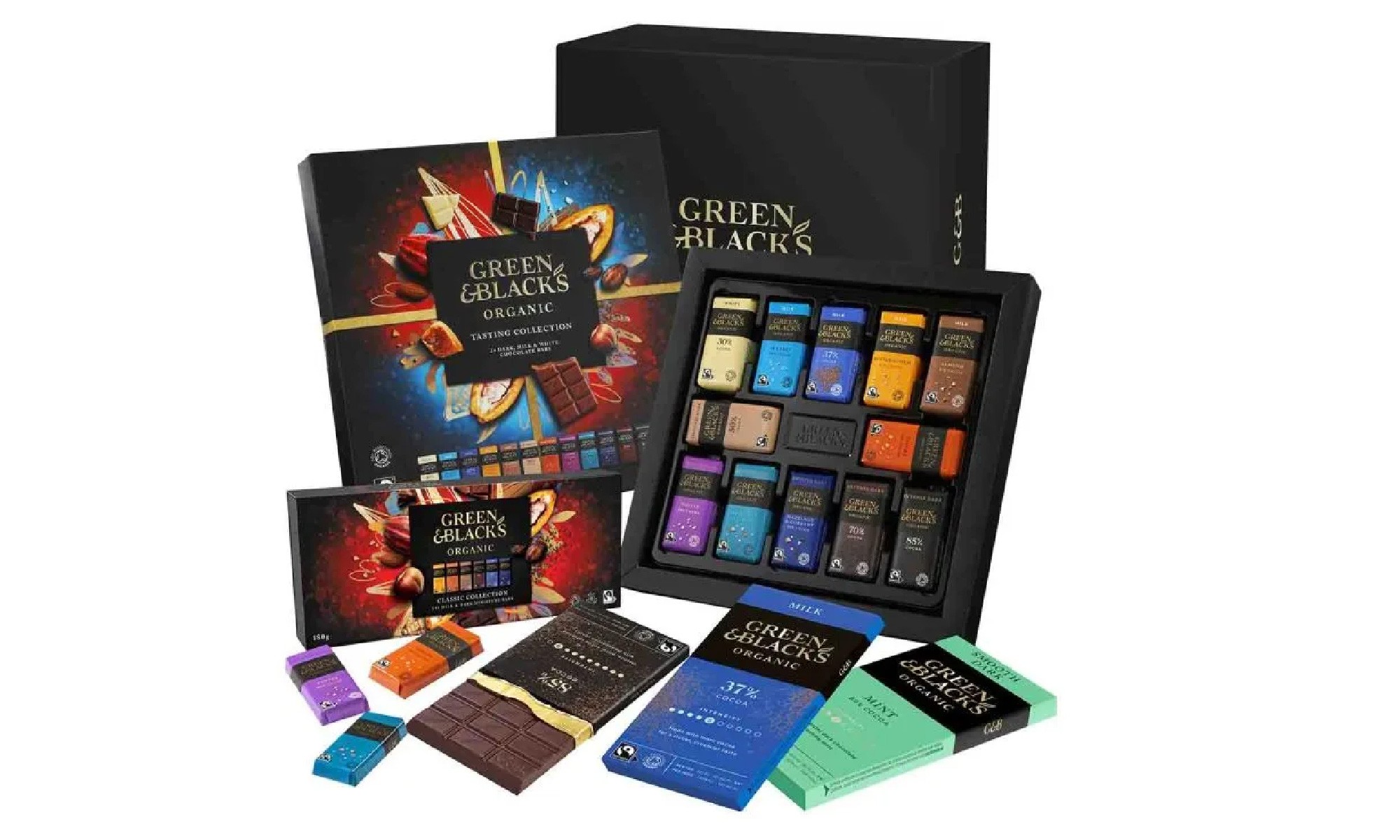
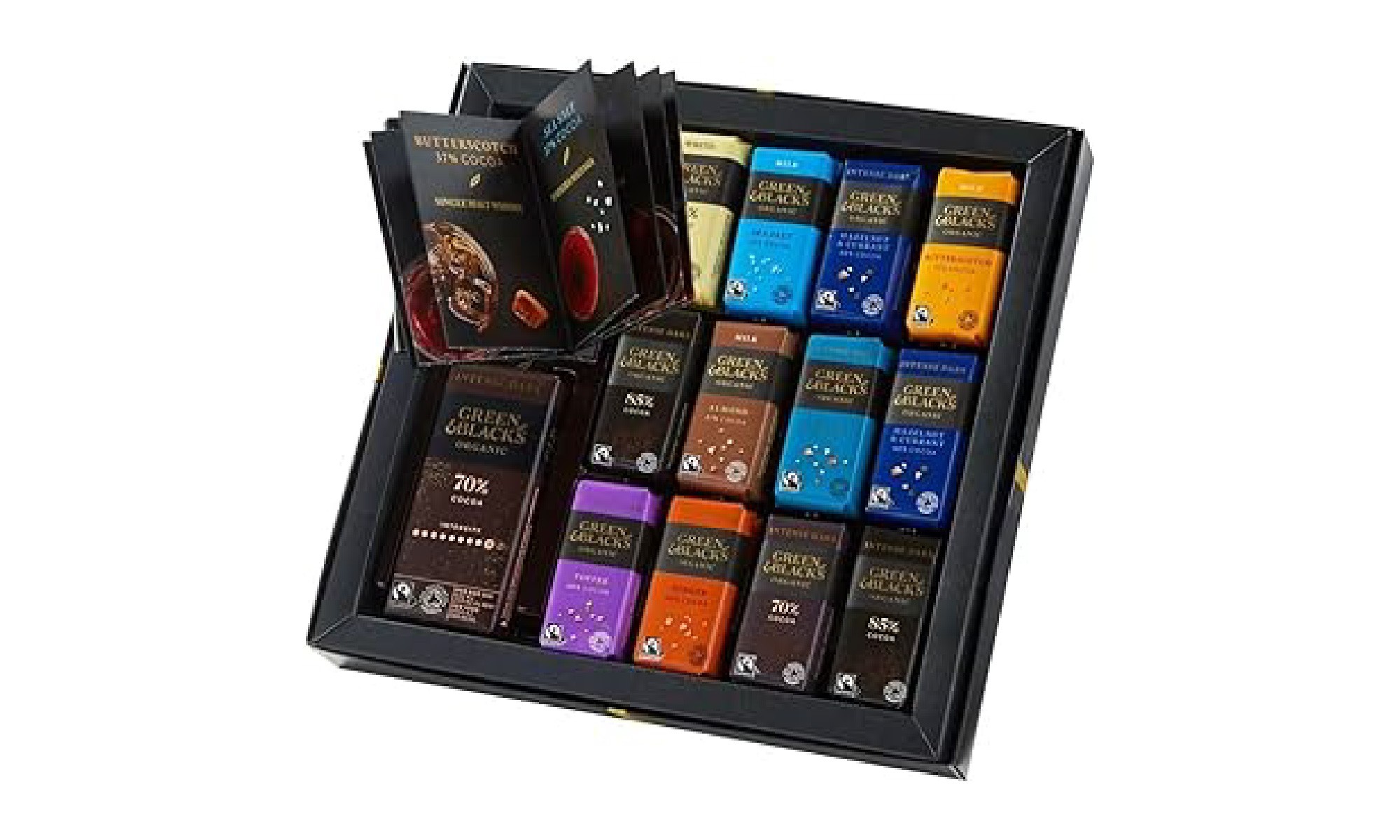
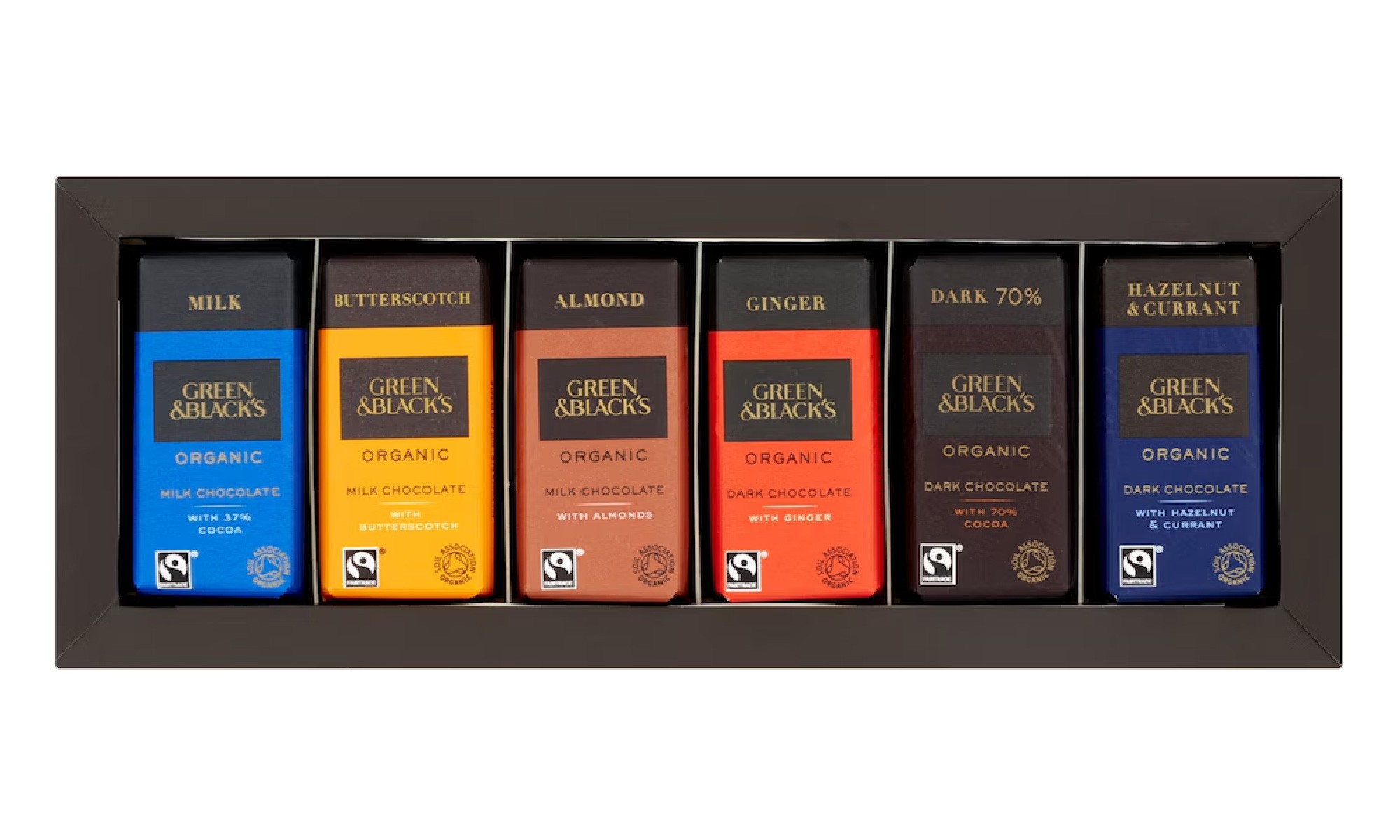
Green and Black's
Green & Black’s occupies a more traditional premium position, using darker colour palettes, gold accents, and minimal illustration to convey seriousness and quality.
Packaging structures are simple and consistent, typically using paper-based materials that reinforce the brand’s organic and ethical positioning.
Sustainability is communicated through restrained design and long-established brand credibility rather than contemporary visual trends.
Internal packaging is minimal, as products are generally single bars, but the external wrapper provides sufficient protection.
While less visually playful than competitors, the packaging photographs well in controlled, editorial-style imagery.
Research
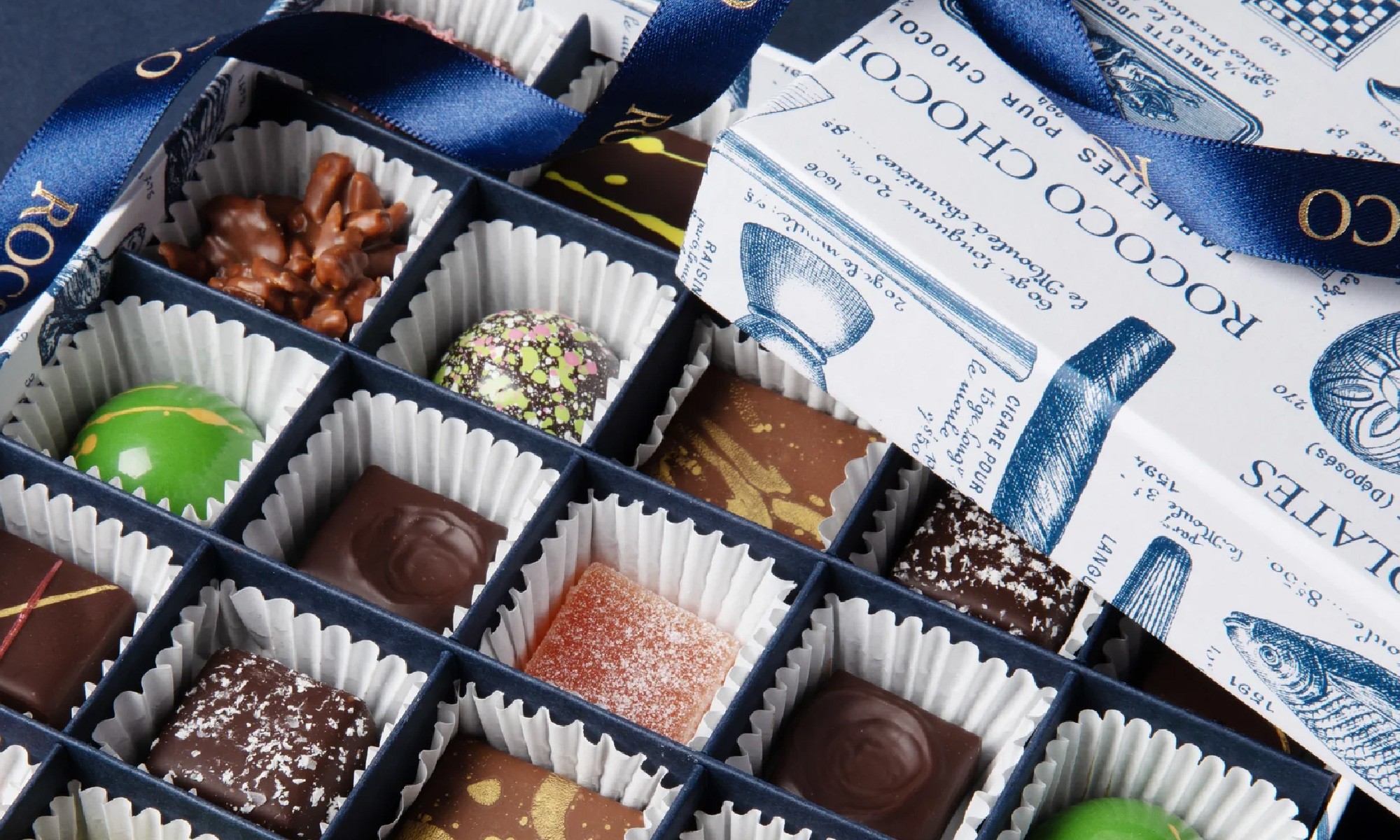
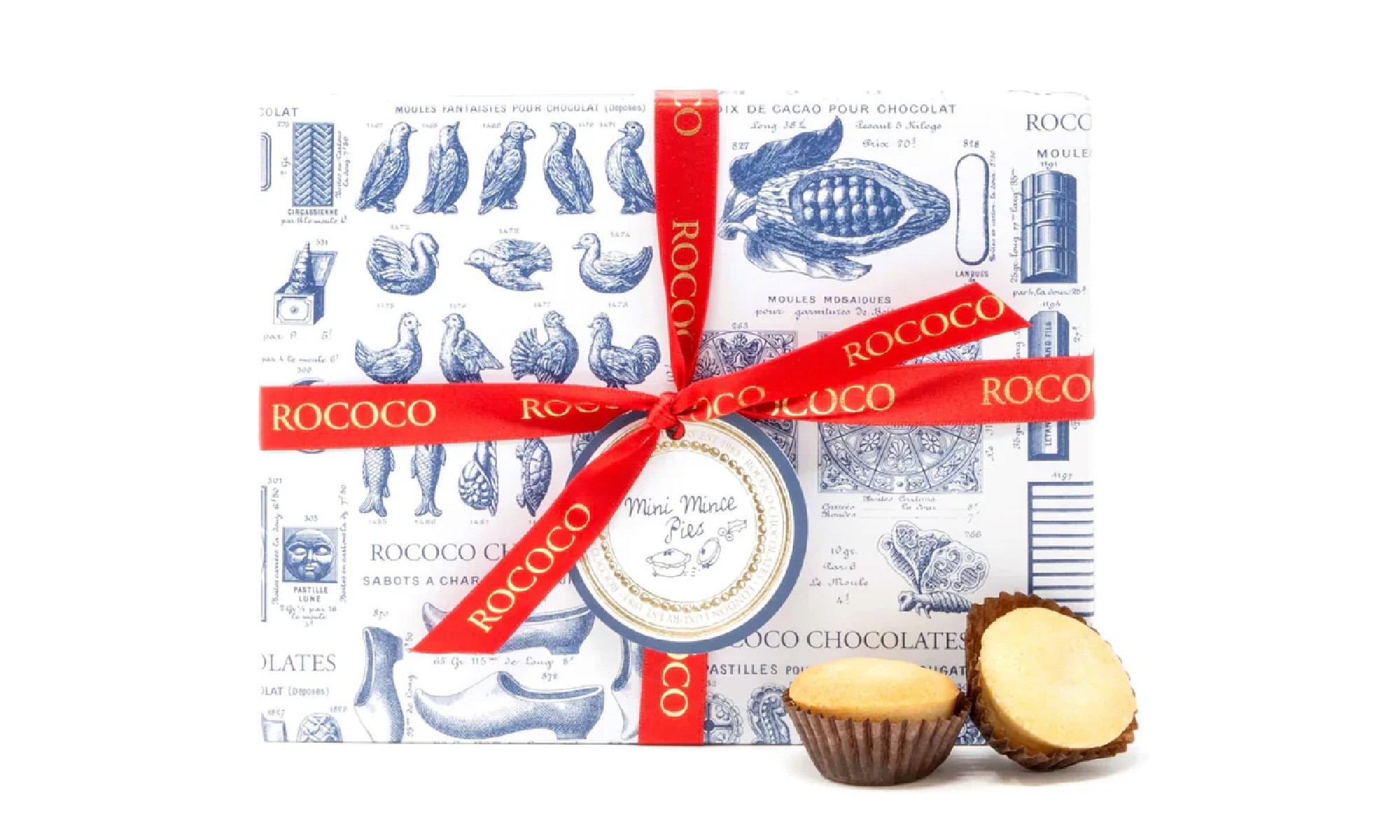
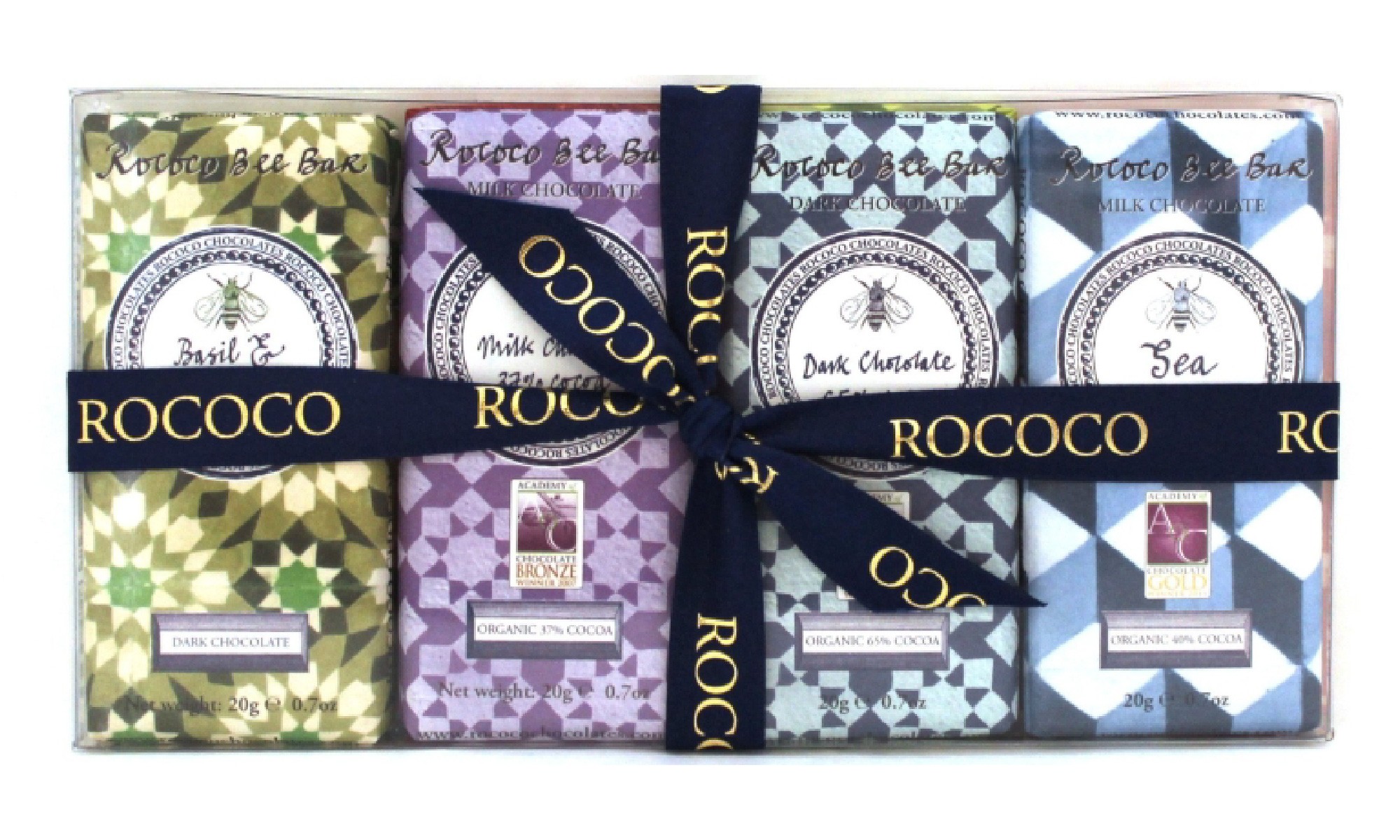
Rococo Chocolates
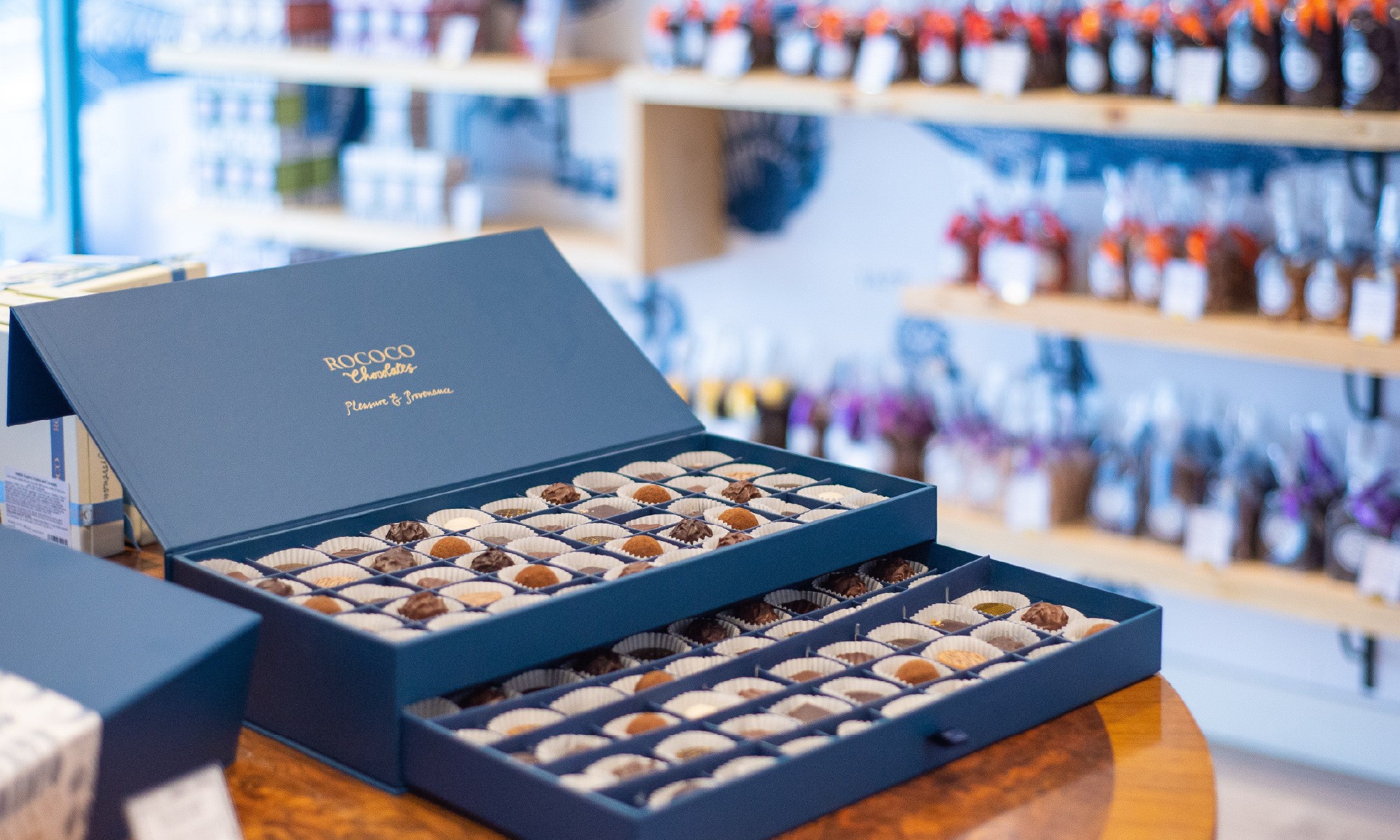
Rococo represents the high-end, artisanal end of the market, using decorative patterns, illustrated elements, and carefully considered box structures to create a boutique feel.
Packaging often uses rigid boxes or layered cartons that enhance the unboxing experience and justify a higher price point.
Internally, products are meticulously arranged using trays or compartments that protect delicate items and elevate presentation.
Sustainability is less visually dominant, but craftsmanship and longevity are emphasised through material quality.
Rococo’s packaging performs strongly in styled photography and social media contexts where detail, texture, and storytelling are prioritised.
Packaging Design
The next stage of the project was to design and develop original packaging for Coco Loco. Informed by my competitor research, I chose to create a packaging solution that felt more engaging and enjoyable to interact with, rather than purely functional. Many of the brands analysed place strong emphasis on unboxing and tactile experience, which influenced my decision to explore packaging that offers a sense of discovery and play.
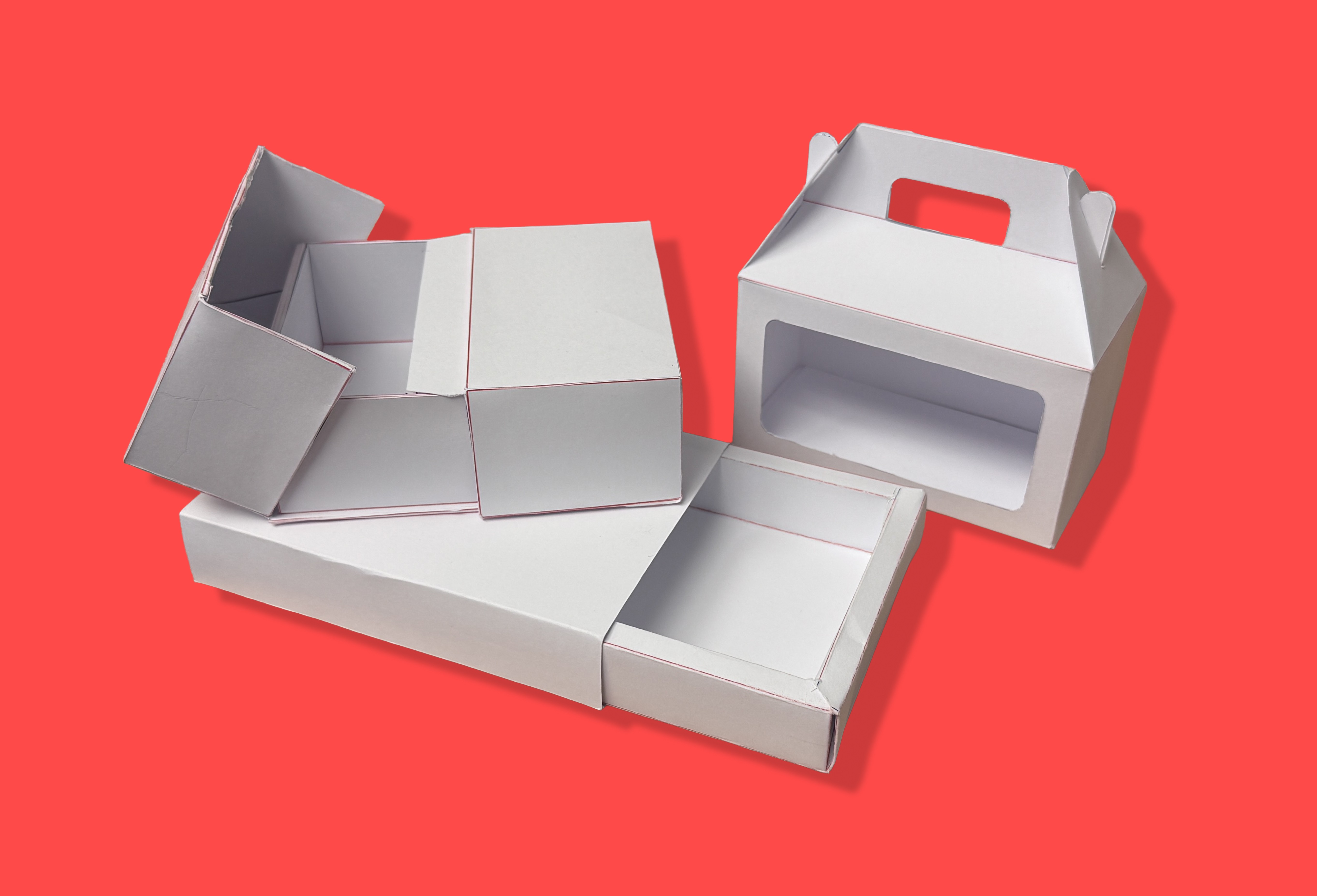
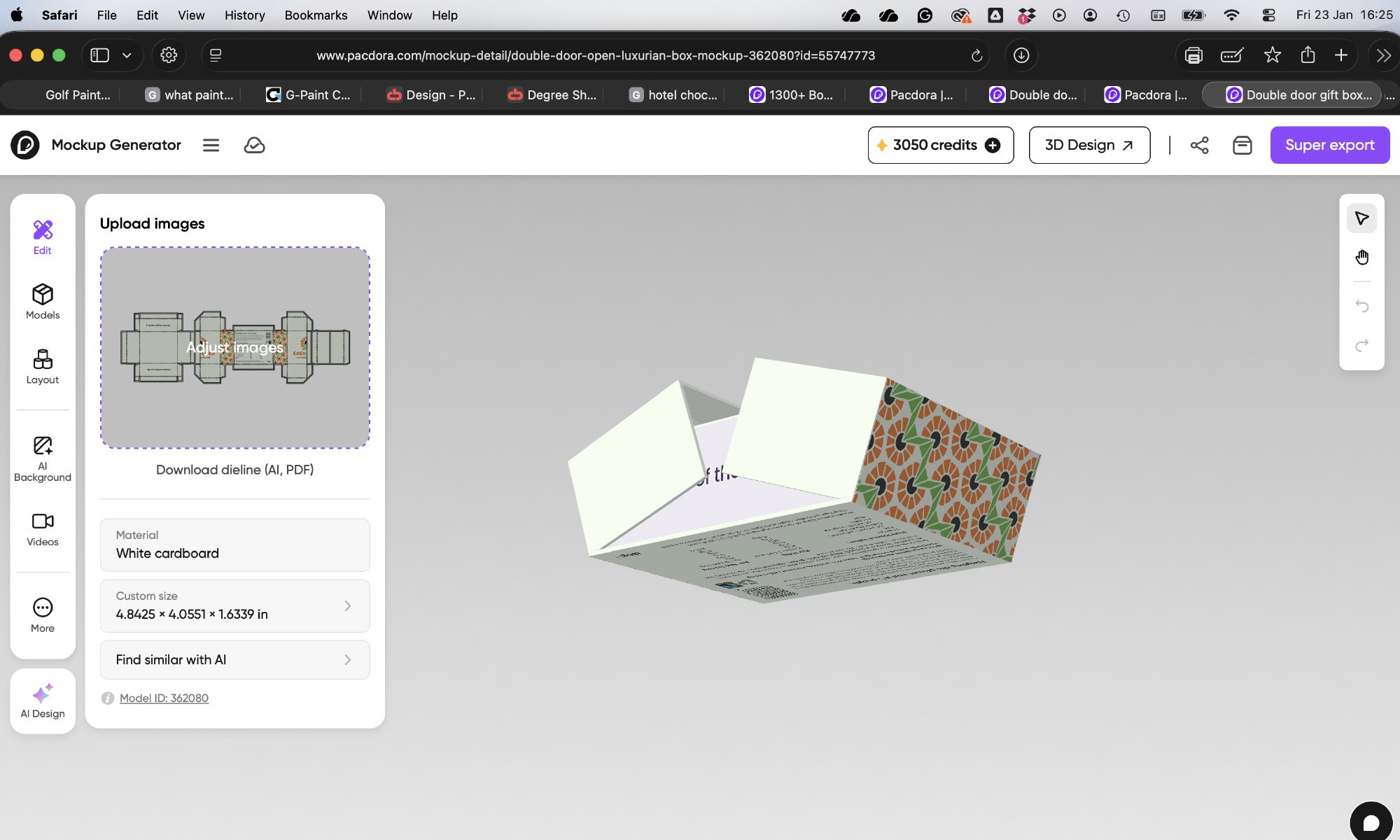
To explore structural possibilities, I used Pacdora, an online packaging design and prototyping platform that allows designers to experiment with a wide range of box nets, materials, and folding mechanisms. Pacdora was particularly useful for visualising how different packaging structures would function in three dimensions, testing scale, proportions, and practicality before committing to a final design.
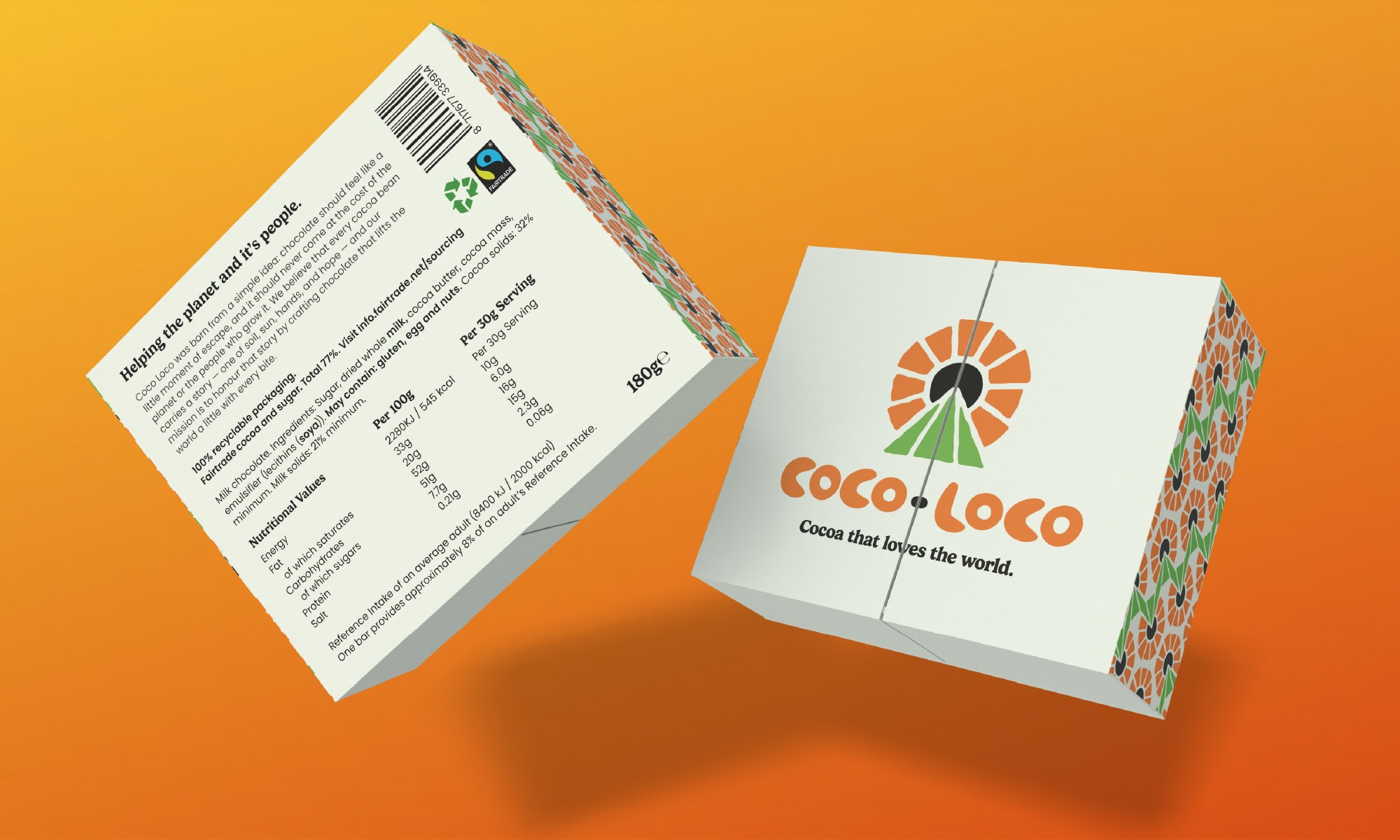
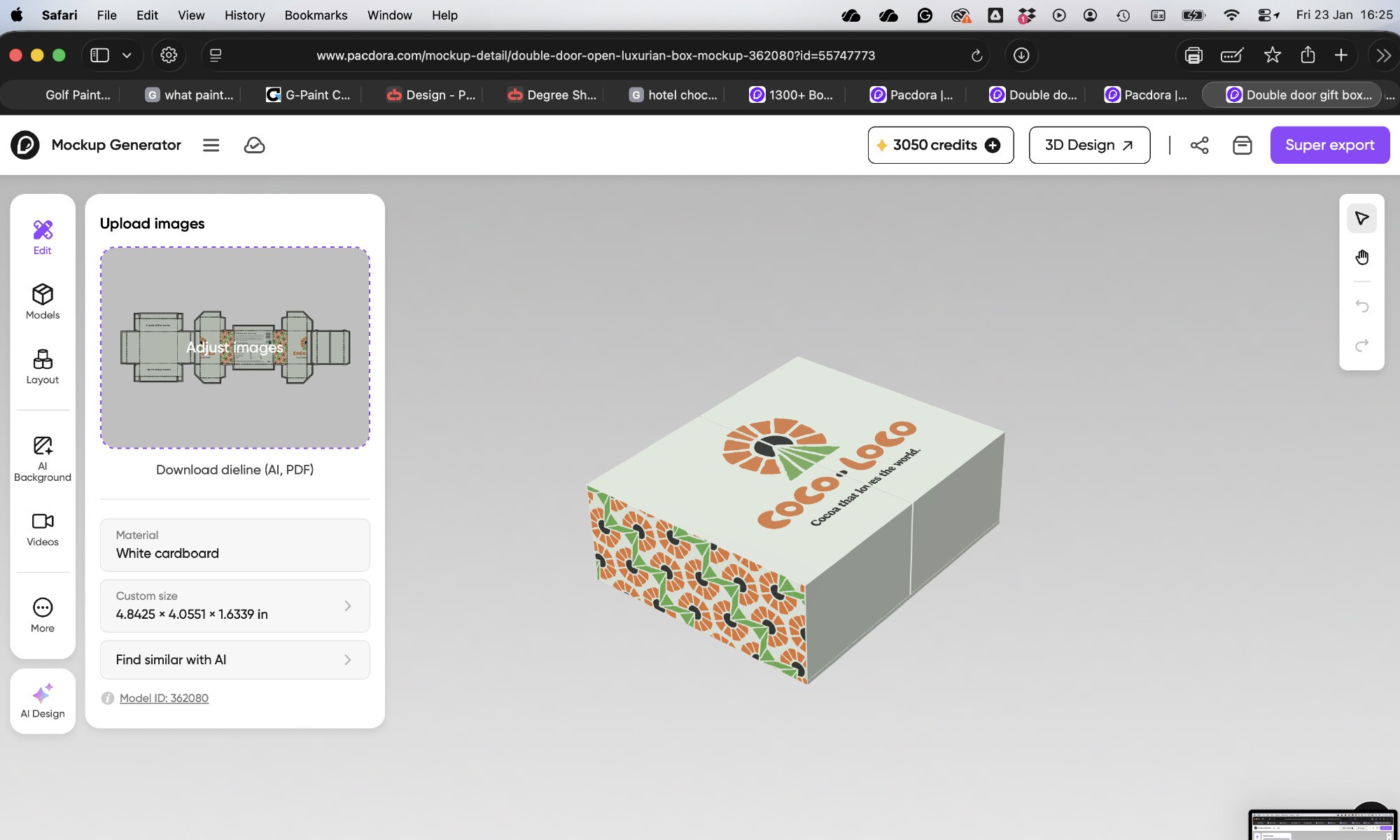
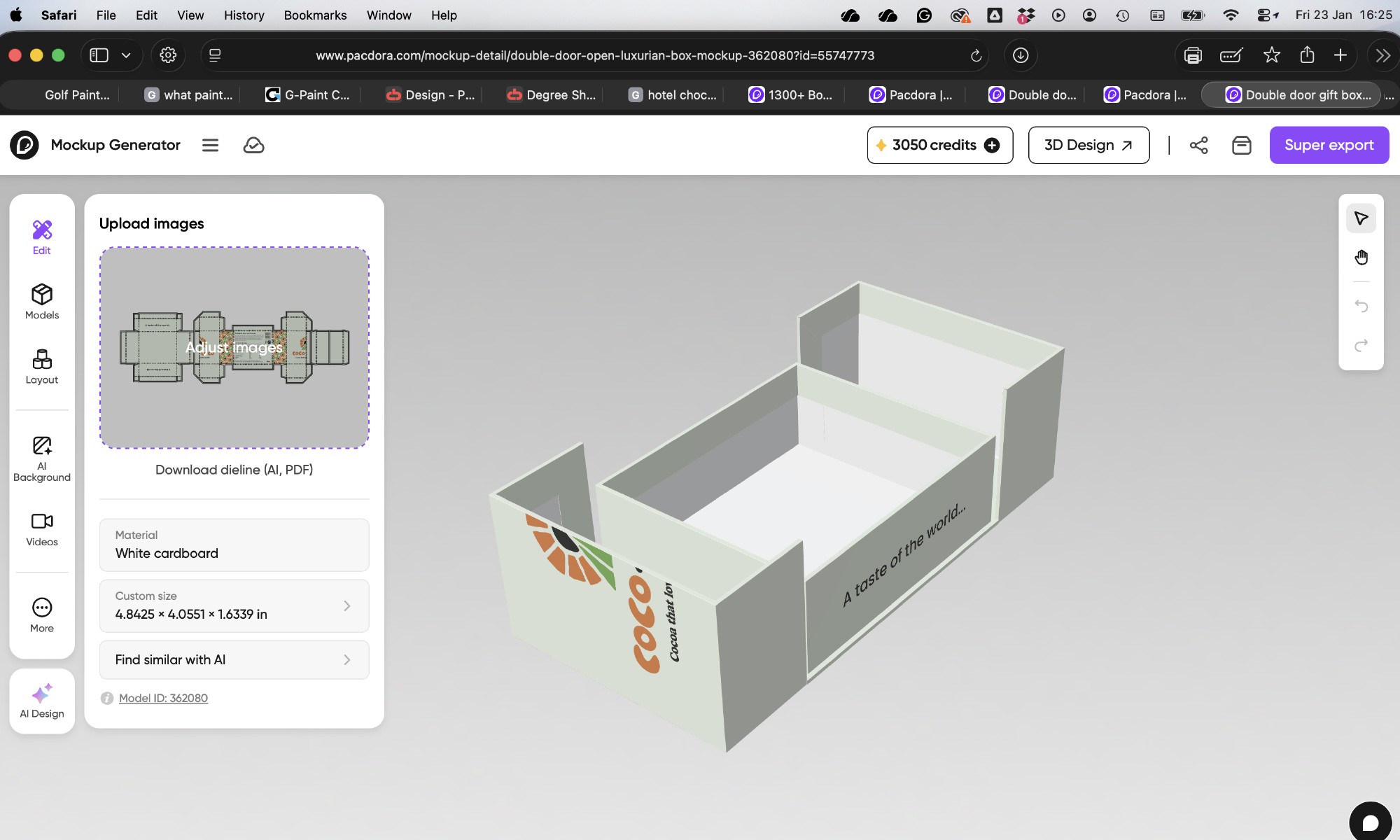
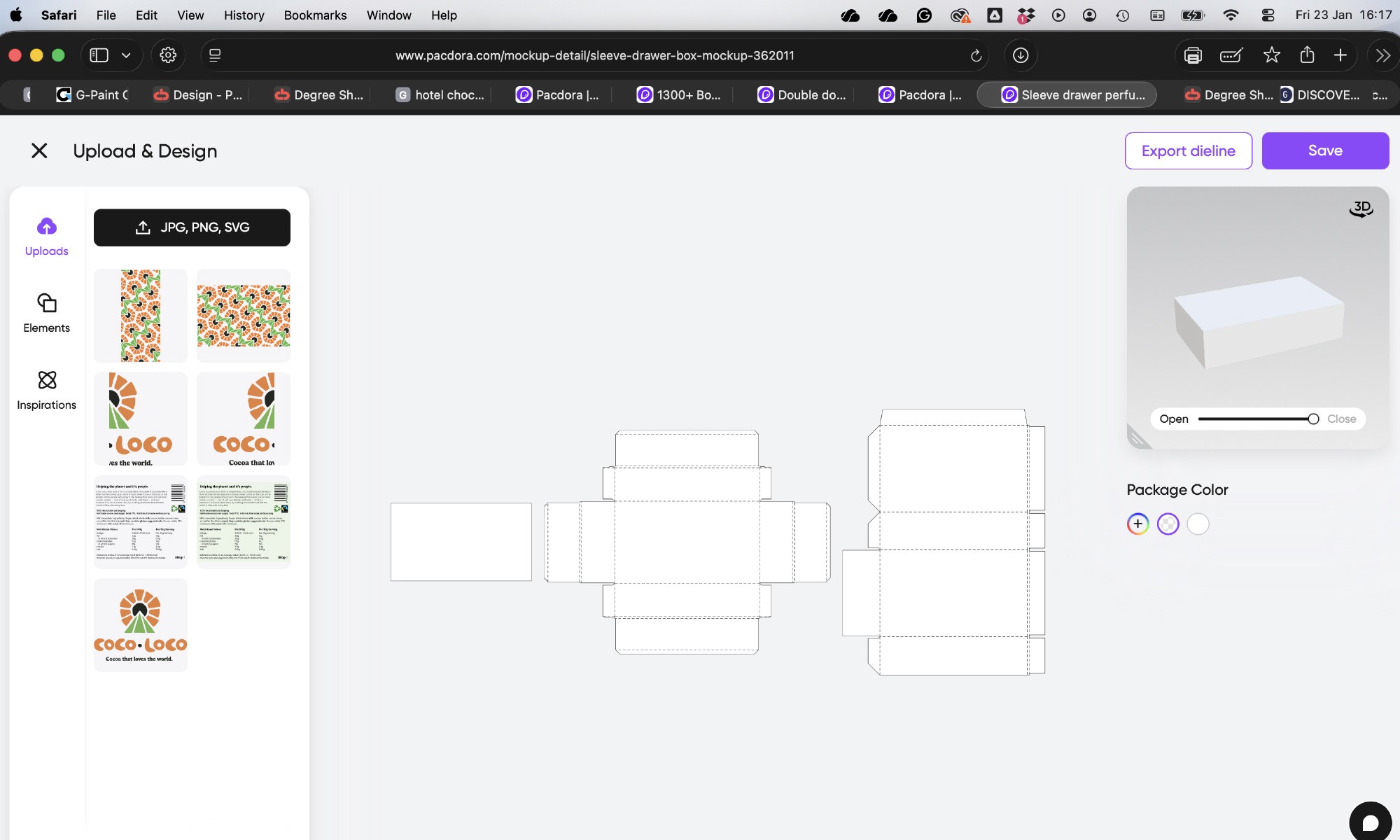
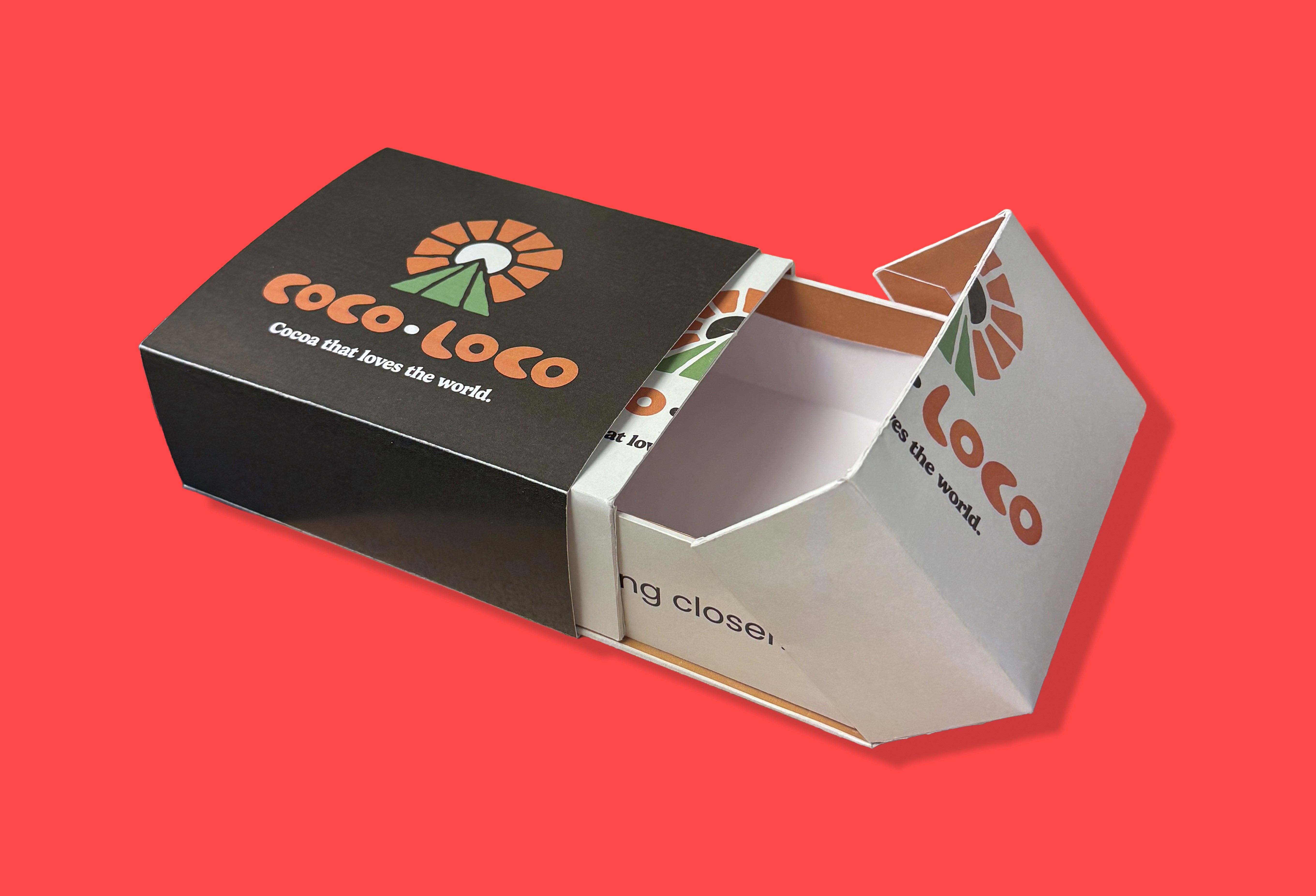
I experimented with several box net structures within Pacdora, assessing how each performed in terms of footprint, protection, and internal organisation. After comparing these options, I selected the structure shown below as it offered the most effective balance between usability, visual interest, and compliance with the A5 footprint requirement. During this process, it became apparent that the box structure had a tendency to open on its own, which led to the introduction of a branded sleeve to secure the packaging. This sleeve not only solved a functional issue but also provided an additional surface to reinforce the Coco Loco brand and enhance shelf presence.
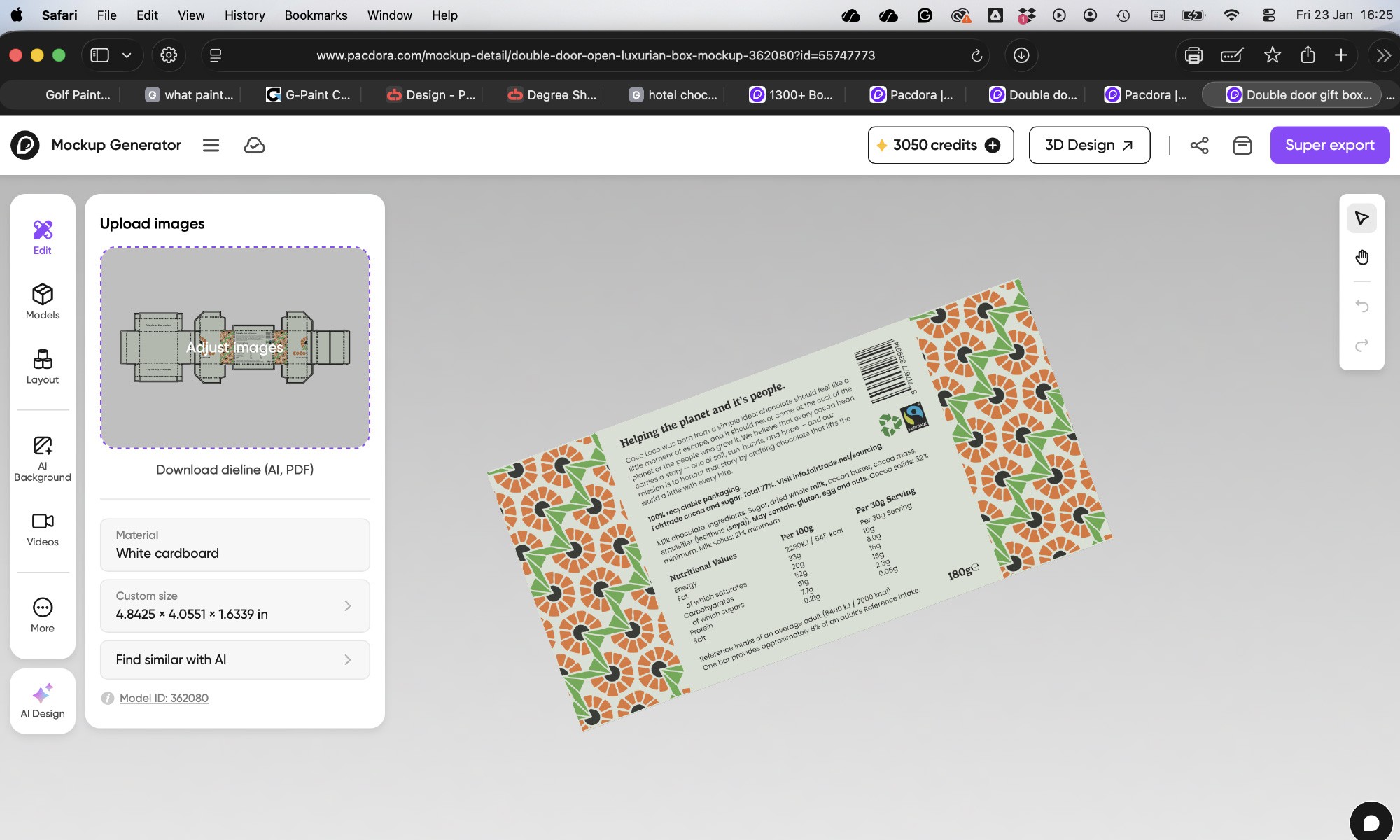
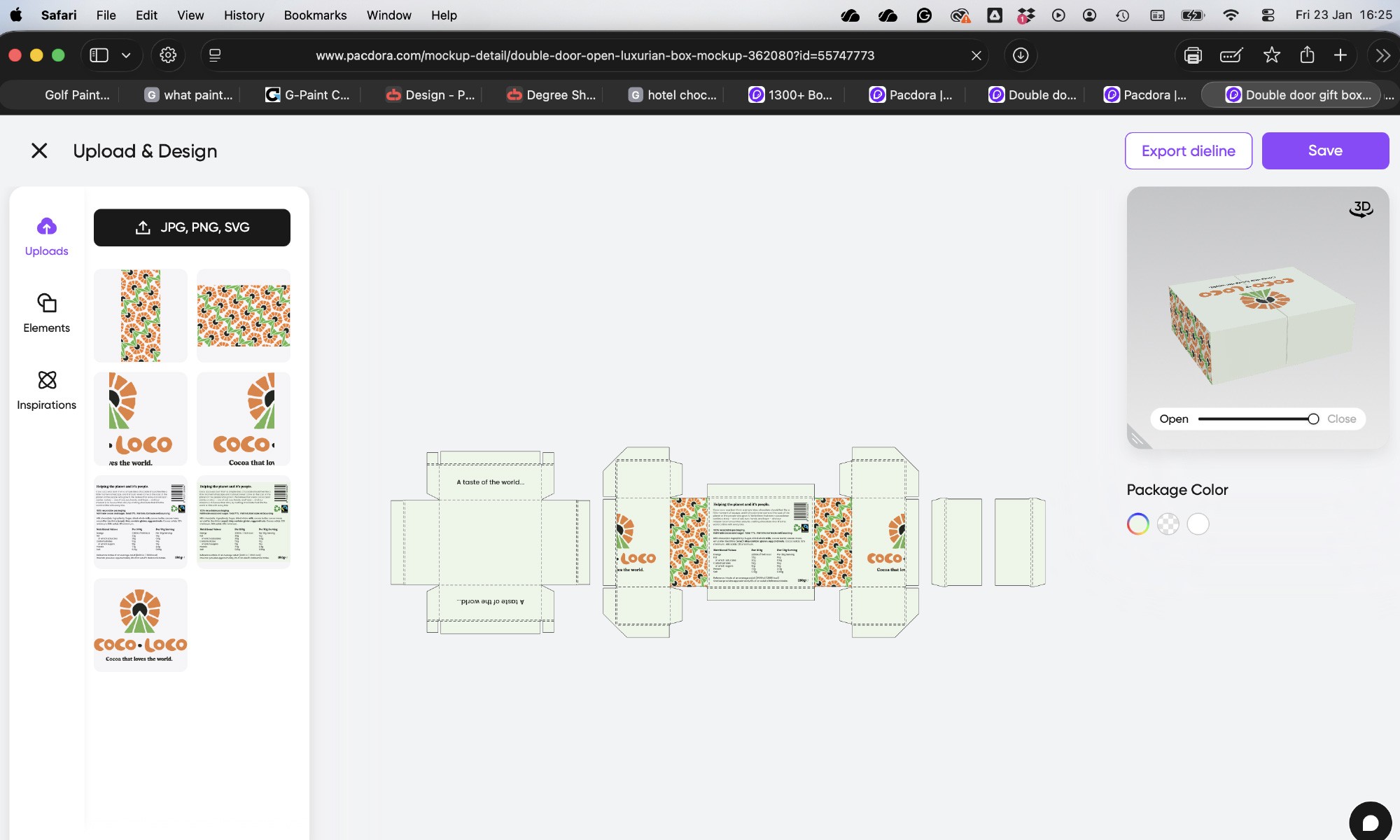
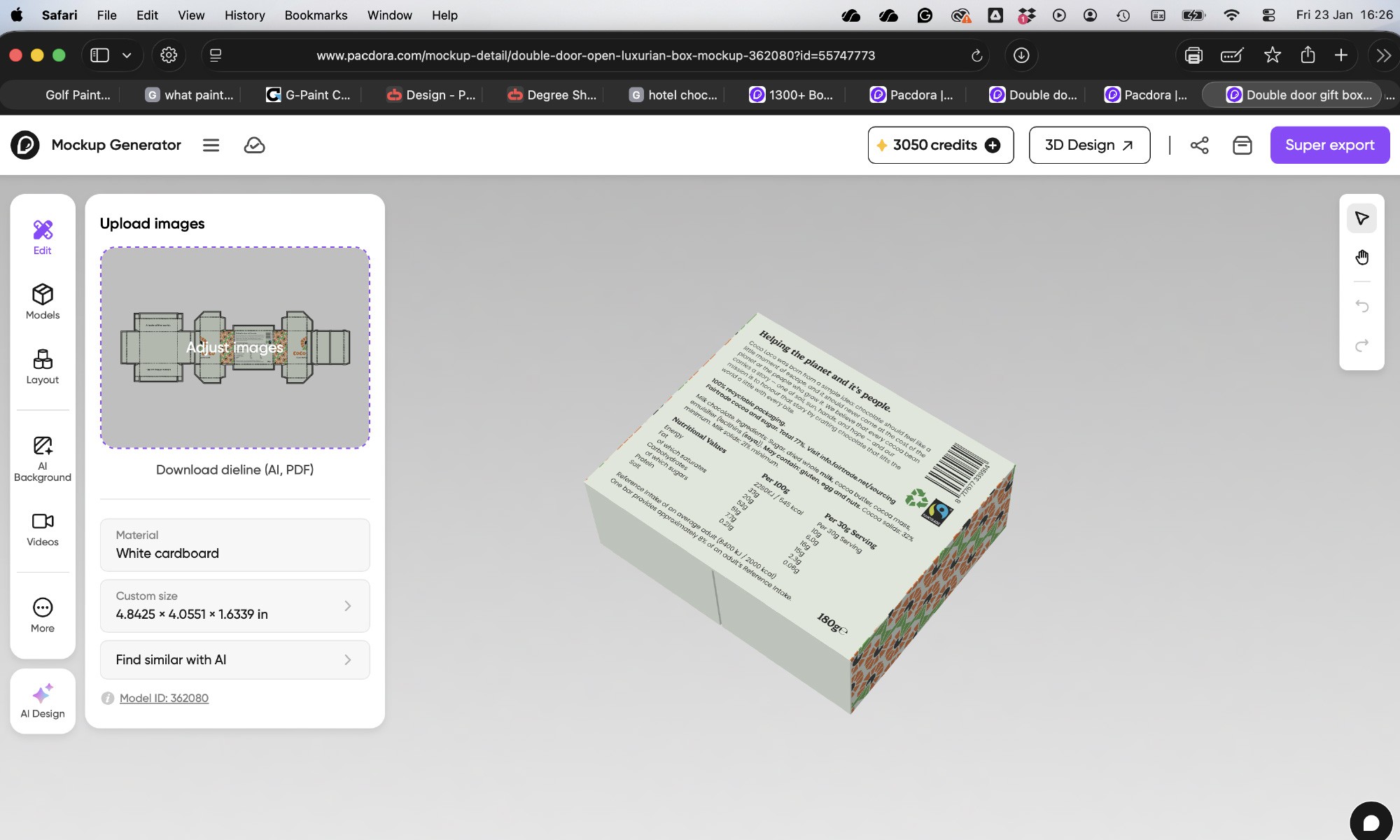
The final packaging design was developed with the brand identity at its core, ensuring consistent use of colour, typography, and tone throughout. The reverse of the box was carefully designed to include all required nutritional and legal information in a clear and legible format, without compromising the overall aesthetic. This approach ensured that the packaging functions as both a practical container and a meaningful brand touchpoint, supporting Coco Loco’s values while delivering an engaging consumer experience.
Packaging Design
Box Dielines
After decided to go for the double sided gift box idea, I had to customise my dieline and produce the box. I did this all inside pacdora and then produced a physical prototype of the box as well as some mockups.
Packaging Design
Wrappers
Towards the very end of the project, I realised one crucial thing. I hadn't yet made any wrappers for individual chocolate bars. This was much more important than a box for all of them, so I had to get a move on.
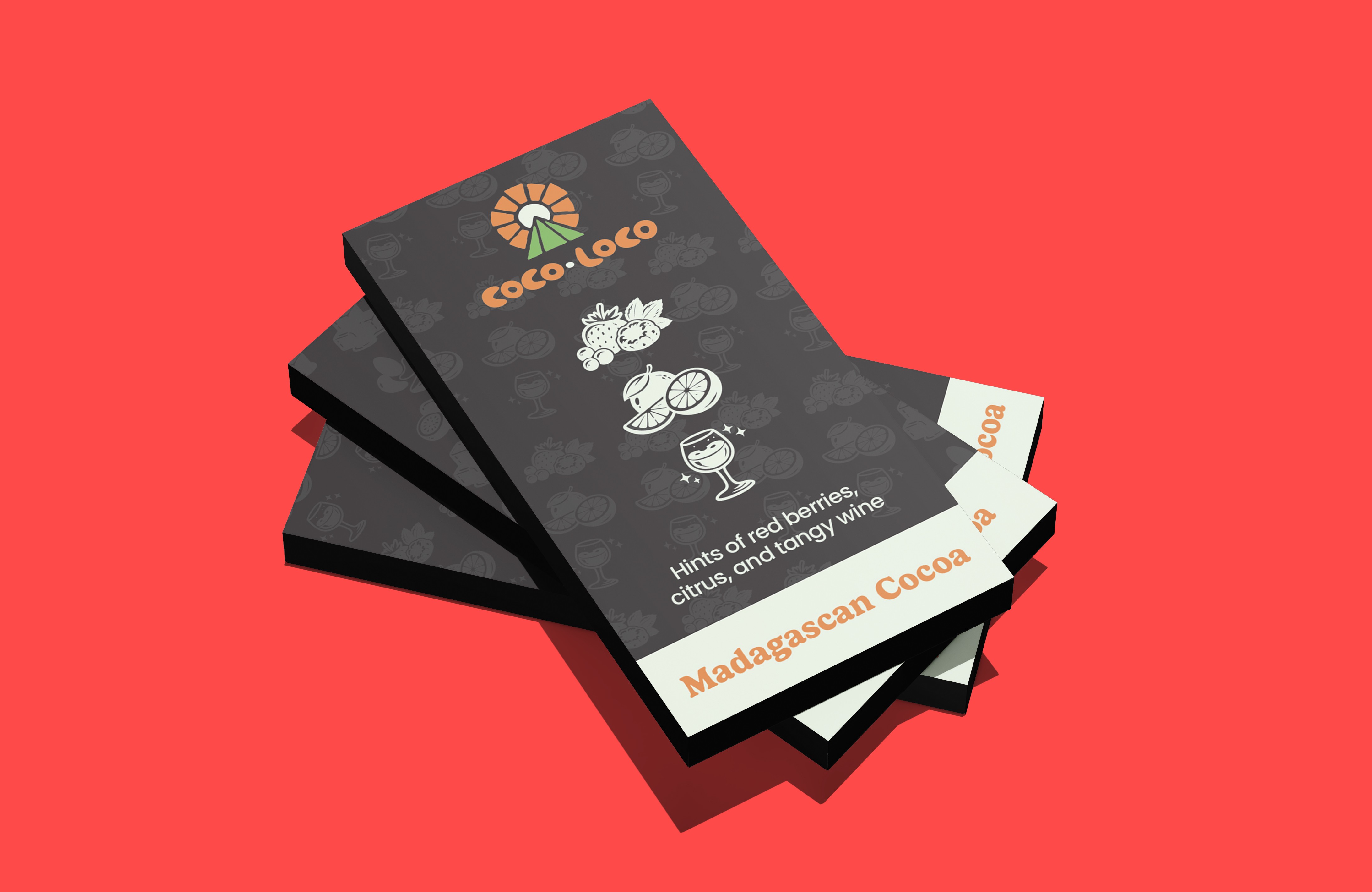
I decided that I would have smaller bars, similar to Green and Blacks, that could give you a pocket sized taste of chocolate from somewhere in the world. The regions I have chosen all have distinct flavours due to the varied conditions in which they are grown which can be used as effective illustrative devices that communicate the flavour to the customer. The Cocoas I have chosen to use are as follows:
Madagascar (Sambirano Valley)
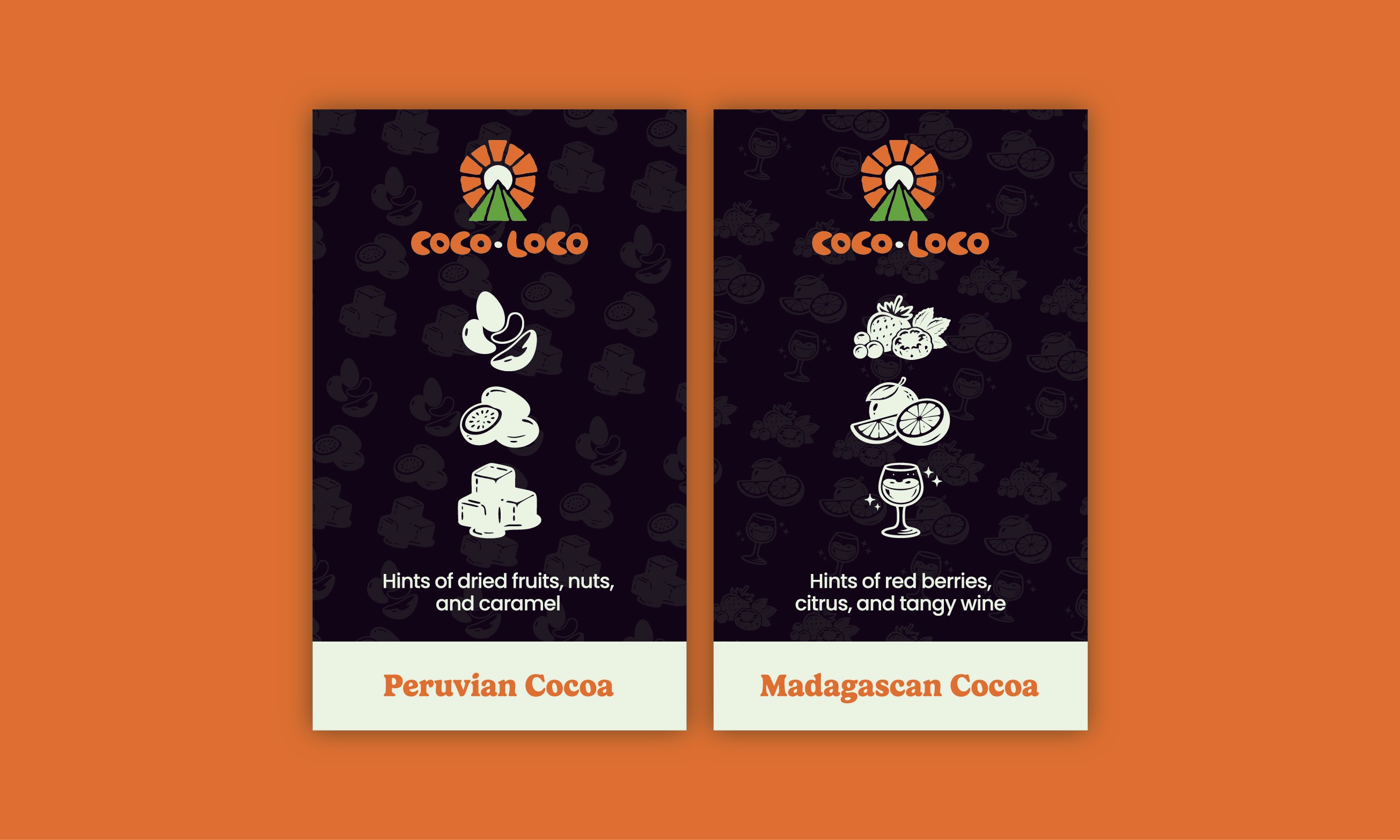
Cocoa from Madagascar is known for its bright, fruity acidity, often described as red berries, citrus, and tangy wine-like notes. It’s vibrant and expressive, making it ideal for a bold, eye-opening chocolate that feels energetic and modern.
Ecuador (Arriba Nacional)
Ecuadorian cocoa is prized for its floral and aromatic qualities, with notes of jasmine, orange blossom, and soft fruit layered over a smooth cocoa base. It feels elegant and refined, well suited to a premium, aromatic bar.
Peru
Peruvian cocoa typically offers a balanced profile with notes of dried fruit, nuts, and gentle caramel. It’s mellow but complex, making it approachable while still feeling craft-led and ethically rooted.
Venezuela
Venezuelan cocoa is rich and indulgent, often featuring deep cocoa flavours with honey, nut, and subtle spice undertones. It’s luxurious and rounded, ideal for a darker, more decadent bar.
Ghana
Ghanaian cocoa is classic and comforting, characterised by strong cocoa intensity, roasted notes, and mild sweetness. It forms the backbone of many traditional chocolates and works well as a familiar, crowd-pleasing option with ethical credibility.
Tanzanian cocoa is bright and clean, with notes of fresh fruit, citrus, and tea-like bitterness. It sits somewhere between Ghana and Madagascar in intensity, offering freshness without sharp acidity.
Packaging Design
Wrapper Mockups
I wanted my wrappers to all have an underlying layout that each one could follow to feel a part of one series of products whilst differentiating from each other effectively. To do this, I began by sketching some ideas of a hierarchy that could include the logo, product name, and flavour.
After choosing the most effective option, I add then sketched out how I could differentiate flavours. The idea that I came to was using iconic symbols of each flavour profile and making them into a pattern and having these in the background at reduced opacity.
Due to being on a time crunch and having limited time to create my wrappers, I went straight to illustrator to pull them together. Below you can see the mockups of how they turned out.
Project Overview
That's a wrap! Shaky start, but I think we got there in the end.
Wrapping Up
Evaluation
Overall, I am very pleased with the outcome of this project, particularly the development of the Coco Loco brand identity. I feel I invested a significant amount of time and effort into the research, strategy, and visual direction stages, which resulted in a cohesive, distinctive, and well-considered brand. The logo, colour palette, typography, and supporting visual language work together effectively to communicate the brand’s values of sustainability, humanity, and joyful exploration. The brand feels confident, recognisable, and appropriate for its intended target market, and I believe the branding is one of the strongest aspects of the project.
The packaging stage was more challenging and highlighted areas for improvement in my time management and planning. While the outer box was functional and met the brief requirements, it lacked some of the playful and interactive qualities present elsewhere in the brand. With more time, this could have been improved through additional structural experimentation or small design details that enhanced the unboxing experience and shelf appeal.
The chocolate bar wrappers were the weakest part of the final outcome. Due to underestimating the time required for this stage, they were rushed and not developed to the same standard as the brand identity. As a result, I only produced two wrappers instead of the six originally planned, limiting the full expression of the flavour system and regional storytelling.
Despite these shortcomings, the project was a valuable learning experience. It reinforced the importance of early planning, prioritisation, and allowing adequate time for execution, particularly during final production stages.
The end!
Apologies for all that reading, I hope it didn't take up too much of your week. That's the entirety of the project from start to finish, I hope you enjoyed it.